
When there’s smoke, there’s a fire to stop
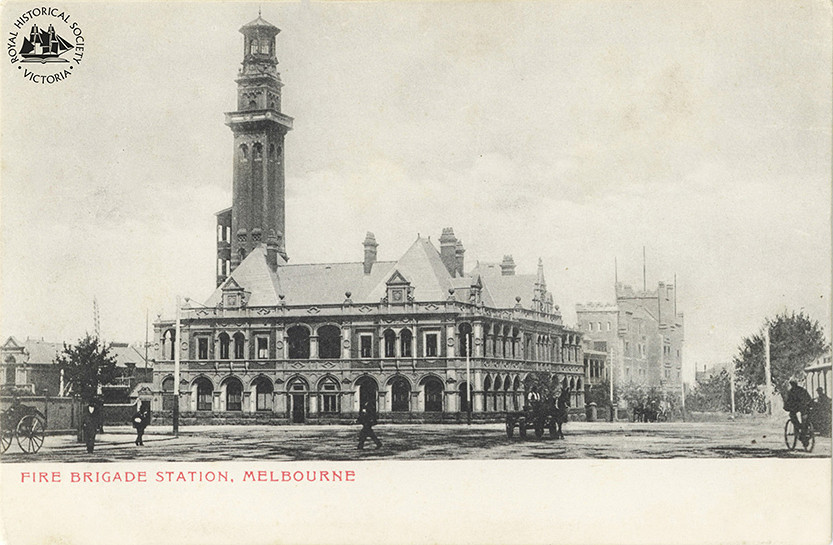
Dated from 1906, this photograph is of the south-west corner of Gisborne St and Victoria Parade, north-east of the main CBD.
Even with the recent invention of the motor car, the roads people and horse-drawn carriages have all the space to themselves. In the background is a brick, castle-like structure, the Salvation Army Training Garrison Building.
In the foreground is a Queen Anne Style building, with a high watchtower looming overall. This is the Eastern Hill Fire Station, which for more than 80 years has seen various fire trucks and vehicles urgently leave the doors in its quest to save Melburnians from fire.
Fires have been a part of Melbourne life since the early days of European settlement. The first recorded fire was at a prison near Batman’s Hill (now near Southern Cross Station) on April 28, 1838, started by Indigenous prisoners in a bid to regain their freedom. It wasn’t until 1845 when the first fire brigade service, the Melbourne Fire Prevention Society, was established.
In the 1880s, with dozens of volunteer and insurance company-run brigades in the city and suburbs, and some divided by rivalry, there were calls to create a unified brigade. An infamous incident happened on December 28, 1888 when the Melbourne Insurance Brigade (at the time was the city’s main brigade) and the National Fire Brigades Association (an association of firemen who advocated for the legislation of a unified brigade) came to physical blows during a Russell St fire after a dispute about hose usage, and then again at Bourke St later that same night, with one fireman arrested.
Adding to the need for a unified brigade was the increase of fires in the city, with six firefighters losing their lives over various fires across 1889 and 1890, leading to inquiries that revealed poor discipline among the brigades. By 1890, the Victorian Government finally passed the Fire Brigades Act, allowing for the establishment of a Metropolitan Fire Brigade.
The new brigade officially had its first meeting on March 6, 1891, with the Insurance Brigade’s Superintendent David Stein as first chief officer. Their initial headquarters was the Insurance Brigade’s building at 447 Little Bourke St, but they were soon able to buy some land across the road from the Eye and Ear Hospital and ran a contest to determine the design of a new station.
The final design was built by Thomas Cockram and Co., and opened on November 2, 1893, in a ceremony where the new firemen’s diligence was shown in a demonstration where an alarm summoned 100 men from multiple brigades to perform “Sundry evolutions”.
Because of the urgent matter of a fire appearing any time, the building was equipped for the long-term stay of its workers. There were living dorms for married men (women didn’t join the MFB until 1988) and their families, as well as bachelor workers and officers, a recreation room, bathrooms, stables for horses and administration rooms. The most notable feature was the 150-foot-tall tower, taking advantage of the high vantage point of the hill. Anyone tasked with watchmen duties would stay a few hours at a time, watching over the city for any signs of smoke come hail or shine, or even pitch darkness. At one point, a watchman was required to press a button to a “time machine” every five minutes to assure the communications room below that he hadn’t dozed off. According to Stein himself, the stints used to be four hours until he dismissed a watchman for falling asleep on the job. The watchman asked that Stein should try the job for himself, and after spending four hours in the darkness, Stein promptly reduced the stints to two hours.
The fire station continued as the brigade’s headquarters until the 1970s, when a new modern facility was built down the road at the corner of Albert and Gisborne St. The Eastern Hill Station continues to remain as a museum for anyone wanting to see what the war on fire was like in a bygone age. •
Buy our Journalists a coffee
Support our dedicated journalists with a donation to help us continue delivering high-quality, reliable news


Related Articles
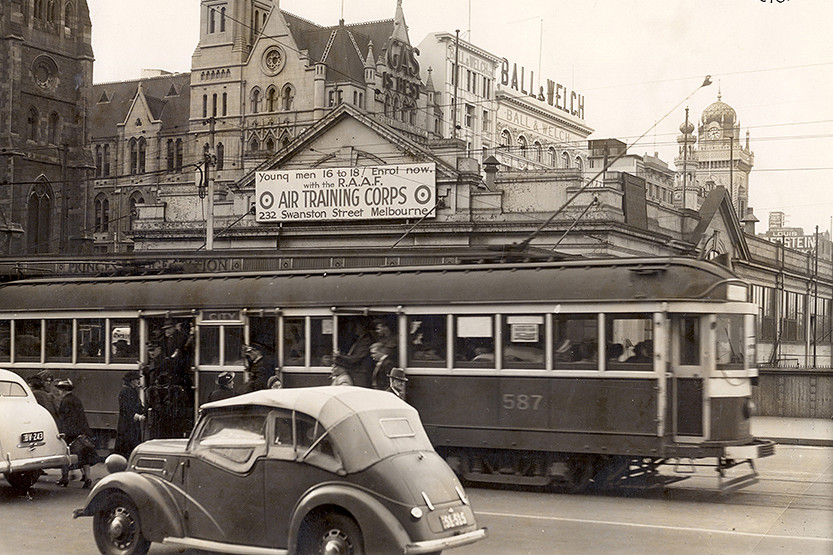
Reminders of wartime looms over Princes Bridge
In the early 1940s in Melbourne, as war ravages overseas, life in the city carries on as normal at the corner of Princes Bridge and Flinders St.
Read More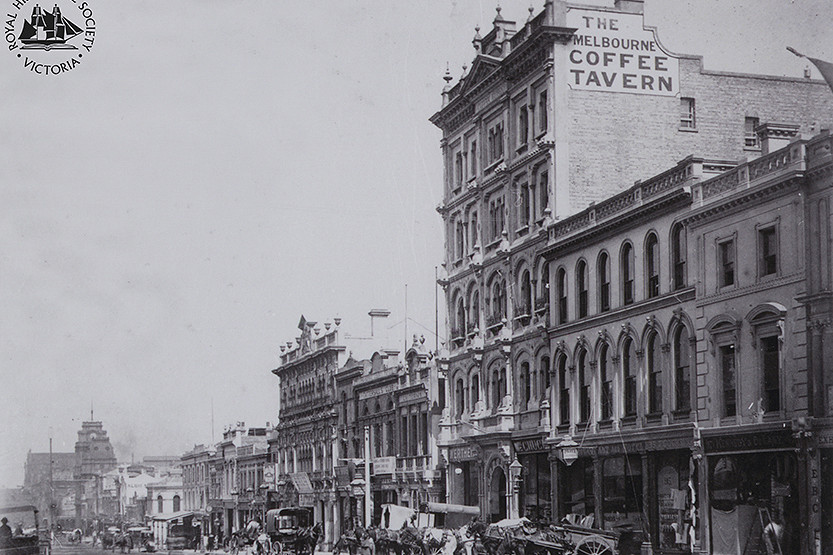
An escapee arrested at the Coffee Tavern
Opened in October 1882 on Bourke St between Swanston and Russell streets, the 90-foot-tall Melbourne Coffee Tavern featured 161 bedrooms and was also home to a sewing machine business owned by Hugo Wertheim.
Read More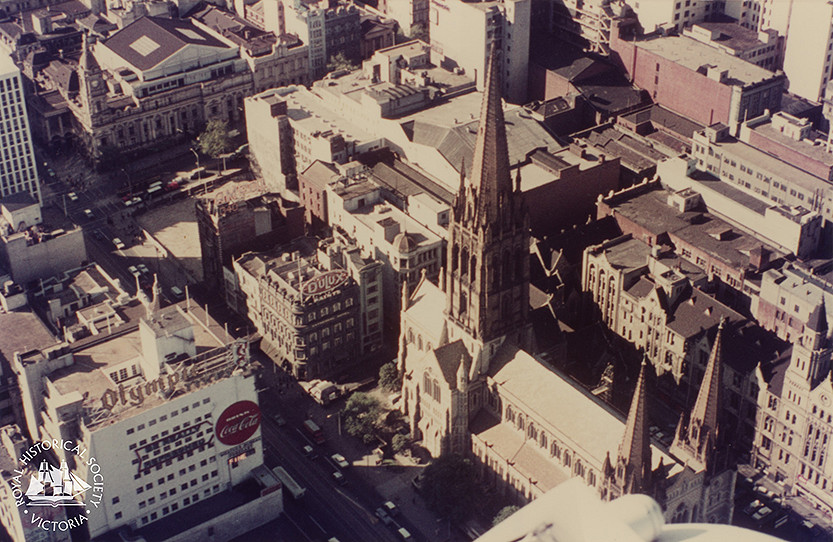
The beginning of a square, and the end of history
For those who are young or new to Melbourne, it might be a shock to discover that buildings once occupied the site of Town Hall Station, at the corner of Swanston and Collins streets.
Read More
Council backs AI push, framing moment as Melbourne’s “fork in the road”
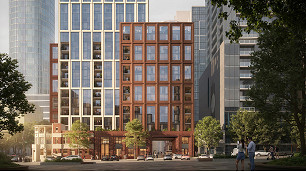
Kilkenny Inn site set for new chapter as council backs bigger residential tower

 Download the Latest Edition