
City’s draft engagement policy draws praise, but calls for more detail before adoption
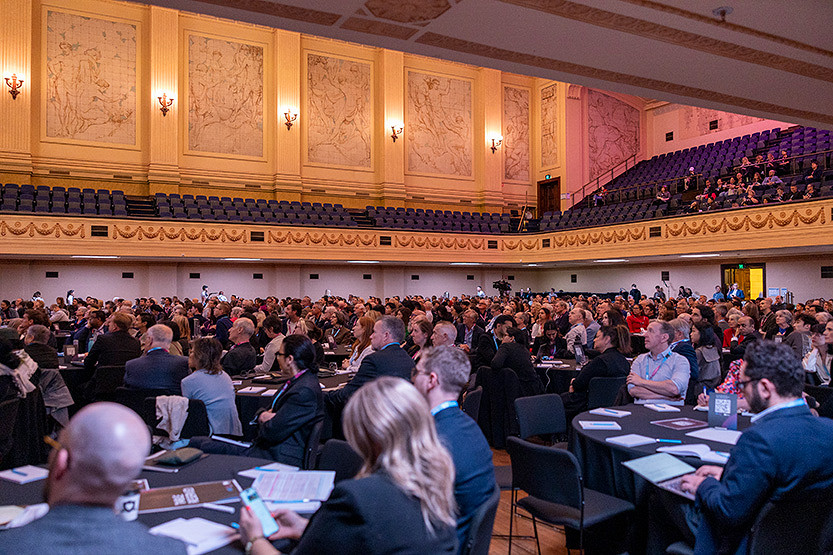

The City of Melbourne’s new community engagement policy has cleared an initial hurdle at Town Hall, but not before submitters and councillors raised concerns that the draft still needs more detail if it is to deliver the “genuine” consultation it promises.
At the Future Melbourne Committee on March 17, councillors unanimously agreed to note feedback on the draft policy and refer it to the April 28 council meeting for final consideration. The policy is required under the Local Government Act and is intended to replace the city’s current 2021 framework, with the new version to guide engagement through to 2030.
The draft sets out a clearer framework for when and how the city should consult, who it should engage with, and when engagement is not recommended. It also places more emphasis on inclusivity, including multilingual engagement, and is accompanied by a simplified Chinese version and a one-page summary.
According to the council report, the review was informed by two phases of consultation over the past year. Officers said six key themes emerged from the first phase: genuine and objective engagement, better promotion, informed participation, varied and inclusive methods, transparent decision-making and trusted relationships.
Those themes were widely supported at the March 17 meeting. But two key submitters, cultural heritage professional B. McNicholas and EastEnders president Dr Stan Capp, argued the draft remained too high-level and risked falling short in practice unless strengthened before adoption.
In her submission, Ms McNicholas said there was broad support for meaningful consultation, but questioned whether the policy would ensure engagement happened “early enough to inform decisions, rather than after key directions have already been settled”. She also warned the community would not have an opportunity to comment on the final policy before adoption and argued the draft still lacked enough detail to ensure its principles were applied consistently in practice.
Drawing heavily on the Victorian Parliament’s recent Inquiry into Community Consultation Practices, she urged the city to embed stronger requirements around early consultation, clear negotiables, sufficient information, broader accessibility and reform of Participate Melbourne. She argued the policy should ensure engagement was not seen as a “‘tick-box’, or ‘window-dressing’ step.”
Dr Capp, who said he had closely followed the operation of the council’s 2021 policy, made a similar point. While describing the current review process as more consultative than the original one five years ago, he argued the draft still needed more guidance on how it would be operationalised across the organisation.
His main concern was deliberative engagement. Dr Capp said the draft’s treatment of it was weaker than the 2021 policy and should do more to preserve the city’s tradition of citizens’ juries, people’s panels and other participatory methods for complex issues. He also suggested an explanatory paper should accompany the final policy to set out methodologies and criteria in greater detail.
Council officers indicated those concerns had been heard.
Responding at the meeting, the council’s director of community development Anthea Spinks said all formal consultation feedback and oral submissions would be incorporated into the final version, alongside a consultation summary. She added that the council was preparing operational practice guidance, which would be made public after the policy was adopted.
In response to Dr Capp specifically, Ms Spinks said the council was already proposing amendments to the deliberative engagement section.
“Based on your submission but also a number of submissions we’ve received through the consultation period, we are proposing that we’ll make some amendments to the deliberative engagement part of the policy,” she said. “So that’s very much in our sights.”
She added that officers had also begun reviewing the state parliamentary inquiry’s final report and were considering which of its recommendations might flow into the policy itself and which might sit in staff practice guidance.
A separate issue raised during the meeting was whether the public would get a chance to see and comment on the final revised draft before council adopted it. Officers said that because the policy must go to a formal council meeting under the Act, there would be no further oral submissions, but written submissions would still be accepted when the final version is published with the April 28 papers.
Councillors broadly backed the direction of the draft while acknowledging it still needed work.
Community and city services portfolio lead Cr Gladys Liu said one of the clearest messages from consultation was that engagement “shouldn’t be a tickbox activity” and had to be genuine. She also welcomed efforts to make engagement more accessible, especially for people who speak English as a second language, saying information needed to be easy to understand and inclusive of Melbourne’s multicultural communities.
Cr Davydd Griffiths described the document as underpinning how the city wanted communication and consultation to happen with everyone who lived, worked, owned a business in, or visited Melbourne. He said it was encouraging to see specific opportunities for more youth engagement flowing from the policy.
Cr Owen Guest was more cautious, warning that the document’s real value would lie in how it was applied.
“The proof will be in the pudding, not the paperwork,” he said.
Lord Mayor Nick Reece struck a similar balance, saying the policy was ultimately about something simple: “making sure people have a real say in the decisions that affect them.”
“We need to be more upfront with the community about when their feedback can shape a decision and when it cannot,” he said. “We’re trying to get the BS factor out of our consultation processes.”
He acknowledged the submitters had “hit the nail on the head several times” and said further fine-tuning was needed before the final version returned in April. He also left open the possibility of deferring adoption if more time was needed to incorporate feedback.
Buy our Journalists a coffee
Support our dedicated journalists with a donation to help us continue delivering high-quality, reliable news


Related Articles

QVM renewal finances: the numbers aren’t the only problem
The latest financial reckoning for the Queen Victoria Market renewal has again exposed a problem that has followed the project almost from the beginning: the City of Melbourne has never been particularly good at explaining how it is paying for it.
Read More
Council backs one-year multicultural advisory committee pilot
The City of Melbourne will establish a multicultural advisory committee to strengthen community input into council policies, services and communications after councillors unanimously endorsed a one-year pilot on August 4.
Read More
QVM review process only raising further questions
The City of Melbourne’s terms of reference for its independent review into Queen Victoria Market Pty Ltd have landed, but they may only deepen the governance question that has surrounded this process from the beginning.
Read More
Who actually pays Victorians the most for solar

EastEnders to host Lord Mayor and Deputy Lord Mayor

 Download the Latest Edition