
Future of the Multicultural Hub remains unclear as key CBD site under review
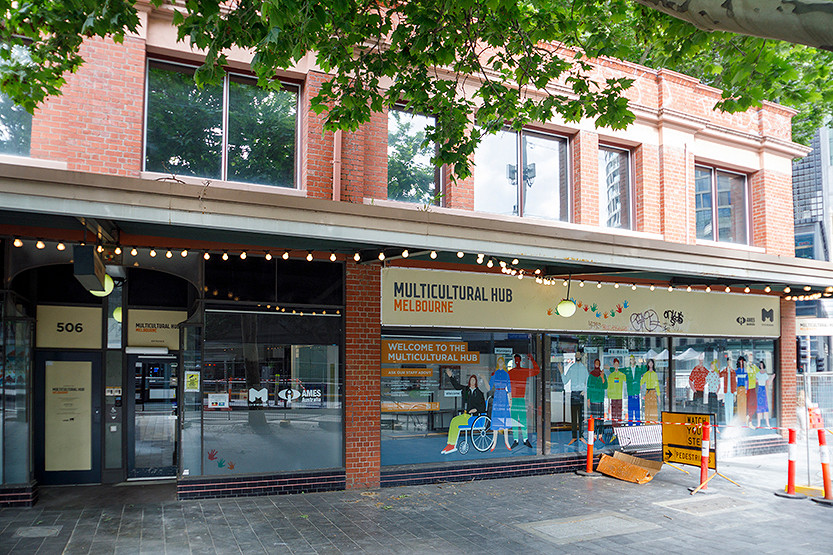

The Multicultural Hub on Elizabeth St, opposite the main entrance to Queen Victoria Market, remains one of the City of Melbourne’s most quietly contested community assets.
It’s a site rich in purpose and history, but is increasingly viewed as underutilised amid the city’s rapidly changing urban landscape.
Owned by the City of Melbourne and leased to AMES Australia, the hub provides vital settlement, employment and English-language services to newly arrived migrants, refugees and asylum seekers. It also houses Cohealth’s community health service and the heritage-listed Drill Hall, a multipurpose community venue surrounded by a social housing complex.
Yet despite its importance as a hub for multicultural engagement, the precinct’s prime CBD location – fronting a wide, paved forecourt on Elizabeth St’s bustling tram corridor – has prompted growing debate about its long-term future and how it could better connect with the market precinct opposite.
The ground floor currently includes a handful of commercial tenancies, including a small café and an Indigenous arts gallery, while the upper levels accommodate classrooms and meeting spaces managed by AMES. But several nearby stakeholders have described the site as “a missed opportunity” for activation, given its visibility and proximity to one of Melbourne’s most-visited public spaces.
CBD News understands that council officers have previously longlisted the site for potential affordable housing redevelopment, alongside others at Victoria and Curzon streets in North and West Melbourne. However, no formal proposals are currently being pursued.
In a statement provided to CBD News, a City of Melbourne spokesperson said there were no plans to change the site’s use, emphasising that the Multicultural Hub “delivers important services to our diverse community and is crucially located in the inner city”.
The spokesperson said the council was “doing its part” to deliver affordable housing elsewhere, pointing to the Munro development near the market (which includes 54 affordable units), the Boyd development in Southbank (40 units), and the Gurrowa Place project, which will deliver more than 80 affordable homes.
Council sources, however, say the Multicultural Hub’s strategic role has become increasingly uncertain following years of shifting priorities. When the City North Structure Plan was first prepared more than a decade ago, it highlighted the need for new community facilities in the area. But much of that planning was “washed away” after the council launched its Queen Victoria Market Precinct Renewal (QVMPR) master plan and invested heavily in the Munro site, where it consolidated most of City North’s community infrastructure.
That move effectively left the Multicultural Hub “stranded”, described internally as a “legacy site” that sits outside the council’s current vision for community service delivery. While once considered an essential part of the City North network, the hub is now viewed by some within council as an “orphaned” facility that no longer fits neatly into the city’s broader planning framework.
The original Munro building plans had included a maternal and child health service before being reconfigured during COVID to deliver the new narrm ngarrgu Library and Family Services, which opened in 2024. That change, coupled with the council’s decision to centralise its community functions in the market precinct, has raised questions about whether the hub’s existing operations will remain long-term.
One senior council source told CBD News that the Elizabeth St site was unlikely to be a redevelopment priority in the short term, noting that the council had resolved to revisit its future only after completing work at the Victoria and Curzon sites. With the Curzon St project delayed, any reconsideration of the hub has also been postponed.
The site’s co-location with affordable housing, delivered in partnership with Housing Choices Australia in 2011, adds another layer of complexity. The nine-storey development includes 59 apartments alongside the restored Drill Hall and public courtyard, which residents have transformed into a community garden.
Meanwhile, the broader Elizabeth St frontage – featuring a generous forecourt, tram superstop, and direct connection to the market’s southern gateway – has prompted calls for temporary activation or placemaking measures to bridge the gap between the two major public spaces. Ideas floated by local stakeholders include pop-up retail, outdoor dining, or market spill-over uses, though none have been formally pursued.
Drill Hall Residents’ Association president Martin Mulvihill said he hoped that any redevelopment of the adjacent Multicultural Hub could help improve access and safety for residents.
He said that the complex, which adjoins the Multicultural Hub, posed significant access and evacuation challenges, particularly for residents with disabilities or mobility issues.
“Every time the lifts or automatic doors break down, the congestion is enormous. If something serious happened, it could be a mini-Grenfell,” Mr Mulvihill said.
He added that the precinct remained physically and visually disconnected from QVM, despite its proximity.
We’ve long wanted to create a kind of uniting ambience between the market and this side of the street – to stop it feeling like the Cinderella of the precinct.
For now, AMES continues to operate the site, running English classes, settlement programs, and employment services, along with providing information on transport, housing, and community engagement. The hub also offers a Gig Workers’ Hub for delivery and rideshare workers – a relatively new initiative helping some of the city’s most precariously employed residents connect with services and advocacy.
The adjoining Cohealth centre provides integrated health care and social support to vulnerable residents and was briefly considered by the state government as a potential site for a safe injecting facility – a plan later abandoned in favour of a new community health hub on Flinders St.
Despite renewed attention on the site, the council insists its current use remains valuable. “The Multicultural Hub continues to play a vital role in connecting residents, supporting newcomers, and providing access to critical services,” the spokesperson said.
But as the Queen Victoria Market precinct evolves, with major new developments under way on Munro and Gurrowa Place, pressure is likely to build on the council to decide what role, if any, the Elizabeth St site will play in the city’s long-term civic fabric. •
Buy our Journalists a coffee
Support our dedicated journalists with a donation to help us continue delivering high-quality, reliable news


Related Articles
The rise of the “third room”: How Australians are reinventing their outdoor spaces
There was a time when the backyard was an afterthought. A patch of grass, a rusting barbecue, maybe a plastic chair or two.
Read More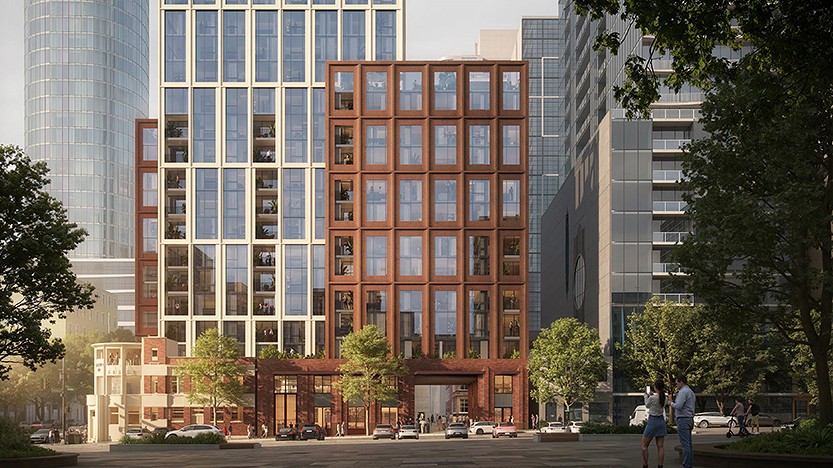
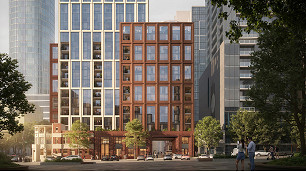
Kilkenny Inn site set for new chapter as council backs bigger residential tower
One of the CBD’s most prominent long-dormant corners appears finally set for a new beginning, after City of Melbourne councillors endorsed revised plans for the former Kilkenny Inn site at King and Lonsdale streets.
Read More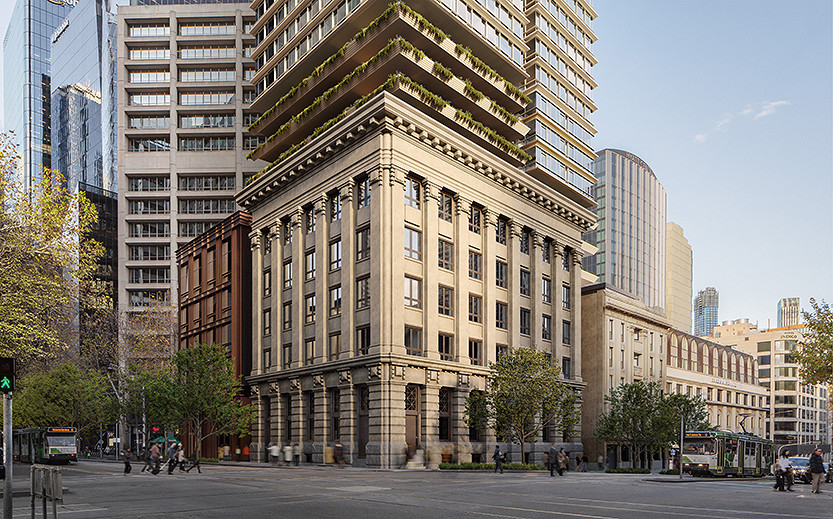
From empty towers to a true CAD: can adaptive reuse reshape the CBD?
As the state government reviews long-criticised CBD developer incentives, a powerful new data tool from Plus Studio could help reveal which underused towers are ready to shift Melbourne from a Central Business District to a true Central Activity District (CAD).
Read More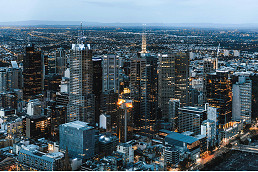
Council backs AI push, framing moment as Melbourne’s “fork in the road”
Kilkenny Inn site set for new chapter as council backs bigger residential tower

 Download the Latest Edition