
Greening the city: Major planning change paves way for a sustainable Melbourne skyline
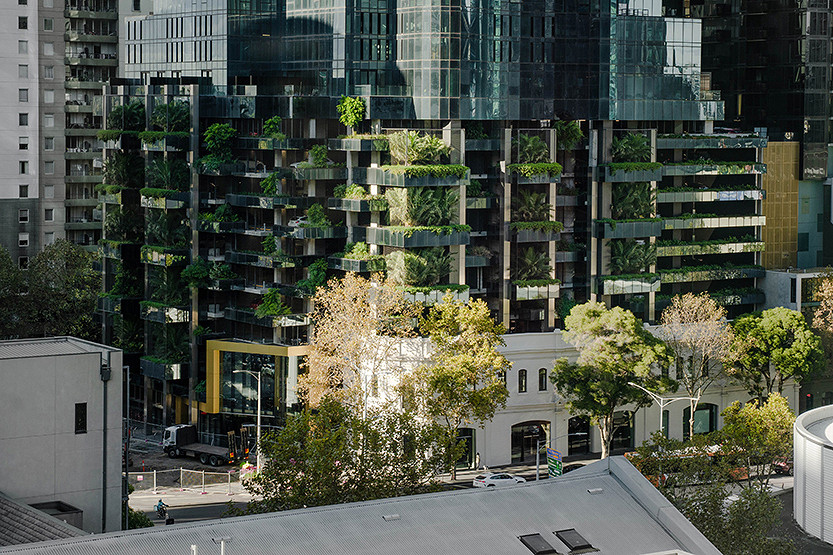

A bold new chapter in sustainable city planning is now under way in Melbourne, with the City of Melbourne officially adopting Planning Scheme Amendment C376 to drive greener, more climate-resilient building design across the municipality.
In a unanimous vote at its Future Melbourne Committee meeting on July 15, councillors endorsed the long-anticipated amendment, which introduces new performance standards to improve the environmental outcomes of buildings while making green rooftops, walls, facades and podium-level landscaping a central feature of Melbourne’s future built form.
Seen as one of the most significant planning reforms in years, the changes aim to help the city reduce carbon emissions, increase visible greenery, and position Melbourne as a global leader in sustainable urban design.
“This is a planning policy that creates better cities, showing the world what we can do in Melbourne, how we innovate, and how we create greener, more liveable cities,” Lord Mayor Nick Reece said.
Amendment C376 will now be submitted to Victorian Minister for Planning Sonya Kilkenny for final approval. If approved, it will apply to most new buildings and major redevelopments across the municipality, setting performance standards for energy efficiency, urban cooling, water management and urban ecology.
The amendment replaces outdated policy from 2013 and introduces new planning controls including a Design and Development Overlay (DDO), which sets sustainability expectations for developments over 1000 square metres. It also amends the Capital City and Docklands Zones and introduces supporting local policies and background documents.
At the heart of the amendment is the Green Factor Tool – an Australian-first assessment framework that helps planners and developers measure the quantity and quality of green infrastructure, such as green roofs, facades, and podium-level planting.
We talk about Melbourne being a Garden City … and we’re going to see an unprecedented expansion of our green streets, green laneways and, as of tonight, green buildings,” Cr Reece said. “The Green Factor Tool is the policy framework which helps unlock that green infrastructure.
The policy marks a critical step in the city’s broader climate response. In Melbourne, buildings account for more than two-thirds of total emissions – far higher than the national average – and transitioning to net-zero buildings is central to the council’s 2040 climate targets.
“This is integral to our approach as a city to be net zero,” the council’s environment portfolio lead Cr Davydd Griffiths said. “The building stock that we have is fundamental to that.”
The council’s director of city strategy Jo Cannington said the change had been years in the making, with work commencing in 2017 as part of the “Green Our City Action Plan”.
The planning process included a lengthy public consultation period, public exhibition of the amendment, and consideration of 73 submissions before an independent planning panel was convened last year.
A key outcome of the panel’s review was a recommendation to shift from mandatory to discretionary controls – a change ultimately supported by the council.
“This allows us to meet the market where it’s at, and also protects development feasibility, which is important,” the council’s planning potfolio lead and Deputy Lord Mayor Roshena Campbell said.
“This amendment is one way in which we are signalling that we want to see efficient buildings, design excellence and sustainable buildings and green buildings.”
While councillors acknowledged the compromise, several submissions voiced concern that making the controls discretionary may water down their impact.
Brenton Beggs, from the Australian Institute of Landscape Architects, said while the institute strongly supported the amendment, “without strong guidance or incentives, there’s a risk that some developments will do the minimum or bypass green infrastructure implementation altogether”.
Council officers noted this concern but said adopting discretionary provisions provided a practical first step toward the long-term goal of mandatory controls, allowing the City of Melbourne to monitor implementation and work collaboratively with industry.
Importantly, many developers are already ahead of the curve. According to council data, around 92 per cent of recent development applications already meet the new standards.
For ASPECT Studios senior associate Warwick Savvas, the policy change simply formalises what many in the industry are already doing.
“I can vouch that the industry is ready to go,” he said. “Engineering and horticultural design and innovation are already supporting these greening elements.”
Others highlighted the competitive edge sustainability gives Melbourne as it works to recover from pandemic-induced commercial vacancies.
Alexander Sear, from ADP Consulting, said green credentials were increasingly critical to attracting high-quality tenants.
“JLL and CBRE have both published data that says lower-rated buildings don’t get tenants. We’ve got a big vacancy problem in the city – and we don’t want more shells lying there hoping for some love,” he said.
“These buildings last 60 to 100 years. If we don’t get this right now, we’re designing things that will miss our net zero targets.”
Despite some concern from the Property Council of Australia over car parking provisions, it too expressed strong support for the amendment as a necessary step toward meeting emissions targets and maintaining the city’s global standing.
The City of Melbourne said the cost of implementing the new standards was now modest – between 0.86 and 1.95 per cent of total build costs – largely due to updated regulations and shifting industry standards.
“This is just good business,” Cr Campbell said. “It’s where the market demand is, and it ensures we’re delivering buildings that are fitting for Melbourne.”
With green buildings now seen as key to attracting investment, boosting liveability and combatting climate change, the unanimous support for Amendment C376 marks a decisive moment for the city’s future.
As Cr Reece put it, “We’ve got 650 pages of joy and progress for Melbourne in this submission. And I think it will be transformative.” •
Buy our Journalists a coffee
Support our dedicated journalists with a donation to help us continue delivering high-quality, reliable news


Related Articles
The rise of the “third room”: How Australians are reinventing their outdoor spaces
There was a time when the backyard was an afterthought. A patch of grass, a rusting barbecue, maybe a plastic chair or two.
Read More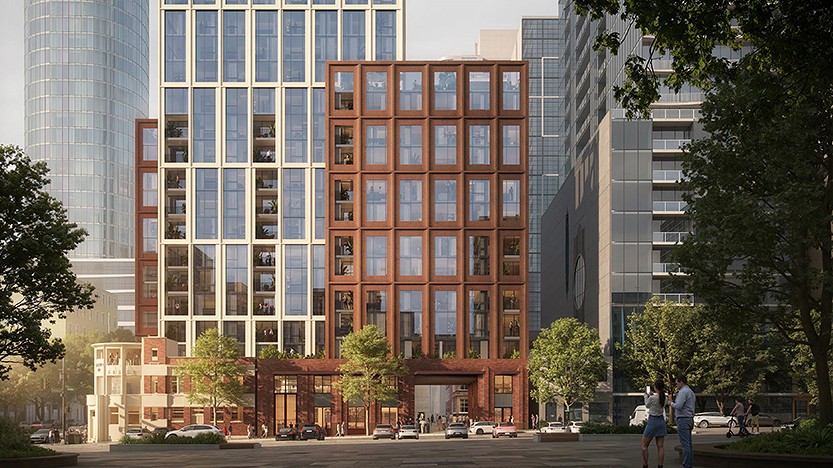
Kilkenny Inn site set for new chapter as council backs bigger residential tower
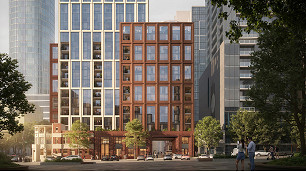
One of the CBD’s most prominent long-dormant corners appears finally set for a new beginning, after City of Melbourne councillors endorsed revised plans for the former Kilkenny Inn site at King and Lonsdale streets.
Read More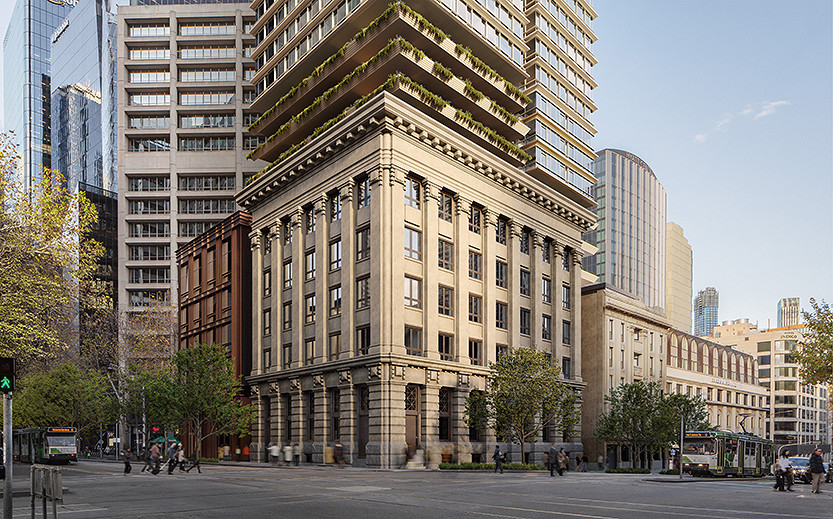
From empty towers to a true CAD: can adaptive reuse reshape the CBD?
As the state government reviews long-criticised CBD developer incentives, a powerful new data tool from Plus Studio could help reveal which underused towers are ready to shift Melbourne from a Central Business District to a true Central Activity District (CAD).
Read More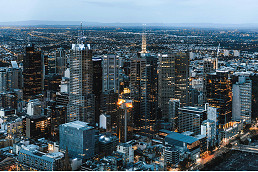
Council backs AI push, framing moment as Melbourne’s “fork in the road”
Kilkenny Inn site set for new chapter as council backs bigger residential tower

 Download the Latest Edition