
Haileybury marks 10 years as catalyst for Melbourne’s vertical school boom
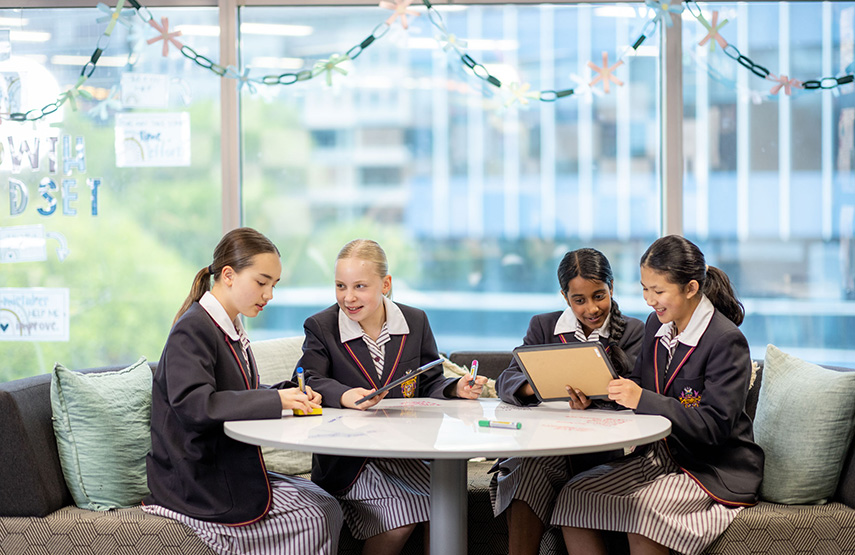
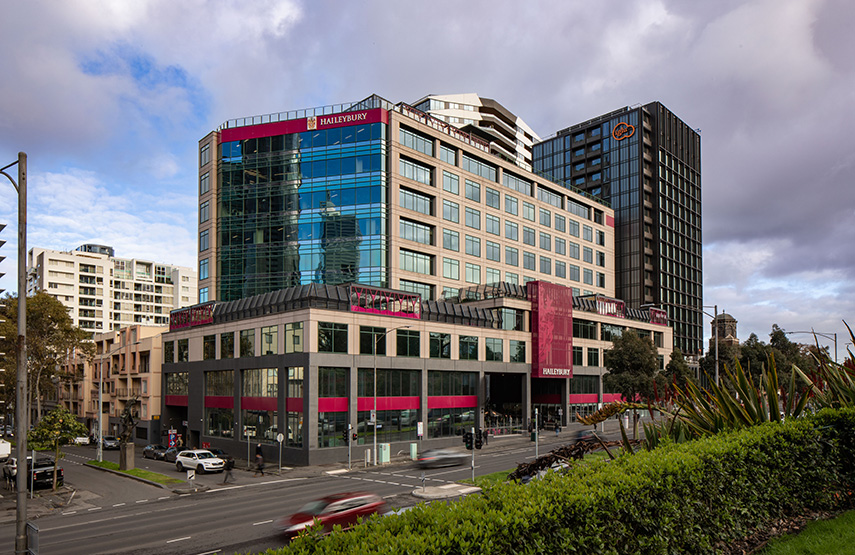

When 17 children walked into Haileybury’s new City campus in April 2016, they became part of a major shift in the way Melbourne thinks about schools.
The repurposed 10-storey King St building, once home to the NAB, became Melbourne’s first vertical school and one of the first campuses of its kind in Australia.
A decade later, those first early learning students are approaching graduation, while Haileybury City has grown into a campus of 755 students from early learning through to Year 12.
For Melbourne’s inner city, the milestone is more than an anniversary for one independent school. It marks the start of a broader change in education planning, as population growth, higher-density housing and limited land force schools to move upwards rather than outwards.
Haileybury City’s success has helped demonstrate how multi-storey schools can work in dense urban environments where traditional sprawling campuses are increasingly difficult to deliver.
Caroline Merrick, head of Haileybury City since 2019, said more vertical schools were likely to emerge across Australian cities.
“I think, in coming years, we will see more vertical schools in Australian cities and that’s a positive step forward,” Ms Merrick said.
Vertical campuses can offer students so many unique experiences, close connection to the diverse community around them, and an excellent education.
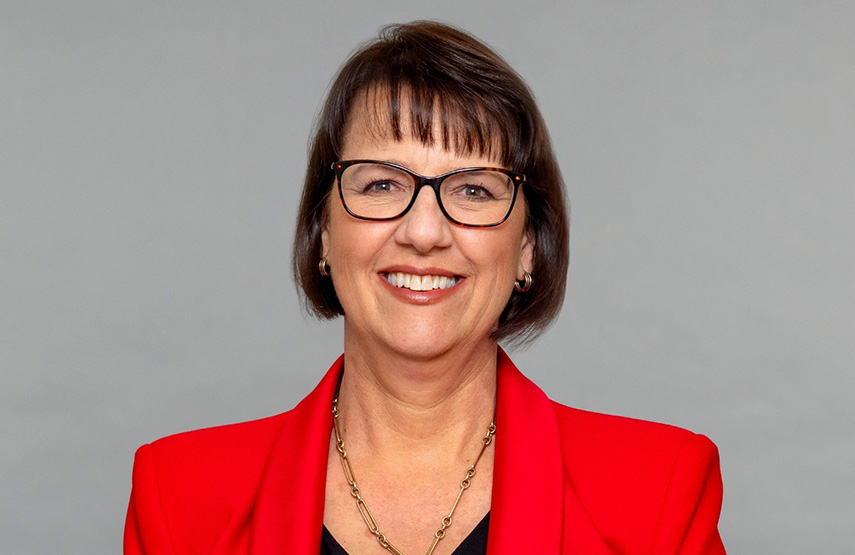
Head of Haileybury City Caroline Merrick.
She said the model required schools to think differently about space, learning and their relationship with the city.
“A lot of schools focus on their history and try to replicate what has been done in the past, but it may be time to do things differently,” she said.
That shift is already evident across the inner city.
South Melbourne Primary School on Ferrars St in Southbank opened in 2018 as Victoria’s first government vertical school. The campus was designed to respond to rapid population growth in Southbank, South Melbourne and Fishermans Bend, where apartment living has transformed the local demographic.
Docklands Primary School followed in 2021, opening as another vertical government school in one of Melbourne’s fastest-growing urban renewal areas.
Both South Melbourne Primary and Docklands Primary have since had funding announced in the recent state budget for new campuses to help meet rising demand, underlining how quickly inner-city enrolment pressure can build once new schools open.
In North Melbourne, the new Molesworth St campus of North Melbourne Primary School opened in 2023, adding another vertical campus to the city’s education landscape. And there are more to come, including a new secondary school in Arden.
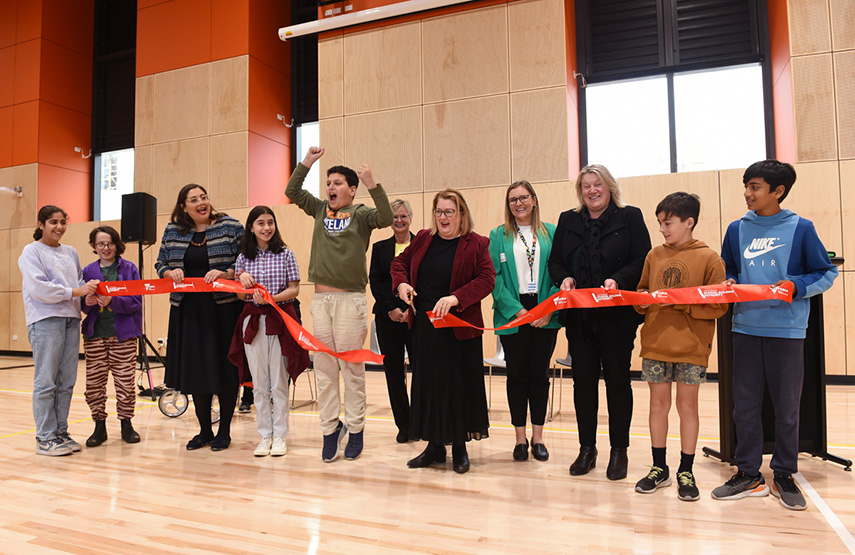
The opening of the North Melbourne Primary School campus on Molesworth St in 2023.
Together, the schools show how the vertical model has moved from an experimental idea to an increasingly common response to Melbourne’s growth.
Haileybury deputy principal of student wellbeing Nathan Chisholm, who was inaugural principal of Melbourne’s second vertical school, Prahran High School, said the concept was still sometimes misunderstood in Australia.
“We’re seeing a shift in how people think about schools in urban environments,” Mr Chisholm said.
“If we were living in New York or Hong Kong and talking about vertical schools, people wouldn’t think it was odd.”
But he said Australian families could still be unsure about whether a school without a traditional oval or swimming pool could feel “normal”.

Haileybury deputy principal of student wellbeing Nathan Chisholm.
For Mr Chisholm, the answer lies in how vertical schools connect with their surrounding neighbourhood.
“The key to a successful vertical school is working with the community around you,” he said.
“Vertical schools are typically in urban areas and that opens up a lot of opportunities because they are surrounded by interesting businesses and by organisations like the NGV, the Immigration Museum, the law courts and Hamer Hall.”
He said students could also make use of nearby green spaces, such as Flagstaff Gardens in Haileybury City’s case.
That relationship with the city is one of the defining features of the vertical school model. Instead of containing every facility within a fenced campus, schools rely on carefully designed internal spaces, outdoor terraces, public parks, nearby institutions and transport connections.
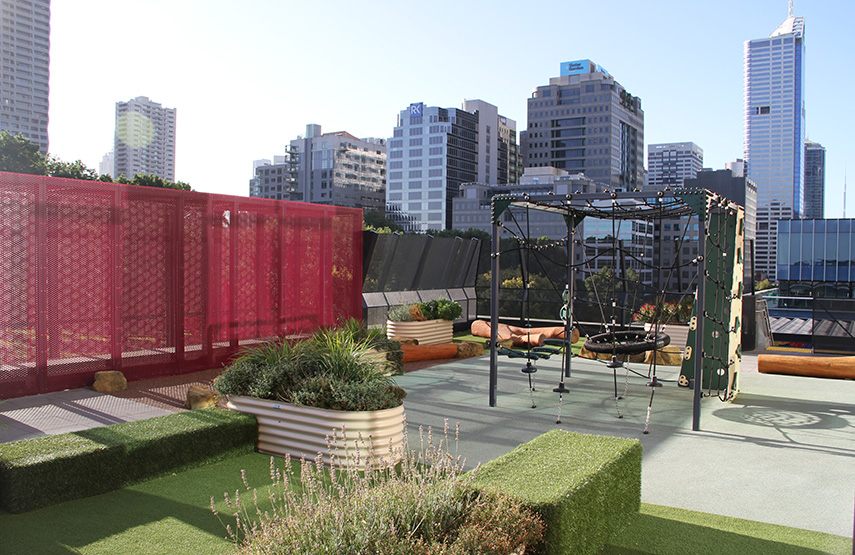
At Haileybury City, there are 1500 square metres of recreation space across three outdoor terraces, alongside the 18 hectares of Flagstaff Gardens on the campus doorstep.
The school’s outdoor areas include a natural-feel play space, planting areas, a dry creek bed, vegetable gardens, sand play and shaded multi-purpose spaces.
Ms Merrick said clever use of space was essential, with a single area often serving many purposes across the day.
“A single space at Haileybury City can have different uses throughout the day – it will be an assessment space for a SAC, an assembly space, later in the day it may host an English class and a visiting poet and it may also accommodate a parent information night,” she said.
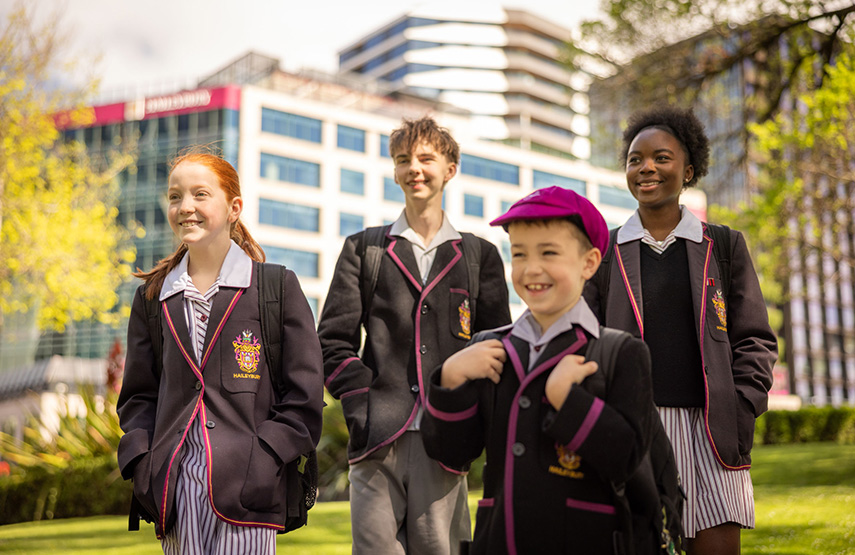
But both Ms Merrick and Mr Chisholm said successful vertical schools could not simply be high-rise versions of traditional campuses.
Research suggests they must be intentionally designed to support connection, inclusion and wellbeing, with architecture, teaching and school culture working together.
“Successful vertical schools combine architecture, wellbeing and pedagogy that work together to create a genuine sense of connection and community,” Mr Chisholm said.
That challenge is only becoming more urgent. Southbank, Docklands, North and West Melbourne, Kensington and the CBD are all absorbing more families into high-density neighbourhoods, while land for conventional school campuses remains scarce and expensive.
Haileybury City’s 10-year anniversary shows how quickly the vertical school model has moved from a novelty to a necessary part of Melbourne’s education future.
As Ms Merrick put it, a successful vertical school is not defined only by its architecture, but “by its culture and people”.
Buy our Journalists a coffee
Support our dedicated journalists with a donation to help us continue delivering high-quality, reliable news


Related Articles
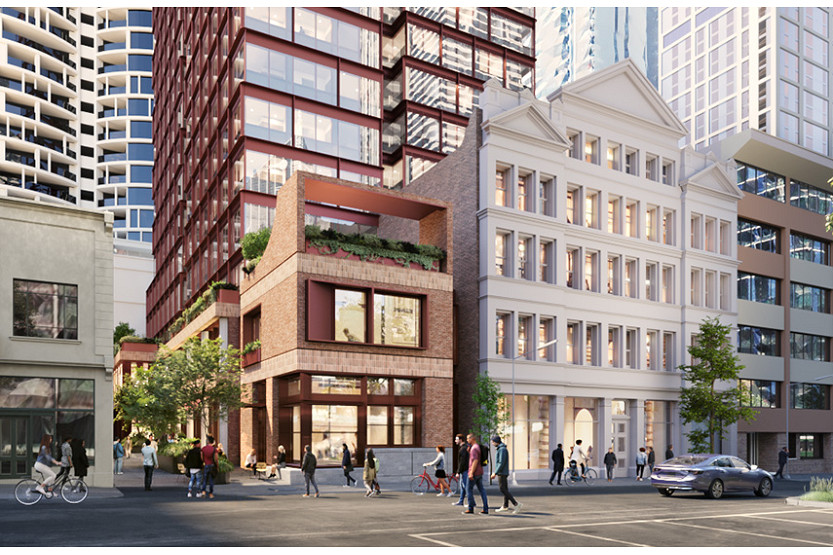
How purpose-built student accommodation outperforms private rental in Melbourne
Before the first lecture, whether arriving from regional Victoria or from abroad, a student in Melbourne has to find somewhere to live. A private rental looks like the obvious path. What it actually requires comes as a surprise.
Read More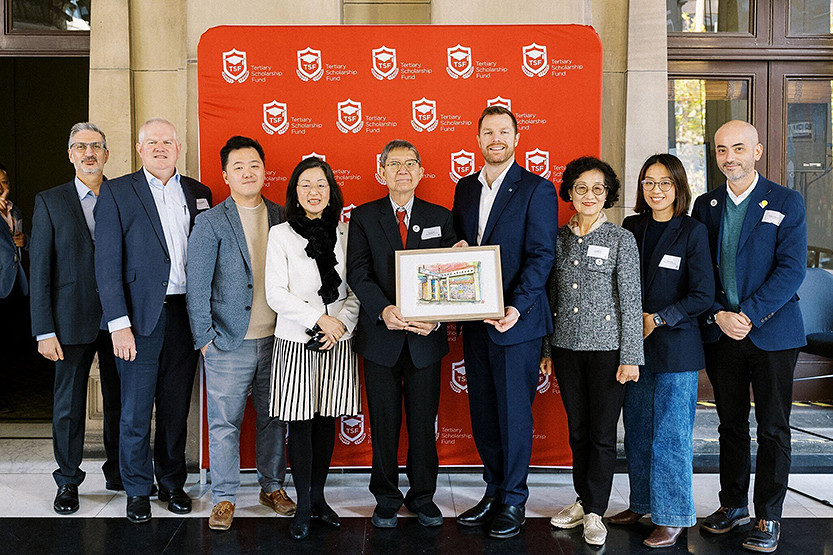
Mekong owner’s scholarship fund marks 20 years and opens 2026 applications
A Swanston St restaurant owner who arrived in Australia with little more than determination has spent the past two decades quietly building one of Melbourne’s most enduring scholarship programs.
Read More
Australia tightens the screws on international students
One in three international students applying to an Australian university was rejected in February 2026. That 32.5 per cent refusal rate is the highest monthly figure recorded in 21 years of tracking data, and it is no accident.
Read More
Who actually pays Victorians the most for solar

EastEnders to host Lord Mayor and Deputy Lord Mayor

 Download the Latest Edition