
Heritage strategy scrap exposes deep cracks in Melbourne council chamber


What should have been a routine tick-and-flick adoption of the City of Melbourne’s new Heritage Strategy became, on February 17, a 75-minute rolling debate that exposed just how fractured this council chamber has become.
The strategy, titled “Stories of People and Place”, is designed as a 10-year reset in how the City of Melbourne thinks about heritage. It deliberately shifts the frame beyond “built form” to the broader, lived story of the city, with five stated priorities: stewardship, distinctive places, Aboriginal heritage, “powerful experiences of our multicultural city”, and sustainability and environment.
It is an ambitious piece of work. The strategy describes heritage as “the things people care about and want to hand on to the future”, and explicitly embraces both tangible and intangible heritage, including festivals and activities such as NAIDOC Week and Lunar New Year events.
It has also been heavily consulted. As Deputy Lord Mayor Roshena Campbell told the chamber in her right of reply, the engagement program drew thousands of views and hundreds of survey responses, with a mix of in-person and online participation. The consultation report itself points to a broad mix of stakeholders and targeted “walkshops”, including business stakeholders, that explored topics like laneways, adaptive reuse, climate resilience and “Aboriginal Melbourne” storytelling in the urban landscape.
And yet, after all that, the meeting’s flashpoint was not a complex planning lever, nor an argument about where heritage should sit in development decisions. It was a single line, in a section titled “Aboriginal heritage and the future of the city”, that states: “Melbourne is an Aboriginal city.”
Cr Owen Guest lit the fuse. In remarks that framed the strategy as overly weighted toward Aboriginal heritage, he questioned the consultation process and argued the emphasis was “disproportionate”, claiming he did not believe Melbourne was an Indigenous city. That line of argument was quickly joined by Cr Gladys Liu, who sought to amend the document to replace “Melbourne is an Aboriginal city” with “Melbourne is a multicultural city.”
Then the debate unravelled.
The amendment morphed in real time. After Cr Dr Olivia Ball offered a compromise to combine the phrasing, Cr Liu and Cr Rafael Camillo withdrew the initial wording and substituted a new line: “Melbourne is a multicultural city respecting Aboriginal heritage.” What followed was less a careful discussion of language and more a visible test of numbers, discipline and temperament.
Lord Mayor Nick Reece opposed the change, arguing that recognising Melbourne as an Aboriginal city was not a denial of multiculturalism, but an acknowledgement of Traditional Owners and tens of thousands of years of connection to Country. Cr Andrew Rowse reached for analogy, calling it a false choice: Melbourne can be “a city of art” without ceasing to be “a city of sport”.
Cr Guest pushed back harder, claiming the phrasing would lead to prioritisation of one group “over and above” others and warning of “one thing leads to the next”, including jobs and decisions made in closed sessions.
It was at this point that the meeting began to resemble less a deliberative forum and more an argument searching for a landing place.
Cr Camillo attempted to quiz fellow councillors mid-debate, repeatedly testing what questions the chair would allow. The meeting’s chair Cr Campbell, at times, struggled to keep the process tight, shutting down lines of questioning that were clearly sliding into personal views rather than procedural clarification. Cr Camillo punctuated Cr Dr Ball’s contribution with a “point of order”, forcing Cr Campbell to intervene.
Then came the moment that most obviously captured how quickly the discussion had turned. Cr Phil Le Liu asked the Lord Mayor whether, at Sunday’s Chinese New Year celebrations, he would tell the Chinese Australian community that the Aboriginal community was “more important” than them. Cr Reece responded bluntly: “No.” The exchange landed with the thud of a culture war talking point rather than a heritage policy question.
By the time the amendment was put, it was effectively a proxy battle over values, identity, and political positioning. It failed.
But the damage was not limited to the four councillors who voted for it. The sharper story was how rapidly the debate became heated, and how easily the chamber was pulled off the actual policy in front of it.
Several councillors called that out explicitly.
Cr Mark Scott’s intervention was the night’s clearest expression of institutional frustration. He apologised to the community watching, describing the on-the-fly “editorial” approach as unprofessional and embarrassing, and labelling the claim that Aboriginal heritage was “disproportionate” as “completely false and ridiculous”, given the scale of history being acknowledged.
Cr Davydd Griffiths said he was “genuinely at a bit of a loss” that the chamber was even having the argument, pointing out it took until well into the document to reach the contested line. He also framed “respect” for Traditional Owners as a “low bar”, and yet one the council was still fighting over.
Even beyond the cultural flashpoint, the meeting revealed other fault lines. Earlier, the chamber had already been manoeuvring around an alternate motion relating to a commitment to develop guidance on when “economic, social or environmental considerations will outweigh heritage objectives”. That debate was technical, but it was also telling: councillors were already testing how the strategy might be used, and how much discretion it might create for heritage trade-offs.
Outside the chamber, the submissions underline a practical concern that should have remained front and centre: implementation. In a submission EastEnders president Dr Stan Capp supported the strategy but urged the council to treat it as a “living document” and to strengthen governance and resourcing, including a Community Heritage Committee and even a dedicated General Manager of Heritage.
That is a serious proposition about how the strategy is carried, monitored and enforced, and it speaks directly to the community’s long-running anxiety that heritage policy is only as strong as the council’s follow-through.
Instead, the meeting became an uncomfortable preview of what year two of this term may look like.
This is not the first time the council has drifted into marathon debate that critics describe as performative. Late last year’s injecting room debate, widely seen as a political stunt given the state government has ruled out a CBD facility, sits in the background as an example of how the chamber can burn time while achieving little. Add in the procedural delays and protracted scrutiny that have characterised other meetings, and the heritage debate begins to look less like a one-off and more like pattern formation.
None of this is to say councillors should not test language or challenge assumptions. But there is a difference between scrutiny and spectacle. On February 17, a significant policy shaped by extensive work and consultation was briefly reduced to a symbolic fight, and in doing so, the chamber displayed a deeper division: a conservative grouping willing to contest the framing of Aboriginal heritage, up against a larger bloc determined to hold the line.
In the end, the strategy passed. The amendment failed. The city moves on.
But for anyone who cares about the City of Melbourne’s reputation as a serious governing body, the bigger takeaway is harder to ignore: on a night that should have showcased patient policy-making, councillors instead served the public an avoidable circus, and a blight that many Melburnians will hope is not repeated. •
Buy our Journalists a coffee
Support our dedicated journalists with a donation to help us continue delivering high-quality, reliable news


Related Articles

Little Bourke St hotel changes backed
A long-approved hotel development on Little Bourke St is a step closer to construction after City of Melbourne councillors unanimously backed amendments to the planning permit at their July 21 Future Melbourne Committee meeting.
Read More
Who actually pays Victorians the most for solar
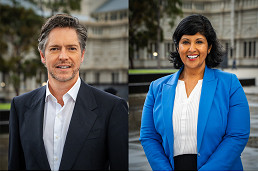
EastEnders to host Lord Mayor and Deputy Lord Mayor

 Download the Latest Edition