
“Man on a mission”: Nick Reece reflects on his first year as Lord Mayor
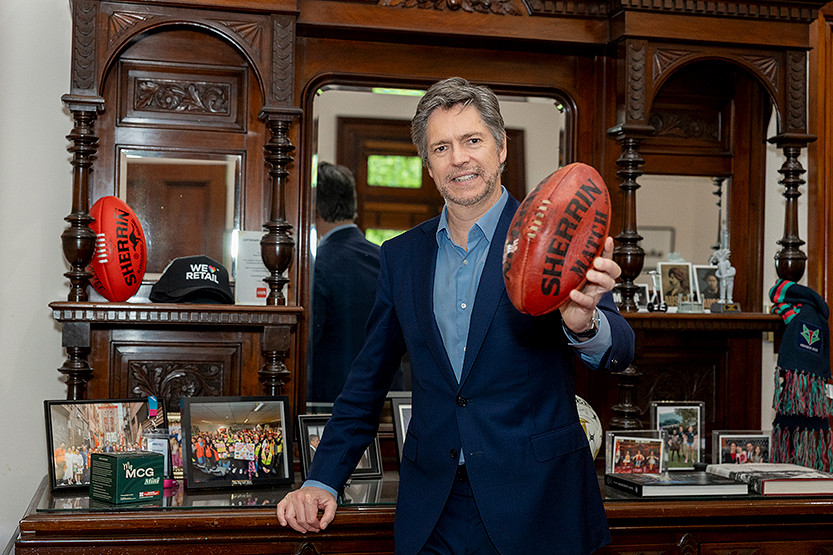

If Sally Capp’s lord mayoralty was defined by megaphone energy and crisis management, her successor Nick Reece is settling into a different groove: quietly trying to reshape the city around a big agenda that’s only just getting started.
One year into the job, Cr Reece still says he has to “pinch” himself.
“I just can’t believe that I’ve been given the opportunity to lead the city,” he told CBD News. “It’s a huge honour. It’s an incredible privilege. I feel truly humbled … I do feel like I’m a man on a mission. I don’t want to waste a day.”
It’s been a hard city to lead. Cr Reece inherited a council still emerging from the trauma of COVID, a tighter budget, and a chamber that’s far less collegiate than the one that backed Capp’s “city-saving” interventions.
The Lord Mayor went to the 2024 election with what he calls “a very ambitious agenda with a level of policy detail that had never been seen before in a City of Melbourne election” – everything from converting office towers to housing, to extending the free tram zone and establishing a seafood precinct in Docklands.
Twelve months on, his three biggest “wins” say as much about the constraints he’s working under as they do about progress: the rollout of Community Safety Officers (CSOs), delivering the council’s first underlying surplus in five years, and opening the Make Room homelessness facility – a flagship project that began under the previous council.
On CSOs, Cr Reece is unapologetic about pushing into territory many argue should remain the state’s responsibility.
“I heard loud and clear from the community the concerns about safety,” he said. “It’s a situation which is unacceptable to me as mayor. So, we have taken the bold step of putting our own City of Melbourne CSOs out on the street.”
The move has been controversial with some advocates, but Cr Reece said early feedback from traders and Victoria Police was positive. “We’ve worked hand in glove in developing the policy … there have already been a number of incidents across the city where [the CSOs] have worked closely with Victoria Police. We’re deploying resources where they are most needed – out on the streets.”
Financially, Town Hall is also edging back into the black. The 2024–25 accounts produced a slim $589,000 underlying surplus – “a significant budget milestone”, according to the Lord Mayor, albeit what some observers have previously dismissed as little more than a rounding error.
People want to know that Town Hall and City of Melbourne has been well run,” Cr Reece said. “That surplus shows that it is. It gives confidence to the community that the city is being well administered and that we are running balanced budgets.
The other key milestone, Make Room in Little Bourke St, has finally opened its doors to people experiencing homelessness.
“It was an enormous sense of pride to see Make Room open,” Reece said. “Obviously that was an initiative from the previous term, but I was very much involved in that. To see that now open and delivering homeless services is wonderful.”
A second, related project is now planned for a council-owned car park in West Melbourne, tackling another slice of the housing crisis. Reece argues the pairing of CSOs on the streets and housing projects in the background reflects a “balanced approach”.
“With the CSOs, we’re providing a strong security and safety presence,” he said. “But through Make Room and the new affordable housing initiative in North Melbourne, we also recognise that you need to have a caring approach as well and put a roof over people’s heads … I do think we’re getting the balance right.”
A reflection of his big ambition was the gathering of 1000 people at Melbourne Town Hall for the 2050 Melbourne Summit in May; an event he described as one of his proudest achievements – “it was that kind of reset moment that Melbourne needed.”
He’s also shown he’s prepared to pull the plug when things aren’t working. The decision to axe shared e-scooters – after years of cluttered footpaths and mounting complaints – was one of the most decisive calls of his Lord Mayoralty.
“That took courage,” Cr Reece said. “When you’re up against Uber and Neuron and the big global operators … but it was a joke what was happening. They were scattered around the city like litter or tripping hazards. So, I got rid of them. Not easy to do, but Melbourne’s better for it.”

Next on his radar are e-delivery bikes: “They have a very important role to play … but we’ve got to get a better system in place around where they park and how they move around our city.”
Metro moment and a city of precincts
Where Cr Reece’s optimism really fires is when he talks about 2026 and the opening of the Metro Tunnel – the project he believes will define the rest of this council term.
“2026 is going to be a hugely exciting year for Melbourne,” he said. “For many years, Melbourne has been what feels like a giant construction site. Now with the new metro stations opening, we are going to see Melbourne in all its glory – in fact, better than that. We’re going to have a Melbourne which is connected in a way it’s never been before.”
“We have people who work here at the City of Melbourne who have never known Melbourne without these construction sites. Now to have them opening and an extra half a million people coming into the city each week is going to be unbelievable.”
Town Hall is already planning how each precinct can ride that wave.
In Southbank, Cr Reece points to the long-awaited new library and community centre, and finally getting sports facilities started at the Kings Way undercroft.
“It’s going to be a state-of-the-art library, expanded community centre,” he said. “And I’d be expecting we’ll be starting work on the new sporting facilities in the Kings Way undercroft.”
In Docklands, he promises “the wheel will spin again” and hints at “exciting announcements around waterfront landscaping” – part of a broader “Garden City” push that will also see high-profile landscape designer Paul Bangay give the CBD and Docklands a green “glow up”.
The CBD itself will benefit from new metro stations at Town Hall/City Square and State Library, a retail renaissance anchored by the likes of Mecca, JD Sports and the arrival of Japanese giant Muji in 2028, and more greening and lighting in laneways.
“Not since Daimaru in the 1990s has Melbourne seen Japanese retail on this [Muji] scale,” Cr Reece said. “They’re opening one of their biggest stores outside Japan here in Melbourne. It’s going to be awesome.”
In Carlton, Cr Reece lights up at the mention of La Mama and the new Carlton Writers’ Festival.
“I love community theatre. I love community media … to see [La Mama] back and launching their 2026 program was brilliant,” he said. The festival, backed by council and Readings’ Mark Rubbo, is “essentially a new arts festival for Carlton … exactly the sort of thing I’m really into”.
Across North and West Melbourne and Kensington, he points to the newly opened Kensington Rec Centre and a wave of new pocket parks and greening funded in this year’s budget.
“West Melbourne and North Melbourne will be the biggest beneficiaries,” he said. “Pocket parks, new greening, green walls, green laneways – that’s the big thing coming through West Melbourne and North Melbourne.”
A larrikin mayor with work still to do
Cr Reece has brought a more understated, occasionally larrikin style to the role, happy to “ham it up for a good cause” with slam dunks and quirky one-liners.
He’s approachable and visible – particularly at community events – but he faces a long to-do list: rebuilding consensus on contentious bike lane changes, keeping the city safe while respecting rights, driving real change in Docklands, the Southbank riverfront and Arden-Macaulay, and making progress on big structural promises like office-to-housing conversions and a bigger free tram zone.
Yet, if there’s a thread running through his first year, it’s belief in Melbourne’s ability to bounce back.
“Melbourne does comebacks better than any city I know of,” Cr Reece said. “In 2026 we’re going to see our city at its best.” •
Buy our Journalists a coffee
Support our dedicated journalists with a donation to help us continue delivering high-quality, reliable news


Related Articles
QVM renewal finances: the numbers aren’t the only problem
The latest financial reckoning for the Queen Victoria Market renewal has again exposed a problem that has followed the project almost from the beginning: the City of Melbourne has never been particularly good at explaining how it is paying for it.
Read More
Council backs one-year multicultural advisory committee pilot
The City of Melbourne will establish a multicultural advisory committee to strengthen community input into council policies, services and communications after councillors unanimously endorsed a one-year pilot on August 4.
Read More
QVM review process only raising further questions
The City of Melbourne’s terms of reference for its independent review into Queen Victoria Market Pty Ltd have landed, but they may only deepen the governance question that has surrounded this process from the beginning.
Read More
Who actually pays Victorians the most for solar
EastEnders to host Lord Mayor and Deputy Lord Mayor

 Download the Latest Edition