
Prudent on paper: what Melbourne’s draft budget really says
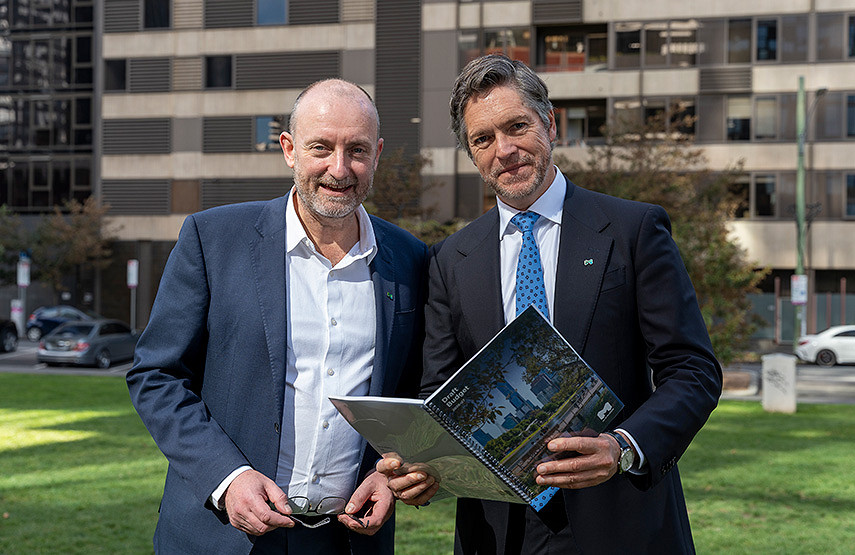

The City of Melbourne’s 2026-27 draft budget, released for public consultation on March 31, is a more disciplined and defensible document than some may have expected in the current climate.
At $804.8 million, it delivers a third straight underlying surplus of $1.2 million, holds the line on broad service cuts, and sets out a path for debt to fall to $60 million by the end of the current council term and to zero by 2032. It is, on balance, a financially prudent budget. But it is also one that gets there by leaning heavily on timing, particularly in capital works.
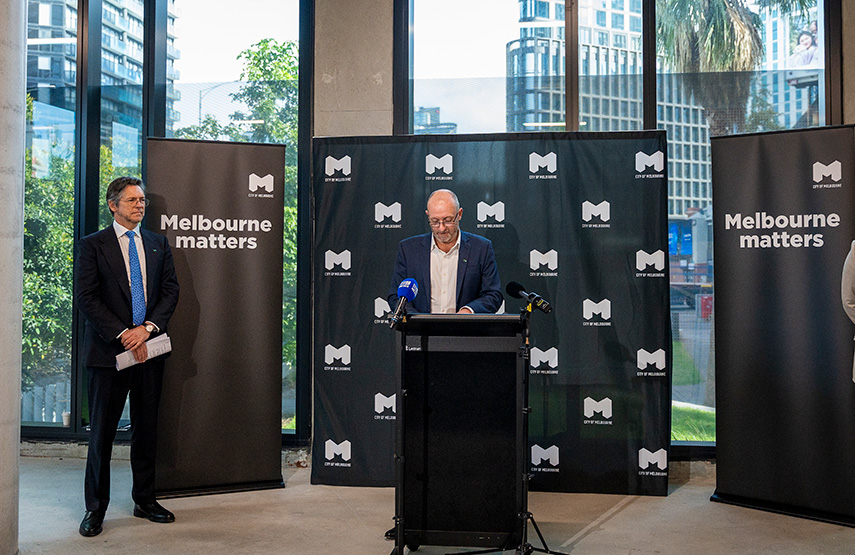
Unveiled at the future Southbank Library at Boyd Community Hub, itself the beneficiary of a $2.8 million fit-out allocation, the budget is full of politically clear priorities: safety, cleaning, greening, activation and business support. The council says it will spend $175.1 million on capital works in 2026-27, including $35 million on Queen Victoria Market renewal, $26.4 million on its Garden City push, and $73.2 million across safety and cleaning related programs.
The key point, however, is that this is not an expansive budget in the traditional sense. It is a careful one.
Finance chair Owen Guest, who the Lord Mayor described as the council’s “fiscal hawk”, made that plain in his remarks to media, arguing that while expenditure growth was disappointing, it was supportable where it funded visible safety, cleaning and outreach. More tellingly, he confirmed that the council had improved its debt outlook not by scrapping major programs, but by pushing parts of the capital program further out. That is the central trade-off in this budget: fiscal stability now in exchange for slower delivery later.
The budget papers themselves back that up. The capital works program falls from $180.2 million forecast in 2025-26 to $175.1 million next year, then drops further to $161 million in 2027-28, $145.6 million in 2028-29 and $135.3 million in 2029-30. The document says this is about “stabilising” capital works so the program is sustainable over time, but the practical reality is that future councils may inherit projects that are not only delayed, but potentially more expensive to deliver in a high-cost construction environment.
Cr Guest insists no services have been sacrificed. That appears broadly true. The operating side of the budget continues to fund libraries, early years, maternal and child health, youth, sports, homelessness outreach, food rescue, grants and major events. Staff numbers also rise modestly from 1580 forecast full-time equivalent positions to 1621 next year.
That is the good news.
The harder question is whether the council is simply storing up cost pressure for later. Infrastructure inflation is still biting. Materials and services are budgeted to rise 9.6 per cent to $252.7 million, contract payments alone are up 11.8 per cent, and employee costs rise 6.4 per cent to $234.1 million. In that context, delaying capital projects is financially understandable, but not without risk.
On rates, this budget confirms what many expected after last year’s widely promoted “freeze”. In reality, the 2025-26 three per cent rebate merely deferred the increase while preserving a higher base. This year, the council applies the full 2.75 per cent state cap, lifting rates income and charges materially. Total rates and charges are forecast to rise from $394.4 million to $429.4 million, with the waste charge alone increasing by 18.2 per cent as a cost recovery measure. Residential general rates rise marginally, while non-residential rates rise from 4.6965 to 4.8049 cents in the dollar.
There is a similar story with parking. Lord Mayor Nick Reece’s election pitch was built partly on holding down costs for motorists, yet this budget introduces the first increase in on-street parking fees in eight years. The rise is modest, between 20 and 30 cents an hour, but it is still a notable break with the political message. User fee revenue from parking is projected to climb from $65.2 million to $70.3 million, helped by both price and continuing kerbside management reforms.
Where the budget is most unapologetic is safety and cleanliness. This is again the defining theme.
The council will double its Community Safety Officer workforce from 11 to 22, supported by an extra $1.7 million, while also expanding the Safe City camera network by up to 150 additional cameras. Alongside that sits the new homelessness and outreach push, with $2.3 million allocated to help rough sleepers and vulnerable people, including for the first time dedicated support for those facing complex mental health challenges. The council is also budgeting $34.3 million for cleaning, graffiti removal and related city amenity work.
This is clearly where Cr Reece believes the political and civic need lies, and he is probably right. After years of safety concerns in the CBD, this is a budget that tries to respond directly to the public mood.
It is also a budget increasingly shaped around pedestrianisation and city movement. Funding is included to refresh Flinders Lane between Swanston and Degraves streets, explore an extension of Bourke Street Mall, and continue broader work on making the little streets more pedestrian-friendly. At the same time, there is $14.7 million for road safety initiatives, footpath renewal and cycling infrastructure. But the cycling component remains comparatively subdued: beginning work on Exhibition St, continuing Queensberry and Rathdowne streets, and advancing design and engagement on Queens Bridge and Flinders streets. That is not nothing, but neither is it transformational.
The same can be said of adaptive reuse. The budget contains policy work around Retrofit Melbourne and enabling underused office buildings to be repurposed, but the breakthrough many hoped for has not yet arrived. Cr Reece acknowledged as much in his comments to CBD News, saying the issue had proven “a harder nut to crack” than first thought, while flagging more from the state government soon. The budget itself speaks of reviewing floor area uplift settings and implementing priority opportunities from the scoping study, but not yet of any major city-shaping package.
For Southbank, the symbolism of the launch venue mattered. The new Southbank Library and Boyd Community Hub fit out is one of the clearest examples of a project actually moving. Works at the Kings Way undercroft, part of the City Road Master Plan, are also progressing.
But for the city as a whole, the budget’s bigger story is this: Melbourne is getting a budget that is sober rather than flashy, and one that is trying to prove it can still run a surplus, reduce debt and maintain services in a tough environment.
That is a respectable achievement. But the price of that prudence is now much clearer. This budget protects the operating core of council yet does so by stretching the capital program over a longer horizon. Whether that proves wise or costly will become clearer in the years ahead.
Consultation is open until April 28, with a special Future Melbourne Committee hearing to be held on May 12 before final adoption on May 26.
Buy our Journalists a coffee
Support our dedicated journalists with a donation to help us continue delivering high-quality, reliable news


Related Articles
Council backs AI push, framing moment as Melbourne’s “fork in the road”
The City of Melbourne has backed a new push to prepare the city for the workforce disruption and economic opportunities created by generative AI, after councillors supported a motion from Cr Andrew Rowse at the Future Melbourne Committee on May 5.
Read More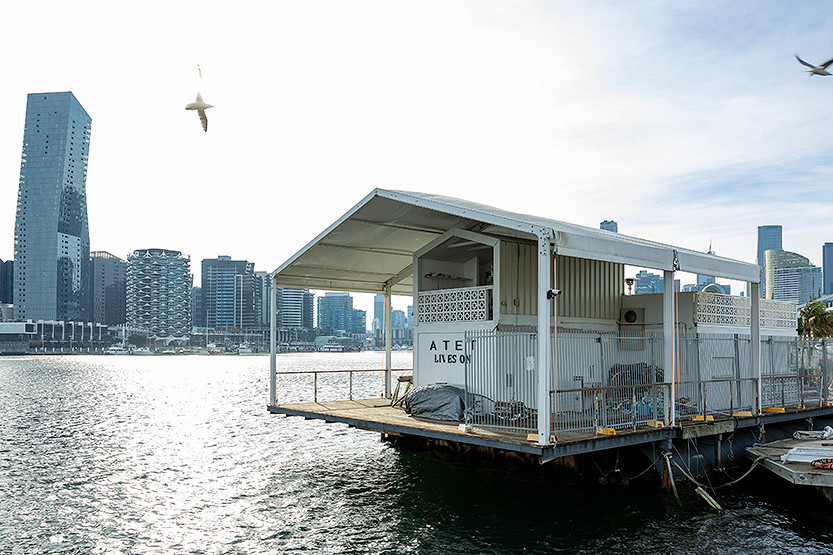
ATET legal mess lays bare major questions for the City of Melbourne
The $7 million Supreme Court fight over Docklands floating events space ATET has now reached the point where the City of Melbourne can no longer plausibly present it as just another difficult regulatory dispute.
Read More
CBD budget doubles down on safety, support and a more walkable city
The City of Melbourne’s latest budget makes clear that, for the CBD, safety and street-level confidence remain the council’s central political and civic priority.
Read More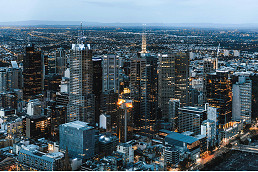
Council backs AI push, framing moment as Melbourne’s “fork in the road”
Kilkenny Inn site set for new chapter as council backs bigger residential tower

 Download the Latest Edition