
Unlocking the artist within: Lyn Gazal tells the secret of drawing well …
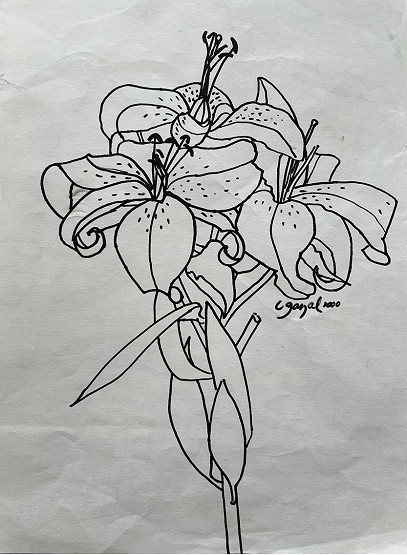
I’ve always been able to draw. As a youngster, it was a genuine puzzlement. Why could I draw, and my classmates couldn’t? Two of my siblings could draw, but the other three couldn’t. Hence my bewilderment!
I had a way of seeing the world that I thought everyone had. When I read, I see images in the stories but when I draw, I see the many parts that made up the whole.
Back in the mid 1950s, when I was in primary school learning to write, I savoured the art of copperplate script. We learnt a modified form but still highly decorative with formal slanted letters. There were lots of curvy capitals and the five-year-old me revelled in producing the thick and thin combinations of line. The letters were no longer arbitrary symbols that meant phonetic sound to enable reading; they were more than that and my drawings mirrored that same quality of descriptive purpose.
Years later, having completed a Fine Art degree and further studies in education, I embarked on a 40-year career in teaching Art and Design and the Creative Technologies.
Drawing is a learnable teachable skill. As long as you have average eyesight and average eye hand coordination you can learn to see like an artist.
Our brain enables us to do this by using the special qualities of both the right and the left hemispheres. These have different modes of interpreting the world. The right, when engaged in drawing, can accurately represent the relationship between objects, including edges, negative spaces, (the area around objects), and proportions rather than relying on verbal labels or prior knowledge. This allows for more objective perception of form and space. When drawing, the artist makes a mental shift to gain the two-fold advantage of that slightly altered mode of awareness to see things in a different way.
I instruct students to remain silent and not to name the subject matter or parts that make up the whole. To draw, one must observe using spatial perception.
When you learn to see the abstract elements laid bare, you enter the right hemisphere what Iain McGilchrist refers to as “The Master”. You have entered an altered state of awareness, which allows you to lose time consciousness, becoming relaxed and able to really concentrate on the subject. Words recede from the conscious mind, and you experience a relaxed, pleasurable yet activated mind.
When teaching drawing, I believe the key is to set up conditions that shift students to a different mode of information processing, something akin to seeing well through a slightly altered state of consciousness.
A favourite quote from Augustus Rodin: “opening the eye to the lovely language of forms to express yourself in that language.”
In the expanded edition of Iain McGilchrist’s 2009 book The Master and His Emissary, The Divided Brain and the Making of the Western World, the author describes the division of labour between the two hemispheres. This divide is what Betty Edwards draws on in her book Drawing on the Right Side of the Brain. I have used this book extensively throughout my teaching career for both high school students and adults alike. I highly recommend both books.
Betty Edwards’ book gives you a step-by-step set of activities which will direct you towards unlocking your hidden artistic talent. She has written a number of other books enhancing her original ideas.
Hope this gives you the enthusiasm to take steps towards unlocking the artist within.
Coming up: Annual General Meeting (AGM) October 2, Kelvin Club, 6 for 6.30pm
Every year at the AGM, a new committee of up to 12 persons is voted to run the Residents 3000 group. This year a few positions are expected to become vacant. If you have skills in the typical roles required of a community association and would like to contribute your time, to helping invigorate our organisation adding new ideas and fun activities for our current and new members, applications are currently being sought. Being a committee member is a good way to get involved closely with a vibrant community that contributes to the wellbeing of the central city residents.
Typical sub-committees
- Membership and sponsors
- Communications
- Events organisation
- News hounds
- Website and mailing list maintenance
Although we need to go through the formal processes that occur at an association AGM, we try to make the event efficient allowing members and guests the time for discussion and socialising in the convivial surroundings of the Kelvin Club. According to long-standing tradition, we usually welcome Melbourne’s Lord Mayor Nick Reece at our AGM but this year, it will be deferred to a future meeting.
More information and updates can be found via our website: residents3000.org.au. In the meantime, think about your contribution to making things even better for residents of Melbourne’s CBD precinct whether it be on the committee or as a member. •
Buy our Journalists a coffee
Support our dedicated journalists with a donation to help us continue delivering high-quality, reliable news

Related Articles

Healthy, happy you
CBD residents should be a healthy lot. We walk across the city, enjoy great restaurants, have access to parks, gyms, yoga, tai chi, dance, sport and world-class medical services. But is that enough? What does the science say about staying well?
Read More
Is your high-rise building safe and secure?
For residents living in Melbourne’s CBD high-rise apartments, the building you call home is far more than four walls and a roof.
Read More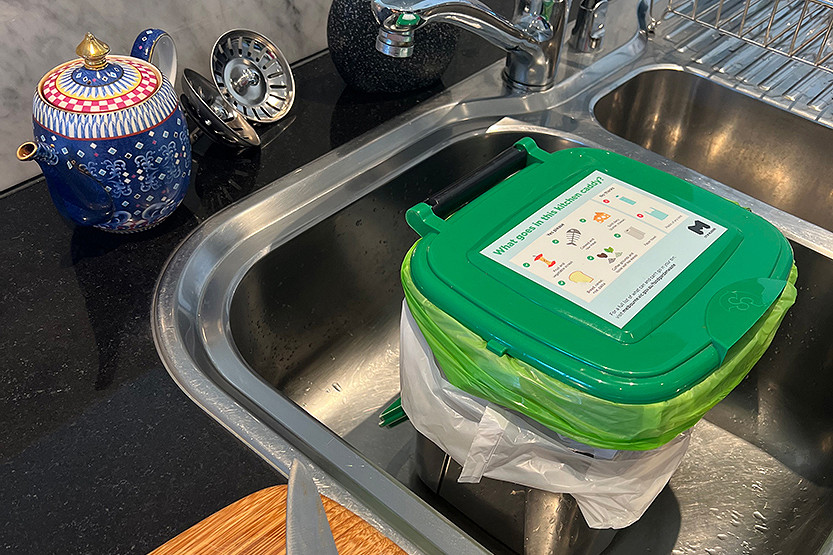
FOGO – for high-rise
CBD residents can now improve their recycling by applying for a FOGO bin from the City of Melbourne. What is the secret of success?
Read More
Who actually pays Victorians the most for solar

EastEnders to host Lord Mayor and Deputy Lord Mayor

 Download the Latest Edition