
Will the real “Melbourne” please stand up
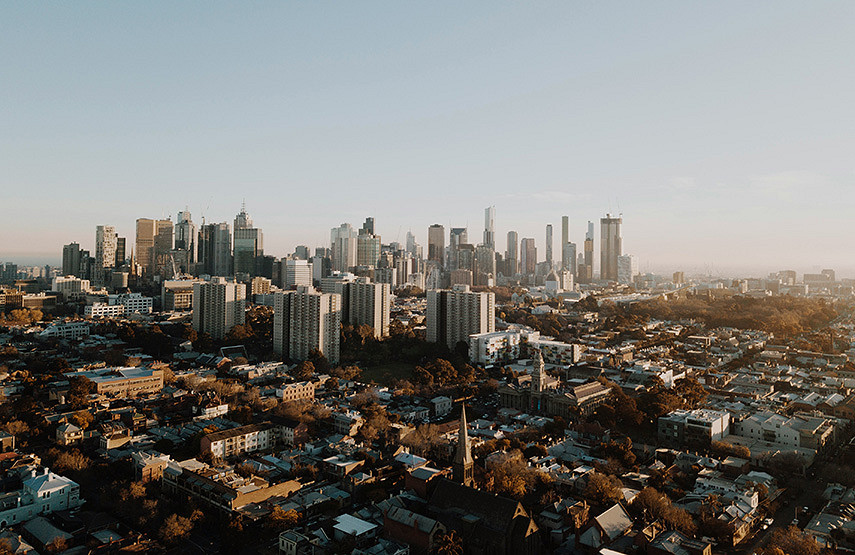
The recent awarding of “Melbourne” as the World’s Most (put in what you like) City, this time by Time Out was based on a survey of 24,000 across 50 cities. On average this reflected the views of 160 people in each city plus 100 Time Out experts!
The ranking of Melbourne as the “World’s Best City” however did not relate to the City of Melbourne despite the self-congratulatory announcement by the Lord Mayor’s office and the mainstream media.
It was an award to the wider metropolitan Melbourne region of 5.5 million and the neighbourhoods, suburbs and lifestyle offerings of 31 city governments. It was not an award for the City of Melbourne and its population of 200,000.
However not to be daunted by the paucity of the data-based decision nor its metropolitan recognition it was the Lord Mayor of Melbourne who celebrated the award, and the achievements of the City of Melbourne. In the Town Hall media release the Lord Mayor praised the success of the Grand Prix which happens to be in the City of Port Phillip.
The award is reflective of the problem that confronts the delineation of the City of Melbourne from metropolitan Melbourne.
So, why has “brand” become the default for Melbourne and not governance? In fact, “Brand Melbourne” has become a marketing coup for the CBD, the municipality and the even the state government each basking in the Melbourne brand.
The confusion is due to a lack of a governance structure for the 31 municipalities and their collaborative role in metropolitan region.
While some prefer to focus on “brand”, an outcome of saturation marketing, I believe we need to address the question of the governance of metropolitan Melbourne.
The 2050 Melbourne Summit held in May last year at the Melbourne Town Hall had some participants asking, “whose Melbourne?”
The confusion was evident in the 2050 report that failed to define the issues or provide timelines and responsibility for their resolution at a CBD, municipal or a metropolitan level.
In April 2016 Shane Scanlan, the founding editor of sibling publication Docklands News, wrote in an opinion piece that still has resonance and meaning a decade later. Titled “Will the real Melbourne please stand up” it states “The ambiguity surrounding the place name “Melbourne” is a continuing challenge for those who live and work within postcode 3000. There are three Melbournes, which are often incorrectly interchanged with each other.
We’ve got a wider metropolitan Melbourne, the municipality of Melbourne and the single postcode 3000 Melbourne. Without these extended descriptors, it is often difficult to know which Melbourne is being spoken of.
So why do we not have a Greater Melbourne Council like other like other governed and populated urban regions as does London, Paris, Vienna, Vancouver and Toronto. Why do we not have a City of Hoddle that distinguishes the City of Melbourne from the 31 city councils that comprise metropolitan Melbourne?
The ambiguity suits Lord Mayors of Melbourne but does not sit well with those who call a governance approach that will build the infrastructure and planning need for housing, climate change, mobility, the economy and employment for future generations.
So, will the real “Melbourne” please stand up!
Australian capital city populations
- Sydney: 240,000
- Melbourne: 190,000
- (Darwin 86,000)
- Hobart 56,000
- Perth 35,000
- Adelaide 30,000
Total: 640,000
(Brisbane: 1.3m)
World cities
- London: 10m
- Paris: 2m
- Vienna: 2m
- Madrid: 4.4m
- Rome: 2.8m
- Toronto: 7m
- Vancouver: 3m
- Auckland: 1.7m
- Metro Melbourne: 5.5m
Martin Brennan is a member of the Carlton Residents’ Association and former City of Melbourne councillor.
Buy our Journalists a coffee
Support our dedicated journalists with a donation to help us continue delivering high-quality, reliable news


Related Articles
Restoring Melbourne as the most liveable city in the world
A jewel in the crown – a title once afforded to the world’s most liveable city. Melbourne had broken its own record and was the first city ever to win the title for seven consecutive years.
Read More
Council backs AI push, framing moment as Melbourne’s “fork in the road”
Kilkenny Inn site set for new chapter as council backs bigger residential tower

 Download the Latest Edition