
Before we put another tower on Melbourne’s front door, we should ask who gets to decide
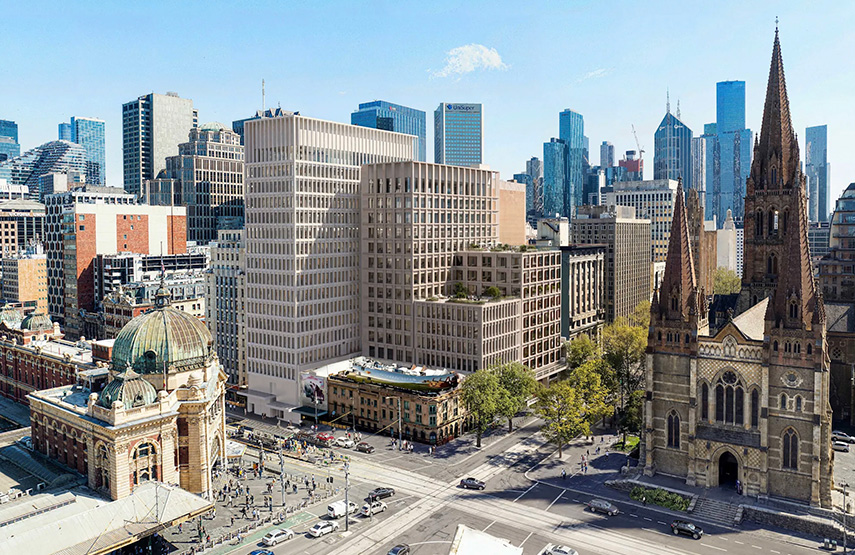
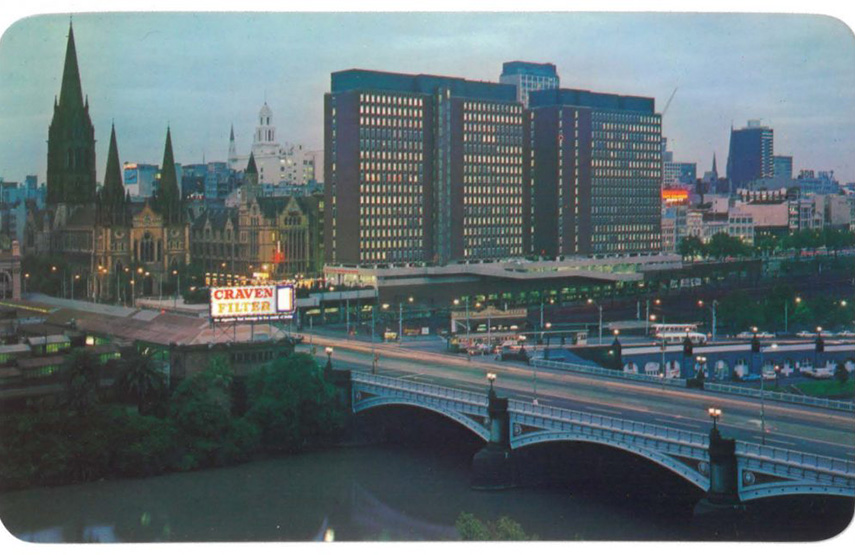
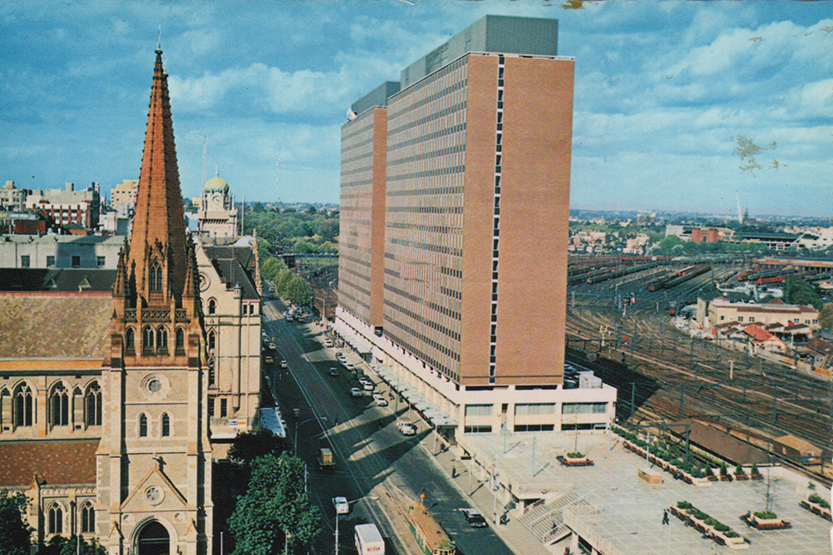
Thirty years ago, Melbourne made a planning decision that would fundamentally reshape its civic landscape. It chose to tear down two office towers.
Bulky and domineering, the Princes Gate Towers – better known as the Gas & Fuel buildings – stood between Swanston St and the Yarra River, boxing in what many regard as Melbourne's front door.
Their removal in 1997 made way for Federation Square and reopened one of the city's defining vistas: the sweep from Flinders Street Station and St Paul's Cathedral across Princes Bridge and the river beyond.
The decision created not only a new civic precinct, but also what is arguably Melbourne's most recognisable skyline – one that, literally, appears on postcards.
Today, Melbourne is facing a remarkably similar planning decision, but in reverse.
Developer Lendlease is seeking ministerial intervention to approve a 76-metre office tower above the new Town Hall Station on the corner of Swanston and Flinders streets, reintroducing a level of height and visual bulk to Melbourne's southern gateway that has been absent for almost three decades.
This is not just another development site.
The intersection of Swanston and Flinders streets is Melbourne's civic crossroads – where heritage landmarks, public spaces and city-defining views converge. The precinct is shaped not only by iconic places such as Flinders Street Station, St Paul's Cathedral, Federation Square and Princes Bridge, but by the relationships between them. Together they form Melbourne's symbolic gateway: a place of arrival, orientation and gathering. The openness of the precinct, the landmark views it frames and the experience of moving through it are part of its civic significance.
Indeed, the decision to remove the Princes Gate Towers reflected an acknowledgement that some places carry a civic value that extends beyond their commercial development potential.
Thirty years ago, we chose to prioritise the quality of Melbourne's public realm and the experience of the city over the retention of a prominent office development. The result was Federation Square and the restoration of one of Melbourne's defining civic landscapes.
The decision was never simply about replacing one building with another; it reflected a broader recognition that Melbourne's civic heart derived value from openness, public access and the visual connection between the city and the river.
That is why this proposal has generated such strong public interest.
This week, the City of Melbourne unanimously voted to oppose the application to double the proposed height of the Town Hall Place office tower, despite previously approving a 40-metre development on the site. Councillors argued that the increased height and bulk on such an important civic site were not justified by any corresponding public benefit.
Questions were also raised about the value of adding more commercial office space at a time when Melbourne continues to grapple with record high office vacancy rates and changing patterns of work.
The proposal attracted a record number of public submissions, overwhelmingly in opposition.
Yet despite the council's unanimous position and the scale of community concern, the final decision – due imminently – rests solely with the Minister for Planning. The proposal is not being assessed through the ordinary planning permit process, but through Ministerial exemption.
This proposal, and the process through which it will be decided, raises broader questions about how planning power is increasingly exercised in Victoria.
The planning and political landscape in which the Minister will make her decision is very different of course from the one that existed when the Princes Gate Towers were removed. Victoria faces growing pressure to accommodate population growth, deliver more housing and concentrate development around major transport infrastructure. In response, governments have increasingly focused on speeding up planning approvals and removing barriers to development.
This shift has been accompanied by a growing suite of ministerial pathways that allow projects deemed to be of “state significance” to bypass traditional planning processes, reducing the role of local government and removing opportunities for public objection. Recent examples include the Development Facilitation Program and other fast-track assessment pathways designed to accelerate major projects.
The result is that decisions about some of Melbourne's most significant sites are increasingly being determined through processes that sit outside traditional local planning frameworks.
Melbourne has long struggled to balance growth with community expectations, with progress at times halting under NIMBYish opposition. So, it is understandable that governments are seeking ways to reduce delays and increase development supply. In many respects, the push for greater density around public transport has been a welcome correction to decades of outward expansion and urban sprawl.
But if planning decisions are increasingly concentrated in a single ministerial office, what safeguards should accompany that power?
And if a minister can override locally determined controls, reject the unanimous position of the council and proceed despite significant community concern, on what basis should that decision be made? How should public benefits be assessed, and how will Victorians know they outweigh what may be lost? Most importantly, what role should communities retain in shaping decisions that will define the city for generations?
In the headlong rush to reform the planning system and accelerate development, many of these questions remain unresolved.
Planning has always been an exercise in balance. While concentrating growth around transport infrastructure is a welcome policy course correction, it does not automatically mean that every site should be developed to its maximum commercial potential, particularly where civic value is at stake. Where the Minister chooses to draw that line and find that balance – at Town Hall Station and beyond – remains unclear. So too does the question of who gets to influence that decision.
Thirty years ago, Melbourne decided that the civic value of this landscape outweighed the commercial value of the buildings that occupied it. The result was Federation Square and one of the city's defining civic landscapes.
The Minister now faces a similar question, but in reverse.
Before we rush to return a tower to Melbourne's front door, we should ask not only what we are willing to lose, but who gets to decide.
Dr Rachel Iampolski is a Melbourne-based urban researcher and writer whose work focuses on public space, planning and urban governance.
Buy our Journalists a coffee
Support our dedicated journalists with a donation to help us continue delivering high-quality, reliable news


Related Articles
Will the real “Melbourne” please stand up
The recent awarding of “Melbourne” as the World’s Most (put in what you like) City, this time by Time Out was based on a survey of 24,000 across 50 cities. On average this reflected the views of 160 people in each city plus 100 Time Out experts!
Read More
Open House offers a look behind the city’s closed doors
How purpose-built student accommodation outperforms private rental in Melbourne

 Download the Latest Edition