
Could shipping containers help solve Melbourne’s space crunch?
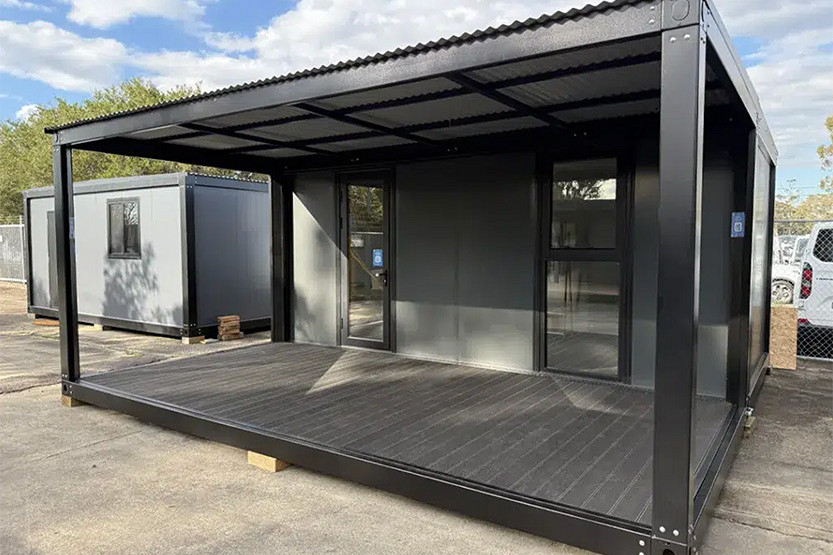
In a city where space is tight, shipping containers are helping Melbourne creatives and small businesses rethink how and where they operate. Here's how.
Key Highlights
- Shipping containers are being used across Melbourne as retail, studio, and activation spaces
- They offer affordable, short-term infrastructure for creative and small business projects
- Many projects begin with requests for more info at shippingcontainerservices.com.au
- Reused containers align with sustainability goals and can be modified for urban settings
Melbourne has never had much spare space – but in recent years, it feels like every square metre is under pressure. Commercial rents are climbing, vacant land is scarce, and temporary projects often face long delays just trying to get off the ground.
For small businesses, artists, community groups, and event organisers, finding affordable, flexible space in the CBD is becoming one of the city’s toughest challenges.
But an unlikely solution is gaining traction: shipping containers.
Once limited to ports and industrial zones, containers are being repurposed for inner-city use – and not just as storage. They’re showing up as retail kiosks, mobile cafés, creative studios, and even compact workspaces. For a city squeezed for room but full of ideas, they might just offer a smarter way to make space work harder.
A city with less space and more demand
Melbourne’s inner suburbs are more active than ever, but that activity isn’t always backed by the space to support it. As small businesses expand and community groups return to in-person events, the pressure on affordable, usable space is hitting a wall – especially in and around the CBD.
Traditional leases are often out of reach for short-term projects or pop-ups, and even temporary permits can involve long wait times or tricky approvals. Meanwhile, unused land sits idle between developments, and activation budgets go underused simply because there’s nowhere to set up.
This gap between space availability and creative demand is where containers are stepping in. They offer a way to occupy space without committing to it, to build something real without breaking ground. For Melbourne’s urban changemakers, that flexibility is becoming more than just convenient – it’s essential.
Containers in unexpected places
It’s no longer unusual to spot a container sitting on a city block – but what’s inside is changing. In Melbourne, containers are being reimagined as everything from hole-in-the-wall espresso bars to art studios, vinyl shops, and barbers. They’re compact, mobile, and quick to set up, making them ideal for locations that can’t support traditional construction or long-term leases.
Pop-up events, night markets, council-run activations – containers are being used to add function to overlooked spaces. And because they’re modular, they can be scaled up or down depending on what’s needed. One container becomes a shop. Two become a gallery. Three and you’ve got a full event setup with room to serve, sell, and host.
They also work well in the in-between spaces – laneways, car parks, or construction-adjacent zones – that might otherwise go unused. It’s this ability to turn almost-anywhere into something useful that’s giving containers a foothold in the inner city.
Affordable infrastructure for creative projects
For independent operators and grassroots organisations, the barrier to entry in Melbourne’s commercial property market is often too high. But containers offer a way around that – a physical footprint without the overheads. Whether it’s a local artist launching a temporary gallery, a florist testing a new suburb, or a startup running a short-term activation, containers give people a place to start.
They’re not just cheaper than bricks and mortar – they’re also quicker to deploy. With basic fit-outs available and delivery handled by the supplier, it’s often a matter of weeks rather than months to get something up and running.
Many of these projects begin with a search for an alternative to traditional leasing, and a lot of that early planning starts with looking at shipping container suppliers. From there, the possibilities tend to expand – custom shelving, lighting, windows, awnings. It’s infrastructure without the long-term lock-in, and that’s proving especially attractive in a city where space is hard to come by.
Reuse, sustainability, and urban compatibility
Melbourne is a city that talks seriously about sustainability – but applying that thinking to built spaces isn’t always straightforward. Shipping containers offer a practical way to align infrastructure with environmental goals. They repurpose existing materials, reduce the need for new construction, and can be modified without major energy use or waste.
For councils and developers with ESG targets, containers present a low-impact alternative that still delivers function and design potential. Many can be fitted with solar panels, passive ventilation, or water-saving systems – making them well suited to urban precincts focused on sustainability and liveability.
They’re also easy to remove, relocate, or adapt. That flexibility means they can be used without permanently altering a space, which is critical in heritage areas, short-term leases, or sites waiting for future development. In a city where every build is under scrutiny, containers offer a way to do more – without doing damage.
Final thoughts
Shipping containers aren’t a silver bullet for Melbourne’s space problems – but they’re proving to be one of the more flexible tools available in a city that needs adaptable solutions.
As short-term infrastructure becomes more relevant for small businesses and creative projects, containers are helping people reimagine what’s possible in tight or temporary spaces.
For those looking to get started, there’s more info at shippingcontainerservices.com.au, where projects often begin with simple ideas and scale into something much bigger. These aren’t just gap fillers – they’re enablers of what comes next.
Buy our Journalists a coffee
Support our dedicated journalists with a donation to help us continue delivering high-quality, reliable news


Related Articles

Builder appointed for major 623 Collins St redevelopment
A builder has been appointed for the long-awaited 623 Collins St redevelopment, with Sterling Global naming Hacer Group as the preferred builder for the $610 million mixed-use project at a March 18 event in the city.
Read More
Before we put another tower on Melbourne’s front door, we should ask who gets to decide

New chapter for State Library Victoria

 Download the Latest Edition