
Council backs infrastructure plan as CBD faces space squeeze
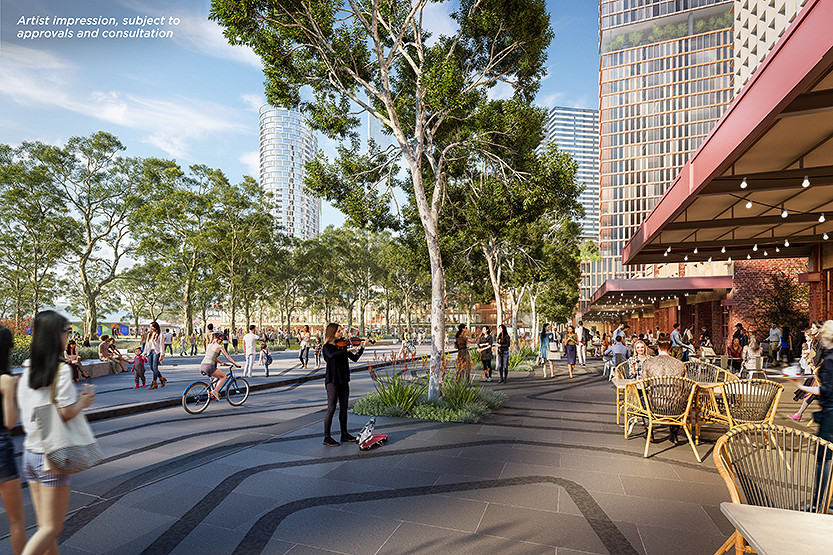

The City of Melbourne has endorsed a new 10-year Community Infrastructure Plan, with the CBD identified as one of the municipality’s most constrained areas for future community space.
The Community Infrastructure Plan 2026–36 was unanimously backed at the June 16 Future Melbourne Committee meeting, setting out a city-wide framework for how the council will plan, deliver, partner and advocate for community spaces over the next decade.
While the plan covers the whole municipality, its central district section highlights the particular challenge facing the Hoddle Grid, where major arts and cultural institutions sit alongside community hubs of varying condition, but also where there are “significant shortfalls” across all categories of community space and limited capacity to expand.
For the CBD, the council’s next four-year pipeline includes planning for open space improvements, the new Market Square and Queens Corner Building at Queen Victoria Market, activation of City of Melbourne buildings in the Bourke St precinct, community space opportunities along the Birrarung as part of future Greenline stages, and advocacy for new primary schools to service the Hoddle Grid.
The plan also identifies longer-term CBD ideas, including a new early years hub, partnerships to deliver recreation and youth spaces, an Aboriginal community hub and better use of civic assets.
City strategy director Jo Cannington told councillors the plan was a “first of its kind” for the City of Melbourne, bringing together the council’s understanding of its community infrastructure assets with demand over time.
She said the plan would help coordinate investment, respond to growth and provide clearer prioritisation about how facilities and services should be optimised.
“It doesn’t actually then go to implementation. That will be the next step,” Ms Cannington said.
“This is our first step on, I think, a really exciting process.”
The plan notes that Melbourne’s residential population is forecast to exceed 292,000 by 2043, alongside a much larger daily population of workers, students and visitors.
For the CBD, that dual role is especially important. The Hoddle Grid is not only a residential neighbourhood, but also the centre of Melbourne’s worker, visitor, education, cultural and civic life.
The report identifies existing central city assets including narrm ngarrgu Library and Family Services, the Multicultural Hub, Melbourne Town Hall, City Library, Melbourne City Baths, City Art, North Bank Signal Box, Collins Street Studio, Regent Theatre and City Square.
But with land scarce, expensive and largely built out, the council says it cannot simply build its way out of future demand.
Acting Lord Mayor Roshena Campbell, who moved an amended version of the original motion, said the plan provided a “much needed reset” by creating a single city-wide framework for community infrastructure planning.
She said the council needed to move away from fragmented, site-by-site decision-making and adopt an evidence-based approach to where investment was needed most.
For the first time, we will have a shared transparent view across the city of existing supply, current and future demand and the gaps that we need to address over time, Cr Campbell said.
She said the plan would help the council make better use of existing infrastructure before deciding to build new facilities, while also embedding infrastructure planning into the annual budget, capital works and asset planning processes.
The final motion also strengthened the plan’s review and accountability process, requiring management to provide an opportunity for community feedback on the first year of the plan through the Annual Plan and Budget process.
Future project ideas will also be monitored, considered and, where necessary, reprioritised through the annual budget cycle.
Ms Cannington said a new interactive online version of the plan would allow residents to see existing community assets and planned projects by neighbourhood.
The tool will be updated annually, with a full review of the plan every four years.
Cr Davydd Griffiths described the document as “foundational” for the council’s future work.
“It’s entirely appropriate that we have something that starts to marry up that understanding of our assets and that understanding of what community need is,” he said.
Heritage issues were also raised through written submissions, including from cultural heritage professional B. McNicholas, who argued the plan should more clearly identify when proposed infrastructure sits within heritage-listed places.
The submission cited examples including Market Square at the National Heritage-listed Queen Victoria Market, facilities within Royal Park and Fawkner Park, the Domain Parklands, and the World Heritage-listed Royal Exhibition Building and Carlton Gardens.
For the CBD, the issue is particularly relevant given the plan’s focus on Market Square, Queens Corner and better use of civic assets.
B. McNicholas argued heritage considerations should be recognised upfront in the strategic planning framework rather than deferred to later project approvals.
The endorsed plan will now be published online, with annual reporting intended to allow communities to track progress and continue pushing for local priorities as Melbourne’s demand for community space grows. •
Buy our Journalists a coffee
Support our dedicated journalists with a donation to help us continue delivering high-quality, reliable news


Related Articles
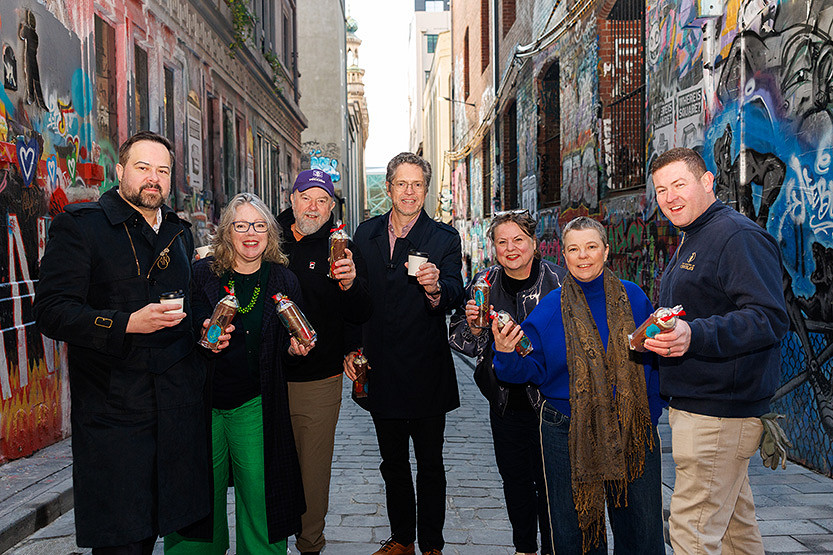
Hosier Lane back in action following accessibility upgrades
Upgrade works have been completed at Hosier Lane, improving accessibility and pedestrian movement through one of Melbourne’s best-known street art destinations.
Read More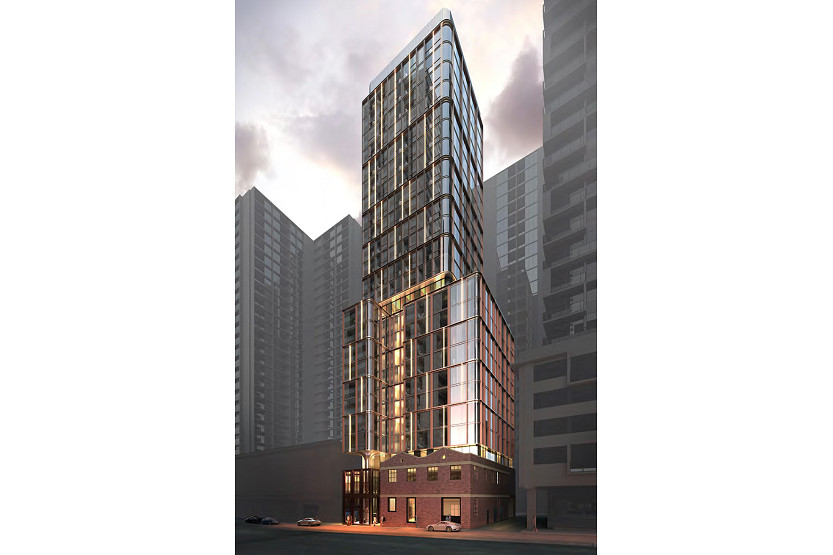
Little Bourke St hotel changes backed
A long-approved hotel development on Little Bourke St is a step closer to construction after City of Melbourne councillors unanimously backed amendments to the planning permit at their July 21 Future Melbourne Committee meeting.
Read More
Council backs Retrofit Melbourne pilot
The City of Melbourne has approved a new three-year Retrofit Melbourne Financial Incentive Scheme, aimed at helping older commercial buildings cut emissions, reduce operating costs and remain competitive amid high office vacancy rates.
Read More
QVM review process only raising further questions

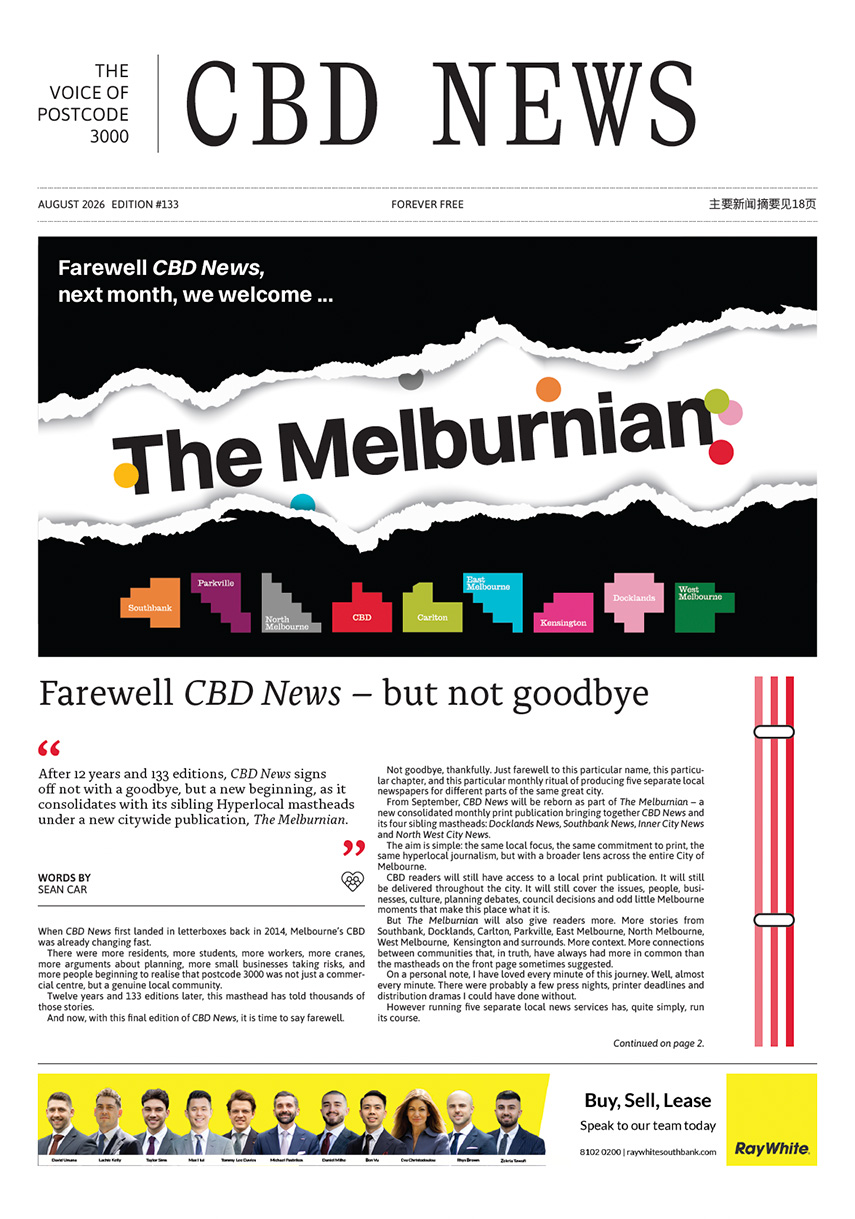
Farewell CBD News – but not goodbye

 Download the Latest Edition