
Kilkenny Inn site set for new chapter as council backs bigger residential tower
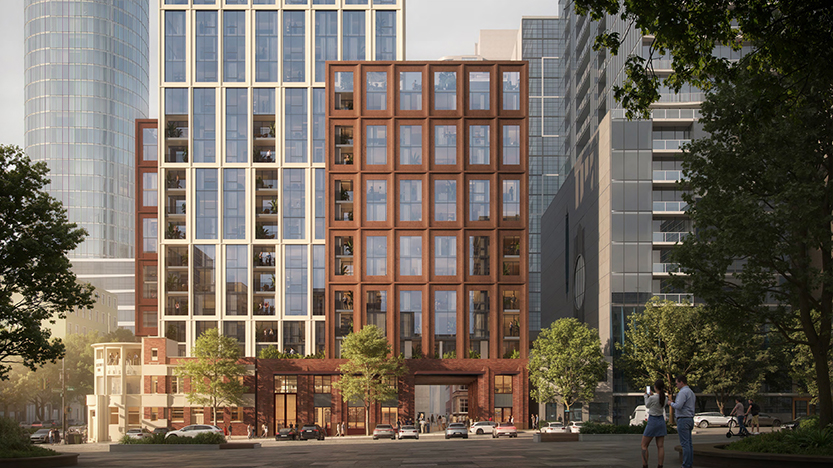
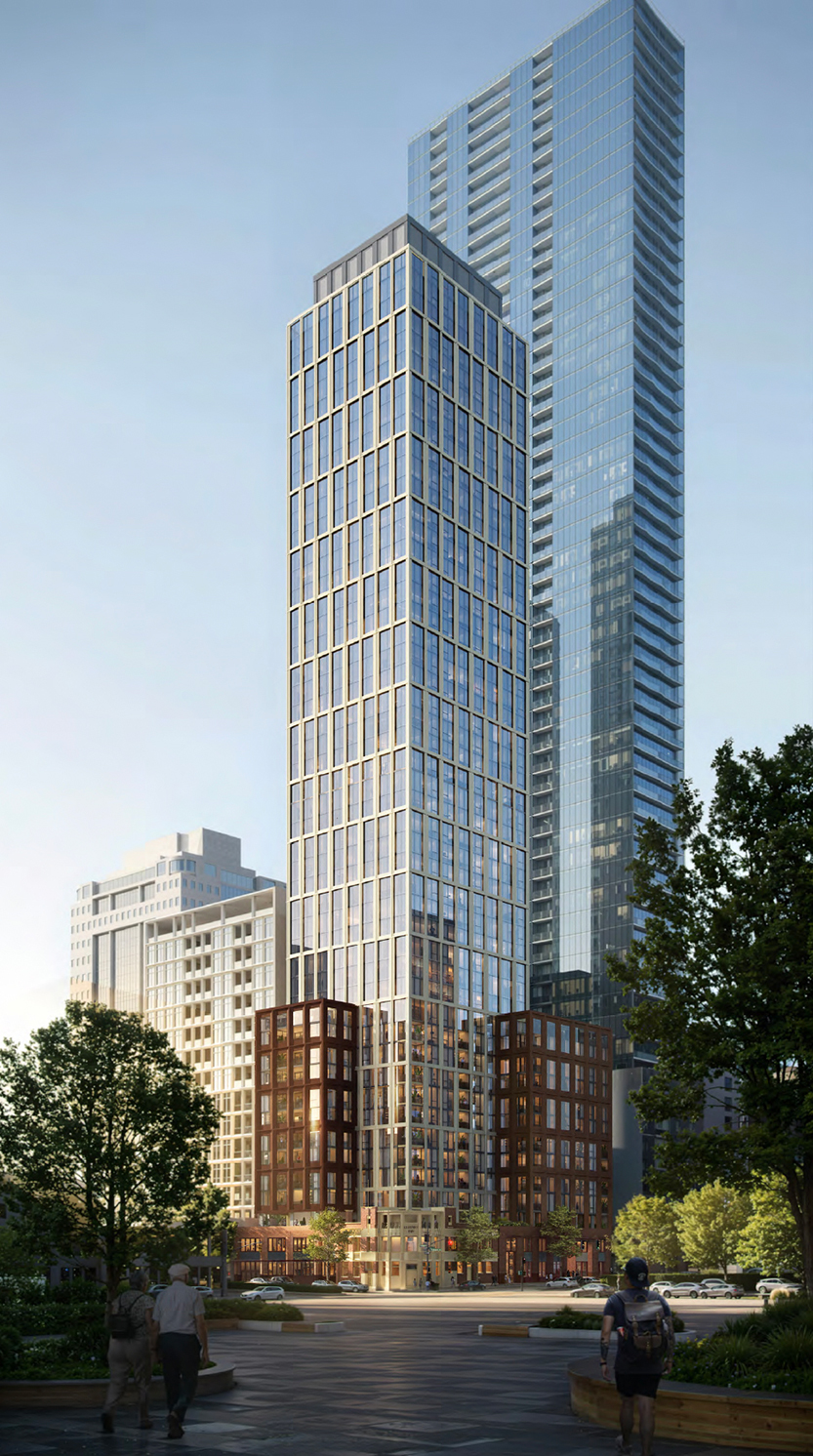

One of the CBD’s most prominent long-dormant corners appears finally set for a new beginning, after City of Melbourne councillors endorsed revised plans for the former Kilkenny Inn site at King and Lonsdale streets.
At its May 19 Future Melbourne Committee meeting, councillors backed a ministerial planning referral for 572-574 Lonsdale St and 248-260 King St, supporting a major shift in direction for the long-troubled site.
What was once approved as a 21-storey office development will now become a much taller 48-storey residential tower, reflecting both Melbourne’s weak office market and the city’s continuing demand for housing.
The proposal, by Hickory and designed by Fender Katsalidis, would deliver 469 apartments above a podium that retains and responds to the heritage fabric of the former Kilkenny Inn. It also includes 636 sqm of retail space, a through-site pedestrian connection linking Lonsdale St to Manton Lane, 74 car spaces, 145 bicycle spaces and an on-site affordable housing contribution equivalent to five per cent of the floor area, or about 23 apartments.
For the western end of the CBD, the decision is significant not only because of the housing it would bring, but because it finally gives clear direction to a site that has sat empty for years.
The corner, once home to the well-known Kilkenny Inn and later a strip club, has endured a particularly difficult recent history. Hickory acquired the site in 2019 and won approval in 2021 for an 80-metre office tower behind the retained pub façade. But after a fire in 2022 gutted much of the building and market conditions turned sharply against new office projects, the site stalled. It later hit the market and, while plans were reconsidered, was temporarily activated with a pop-up park.
Presenting the new proposal, council planning officers said the site was surrounded by high-density built form and undergoing significant change, and that the revised design represented a better overall fit than the previously approved commercial scheme.
Acting head of statutory planning Nick McLennan told councillors that management was comfortable with the new proposal and believed the built form had been “massaged and probably more appropriately structured on the site”, resulting in a well-articulated development.
Importantly, the new application does not alter the previously approved retention of the heritage Kilkenny Inn façade, a point that remained central throughout the debate.
Hickory’s head of property and development Zoran Trimcevski said the company had spent the best part of three years rethinking the site in response to “persistent market conditions” and changing realities in the property sector.
Unfortunately, due to the headwinds we’re all aware of, it’s meant that we’ve had to redesign what we thought we’d deliver on this site, he said.
He said the revised proposal was intended not only to reactivate the site, but to help “reimagine the western precinct there that’s probably a little bit tired and underdone.”
The pivot from office to residential also drew discussion about the type of apartments being proposed. The tower would contain 129 studios, 208 one-bedroom, 120 two-bedroom and 12 three-bedroom apartments.
Cr Rafael Camillo questioned whether that mix included enough larger homes for families, but Trimcevski said market evidence from Hickory’s recent CBD projects showed three-bedroom stock remained the hardest to sell or lease.
“The only apartment stock we’re left with are three bedrooms,” he said. “They’re difficult to sell, difficult to occupy.”
He added that the project had been deliberately conceived as a flexible residential development that could adapt to changing market conditions, whether as build-to-sell or build-to-rent.
That point became even more topical during the debate when Cr Phil Le Liu raised the federal government’s newly announced tax changes around negative gearing and capital gains tax. Under the reforms, negative gearing will be restricted to new residential properties, while investors in new builds will still be able to access more favourable CGT treatment than those buying existing stock, a shift widely seen as an attempt to push more capital towards new housing supply.
Trimcevski confirmed those changes would help support investment in projects like this, particularly at a time when many approved developments remain financially difficult to commence because of high construction and labour costs.
That broader challenge has been increasingly noted by analysts arguing that the real bottleneck in housing supply is not planning approvals alone, but whether projects can actually be built once approved.
In that sense, the Kilkenny Inn approval may prove to be more than just a one-off breakthrough for a stalled site. If the new tax settings do start nudging investors and developers more firmly towards new housing, this corner could become an early example of a wider shift now beginning to flow through the city.
Deputy Lord Mayor Roshena Campbell welcomed the outcome, noting the importance of finally moving dormant sites like this one forward.
“It is, quite frankly, unacceptable in a city like Melbourne that a site like this remains vacant, so we are incredibly excited by the opportunity to see some activity on this site,” she said.
Lord Mayor Nick Reece also focused on the site’s heritage value and public-facing design, asking specifically about the façade strategy and apartment mix. The development team emphasised that the project would retain the Kilkenny Inn’s heritage presence while using brick and podium articulation to create a more human-scaled lower level.
Architect James Pearce from Fender Katsalidis described the scheme as a “considered evolution” of the previously approved design.
Taken together, the council’s endorsement marks a long-awaited breakthrough for a site that has become symbolic of both the challenges and possibilities of the CBD’s western edge.
The pop-up park may have given the corner a temporary purpose, but this new approval suggests something more lasting is finally on the horizon. •
Buy our Journalists a coffee
Support our dedicated journalists with a donation to help us continue delivering high-quality, reliable news


Related Articles
The rise of the “third room”: How Australians are reinventing their outdoor spaces
There was a time when the backyard was an afterthought. A patch of grass, a rusting barbecue, maybe a plastic chair or two.
Read More
From empty towers to a true CAD: can adaptive reuse reshape the CBD?
As the state government reviews long-criticised CBD developer incentives, a powerful new data tool from Plus Studio could help reveal which underused towers are ready to shift Melbourne from a Central Business District to a true Central Activity District (CAD).
Read More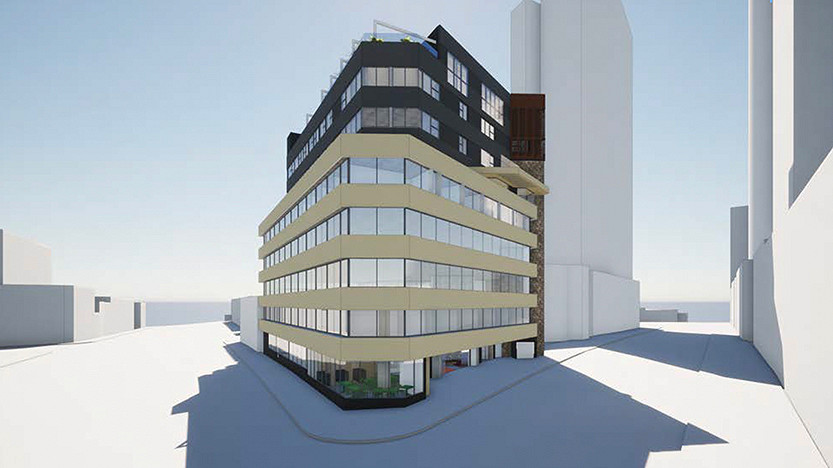
Council approves amended Russell St function centre, despite 36 objections
The City of Melbourne has backed an amended permit for the Space Hotel on Russell St, approving changes to a long-running proposal for a rooftop function centre after finding the revised scheme would deliver better heritage and amenity outcomes.
Read More
QVM food rescue program turns surplus produce into relief for struggling Melburnians
Council backs AI push, framing moment as Melbourne’s “fork in the road”

 Download the Latest Edition