
Melbourne’s forgotten St Kilda railway
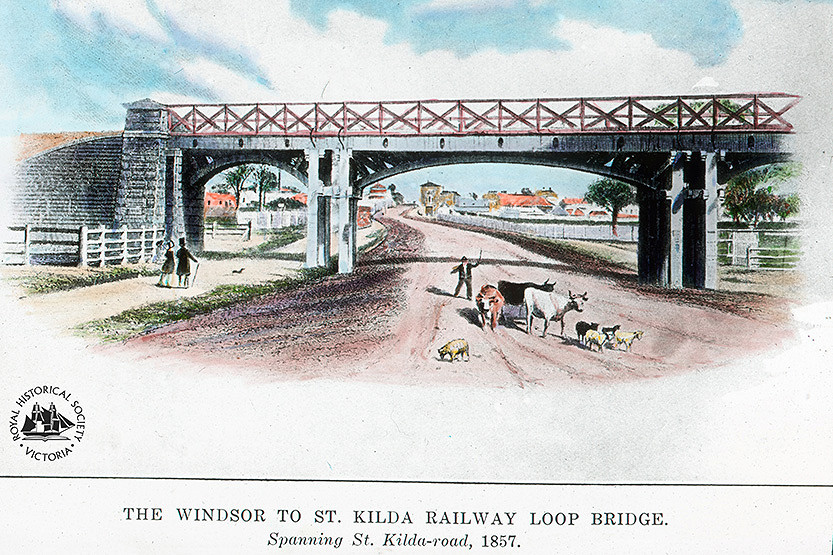
This photograph, taken around the early 1860s, shows us a different view of the south end of St Kilda Rd.
On the horizon is St Kilda Junction, including the Junction Hotel (built in 1853 and demolished in 1973) in the centre. In the foreground, located around the point where the road intersects with Union St, is a wooden bridge soaring across the road where steam trains once chugged along a line now forgotten.
The first railway in Melbourne from Flinders Street Station to Sandridge (now Port Melbourne) in 1854, was run by the private company Melbourne and Hobson’s Bay Railway Company (or MHBRC).
They later built a branch line to St Kilda, which opened on May 13, 1857, stopping at South Melbourne, Albert Park and Middle Park before terminating at the station near Fitzroy St.
There was also an emerging plan for a railway to Brighton, back then a burgeoning seaside town. Early schemes had been floated as early as 1853 but after a few false starts, it wasn’t until June 1857 when a company known as the St Kilda and Brighton Railway Co. (or SBRC) announced plans to create a railway that connected St Kilda to Brighton for £125,000. The railway was authorised in November, and in 1858 William Randle was contracted to build it.
The work that followed was marred by financial issues, with the company thrice raising mortgages amounting to around £52,600 to cover construction. There were also fears the railway wouldn’t be complete before New Years Day 1860 with reports of construction being delayed due to bad weather and the “relaxed energy on the part of the contractors”.
Fortunately, after months of excavation and laying down the rails, the line was given a trial trip by 40 people on December 3, 1859, before being open to the public on December 19.
The Brighton railway started with a loop between St Kilda and Windsor stations. Upon leaving the former, trains would travel along an embankment built at the south end of the swampy Albert Park. This led to a 400-yard-long viaduct then the 102-foot timber bridge that crossed both St Kilda Rd and the south end of Punt Rd.
It then crossed Union St before looping its way to Windsor Station near Chapel St. From there the train would stop at Balaclava, Elsternwick, and then terminate at Bay St at Brighton.
As the SBRC had no rolling stock, the line was initially run by the MHBRC thanks to an agreement between the two companies which remained until late 1860. The SBRC then bought a couple of the MHBRC’s engines and carriages and worked the line under its own management.
The bridge in its time was met with concerns from civilians. Within months of opening, a George A. Allan would complain to The Argus (February 11, 1860), that the bridge was “in an unsafe condition, the centre part having given considerably” with an inflection on the Melbourne side of the bridge.
In The Age (April 2, 1860) a reader using the pseudonym “Caution” also warned of the likely danger the bridge posed. In the following days the engineer Charles R. Swyer would reply, insisting the bridge (or at least the beams supporting it) had no deflection. While Caution wasn’t satisfied with the answer in his reply, their fears of disaster were never realised as the bridge wouldn’t last long enough for one to happen.
By 1861 the St Kilda-Windsor loop had become irrelevant. As the loop was being built and started its run, another line was being constructed by the Melbourne and Suburban Railway Company (MSRC), running from Melbourne to Cremorne via Richmond Station. It connected with South Yarra station and the Windsor-Brighton line by December 22, 1860, meaning there was no need to take the loop to get to Brighton.
By 1862 the loop had fallen into disuse, and spent years gathering weeds until the St Kilda bridge and viaducts were torn down in 1867. However, some of the railway between Punt Rd and Windsor Station survived as a siding, crossing Union Rd (then known as Hoddle St). It allowed trains to haul bluestone to a depot in the area.
However, due to the blockages in traffic, members of the Prahran Council decided to take matters into their own hands and attempted to tear up the tracks. The matter was settled in court in 1869, with the Railway Company ultimately winning but the siding was never rebuilt. All that remains of the railway is the St Kilda line, which since its closure in 1987 has been reconverted into a tram-exclusive route. •
Buy our Journalists a coffee
Support our dedicated journalists with a donation to help us continue delivering high-quality, reliable news


Related Articles
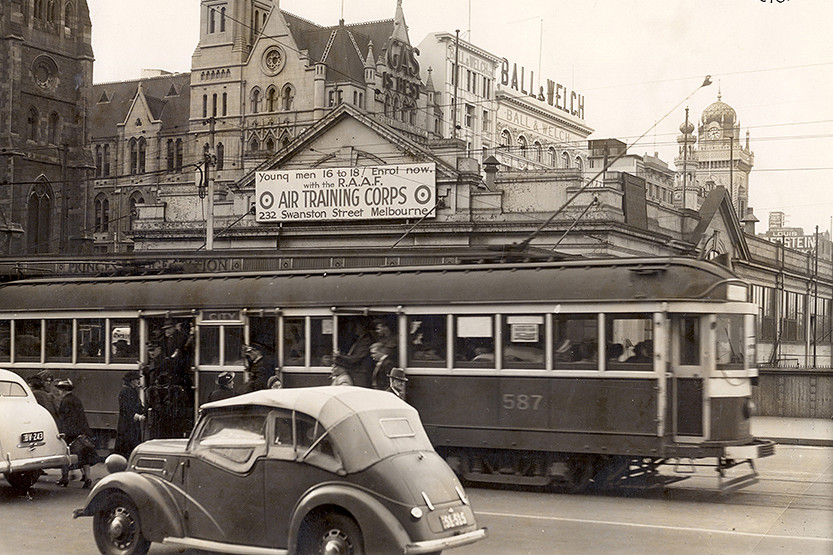
Reminders of wartime looms over Princes Bridge
In the early 1940s in Melbourne, as war ravages overseas, life in the city carries on as normal at the corner of Princes Bridge and Flinders St.
Read More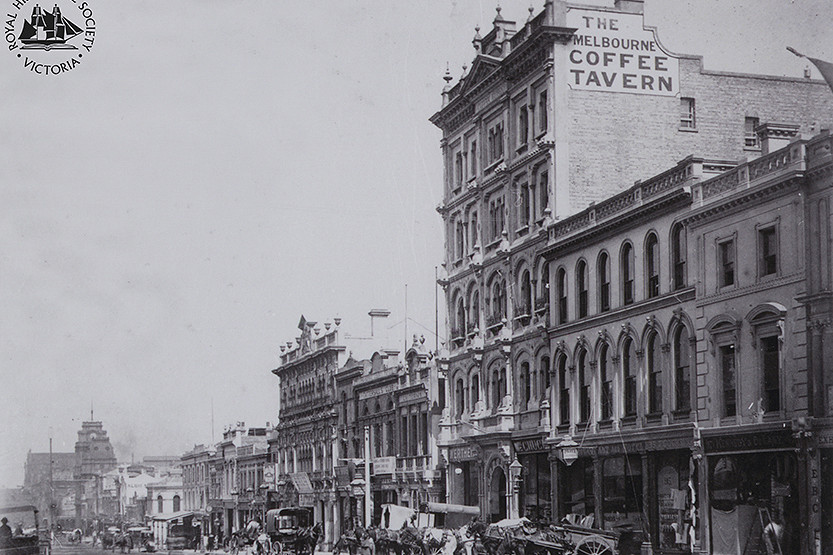
An escapee arrested at the Coffee Tavern
Opened in October 1882 on Bourke St between Swanston and Russell streets, the 90-foot-tall Melbourne Coffee Tavern featured 161 bedrooms and was also home to a sewing machine business owned by Hugo Wertheim.
Read More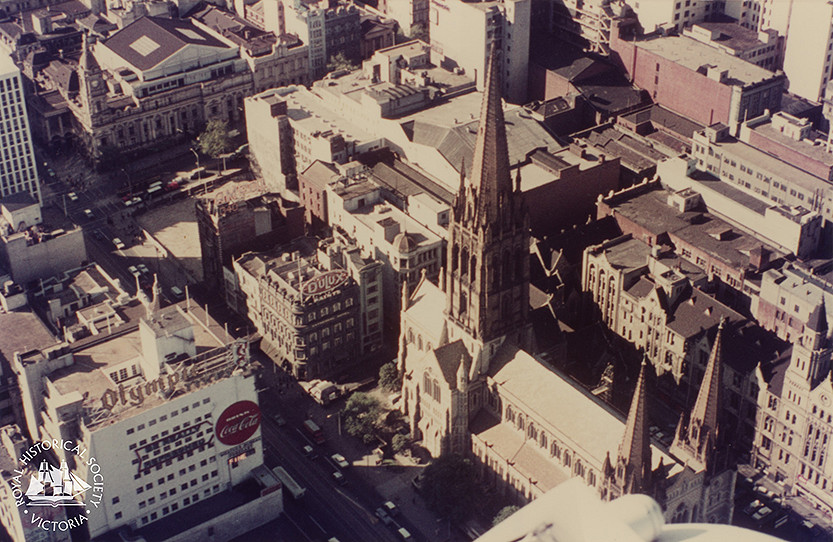
The beginning of a square, and the end of history
For those who are young or new to Melbourne, it might be a shock to discover that buildings once occupied the site of Town Hall Station, at the corner of Swanston and Collins streets.
Read More
QVM food rescue program turns surplus produce into relief for struggling Melburnians
Council backs AI push, framing moment as Melbourne’s “fork in the road”

 Download the Latest Edition