
Observing at Flagstaff
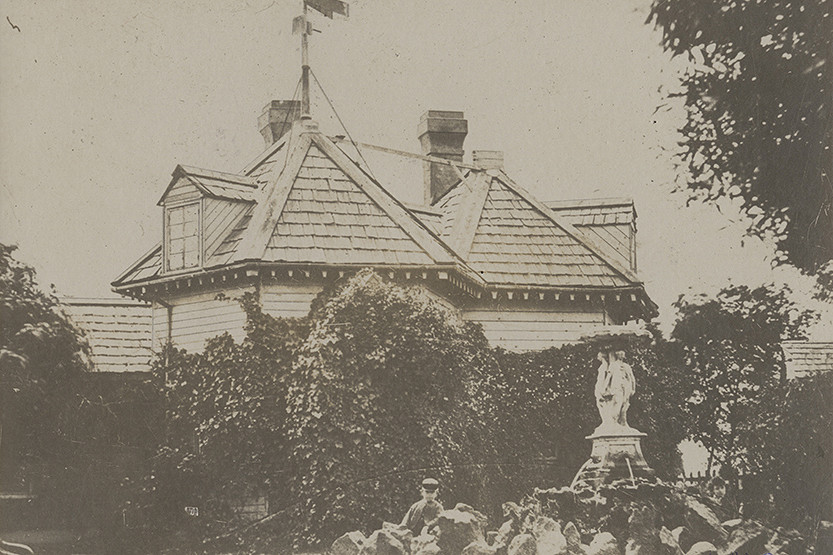
This humble building in Flagstaff Gardens, covered in ivy and sporting a weathervane, was once an important scientific site in Melbourne.
Taken around 1871, this is a rare photograph of the former Magnetic Observatory that operated on Flagstaff Hill in the Flagstaff Gardens from 1858 until 1863.
During the early days of European settlement, Flagstaff Gardens was used as the city’s first cemetery.
In 1836, the first burial was of a child named Willie Goodman. Within a year, it was obvious that more space was needed, and a new official cemetery was created on a site further northeast: the current Queen Victoria Market site.
In 1840 the hill found a new purpose when it became the site of a signal station and a flagstaff (hence the park’s name), taking advantage of the hill’s high vantage point to the Yarra River and Port Phillip Bay.
Naval flags were attached to the flagstaff, communicating in semaphore about arriving and departing ships. The arrivals were of particular interest for locals who were awaiting mail from loved ones. The flagstaff would also drop a time-ball at noon to indicate the time.
Most famously, in November 1850 Flagstaff was the location where the separation of Victoria from New South Wales was celebrated, highlighted by a 21-gun salute, and a balloon launched that “bore away the tidings of Separation by means of parchment slips attached to it.” (The Argus). The signal station continued operating until 1857, overtaken in the end by the more convenient format of telegraph and newspapers, which provided more accessible shipping news.
A young German scientist then gave the signal station a new lease on life. Georg Balthasar Von Neumayer first visited Melbourne in 1852, and after spending time as a miner then a ship’s mate, saw scientific potential in the colony. With the backing of the King of Bavaria, Maximillian II, Neumayer came back to Melbourne in 1857 requesting the Legislative Assembly for a Magnetic and Meteorological Observatory for the purposes of navigation. The Assembly refused his request, but with valuable support from his peers and the German community his observatory was funded and approved, with the signal station chosen as its site. £500 was voted to repair the buildings and another £450 was raised by private subscription (The Argus).
Starting operations in March 1858, the Observatory needed as many as five different buildings to house all the equipment. The research included atmospheric readings, weather, phenomena such as the Aurora Australis, and magnetic terrestialism. Neumayer eventually published his observatory’s findings in 1867, and also conducted a five-year survey of Victoria’s magnetic properties, which saw him travel around 11,000 miles.
Among Neumayer’s assistants was a young surveyor who in 1860 was appointed as part of an expedition to travel up to the north end of Australia with an Irish-born police officer-turned explorer. Neumayer joined the duo for a while, before turning away at Bilbarka, near the Darling River. Neumayer would never see those two alive ever again, for months later in 1861 his assistant, William John Wills, and the officer, Robert O’Hara Burke, were found dead after their disastrous return journey from the Gulf of Carpentaria.
The observatory in the meantime would not last, as iron in the region as well as the operations of a nearby sawmill interfered with the sensitive equipment. Fortunately, the Botanic Gardens south of the Yarra happened to have a more suitable site, and with the Williamstown Astronomical Observatory also needing to move, it was deemed more economical to house both into the same building. By January 1863 it was reported the staff had already moved into their new home (despite being unfinished), and the old building was left to rot before it was demolished sometime later.
The Flagstaff Hill observatory shut down, but the park was undergoing its next transformation. From 1862 efforts were made to turn the bare hill into a recreation reserve, with works to improve the topsoil and plant various trees. By 1873 the gardens were permanently reserved, and today remains a spot to have a picnic at.
While there are no remains of the original observatory left, and tall buildings block the view of the Yarra, you can still find a mast perched near the King St end as part of the separation memorial. •
Buy our Journalists a coffee
Support our dedicated journalists with a donation to help us continue delivering high-quality, reliable news


Related Articles
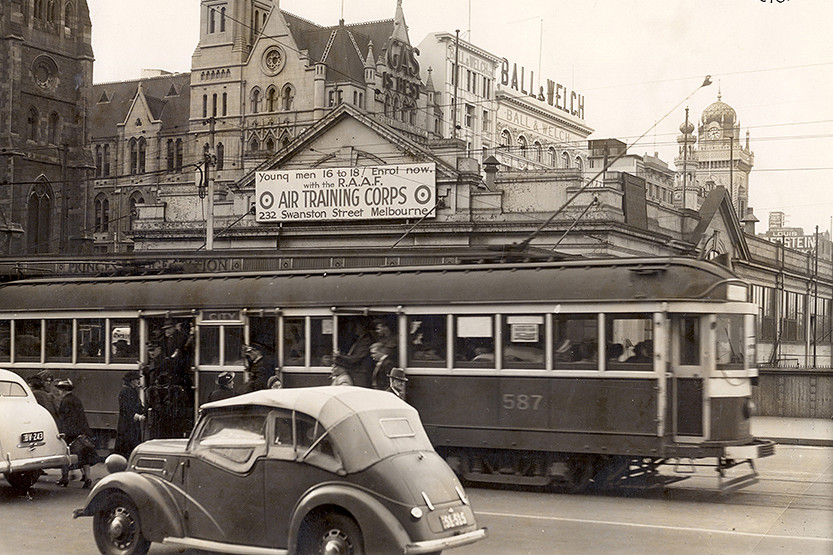
Reminders of wartime looms over Princes Bridge
In the early 1940s in Melbourne, as war ravages overseas, life in the city carries on as normal at the corner of Princes Bridge and Flinders St.
Read More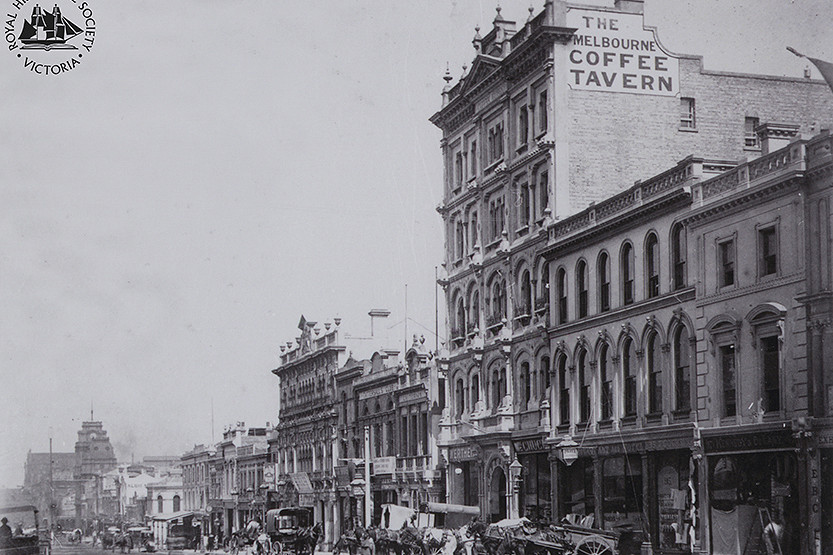
An escapee arrested at the Coffee Tavern
Opened in October 1882 on Bourke St between Swanston and Russell streets, the 90-foot-tall Melbourne Coffee Tavern featured 161 bedrooms and was also home to a sewing machine business owned by Hugo Wertheim.
Read More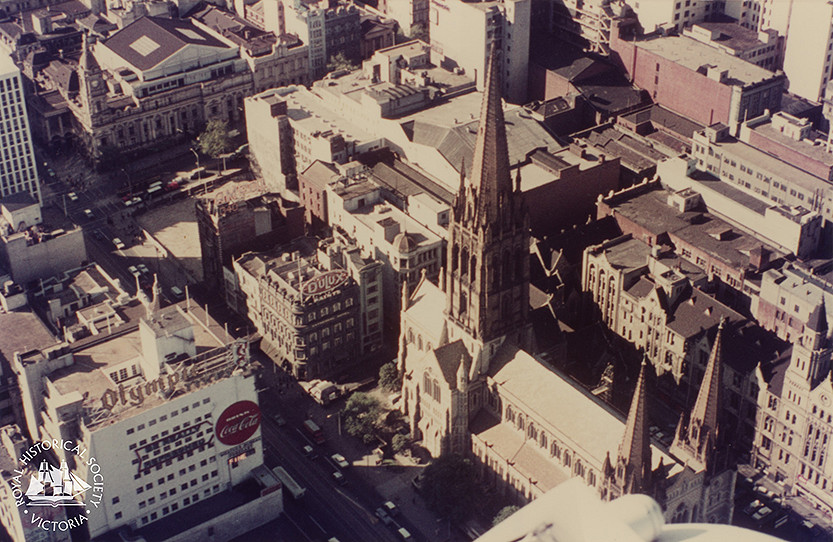
The beginning of a square, and the end of history
For those who are young or new to Melbourne, it might be a shock to discover that buildings once occupied the site of Town Hall Station, at the corner of Swanston and Collins streets.
Read More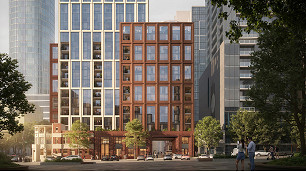
Kilkenny Inn site set for new chapter as council backs bigger residential tower
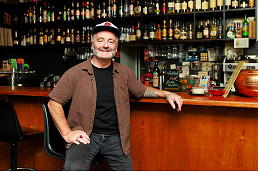
A bar, a laneway and 25 years of city life at Hells Kitchen

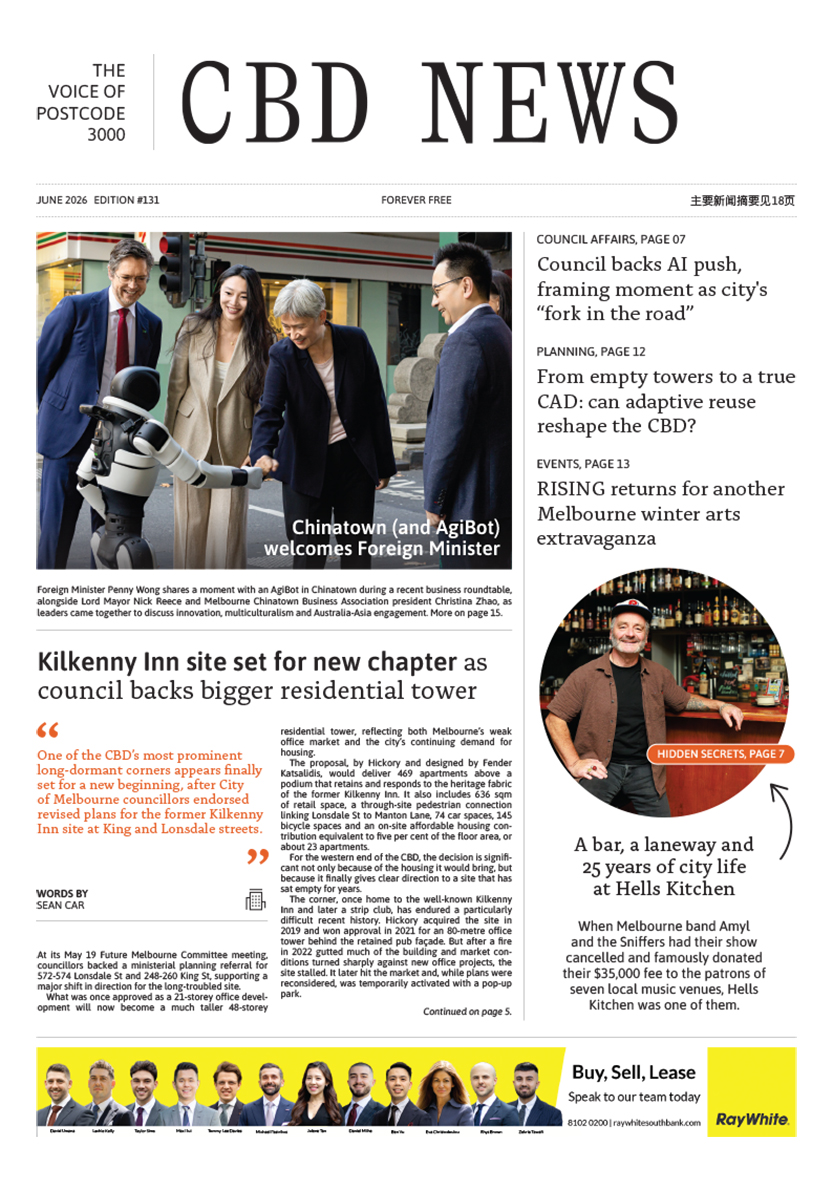 Download the Latest Edition