
QVM renewal finances: the numbers aren’t the only problem

The latest financial reckoning for the Queen Victoria Market renewal has again exposed a problem that has followed the project almost from the beginning: the City of Melbourne has never been particularly good at explaining how it is paying for it.
A quarterly report going before councillors on August 25 reveals $237.6 million has now been spent on the renewal against a current program budget of $305.6 million – a figure council says was reset in December 2022 but kept confidential because of commercially sensitive procurement.
That revelation has understandably attracted criticism. For years, public quarterly reports continued measuring the program against a $268 million figure while the council says its actual approved envelope had already increased to $305.6 million.
But describing this simply as a secret $37.6 million “blowout” as reported elsewhere in the media misses a much messier history.
The renewal was initially promoted in 2014 as costing up to $250 million before growing to around $308 million by 2017. That original vision also looked quite different: plans once contemplated placing major trader infrastructure and car parking beneath the heritage sheds before Heritage Victoria effectively forced a rethink.
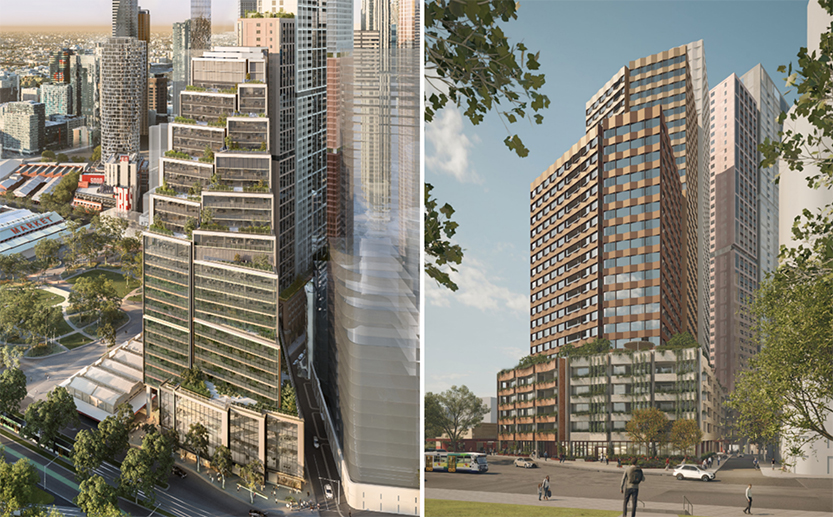
The council also added the Munro redevelopment to the renewal program. The prominent site on the corner of Queen and Therry streets was purchased for $76 million in late 2014.
It subsequently partnered with PDG to deliver a new library and community hub, affordable housing, retail and hospitality and 500 market customer car parks, while the remainder of the site was developed for build-to-rent housing, a hotel and retail.
In 2020, amid COVID pressures, the reported program budget fell to $268 million. But the defining part of that reset was tied to the $40 million Queen’s Corner Building disappearing from the funded program, with the possibility it could instead be delivered through negotiations with the future southern development site partner. The renewal business case was updated on that basis, but council itself expressed scepticism in December 2021, resolving that delivery of the building “may or may not” be delivered by development partners.
Then came construction escalation, changing designs and the costly Trader Shed, helping push the working figure back to $305.6 million.
The problem is not necessarily that costs changed. Over more than a decade, through heritage complications, COVID, inflation and major redesigns, it would have been remarkable if they hadn’t.
The problem is how little of this financial story council has ever clearly told.
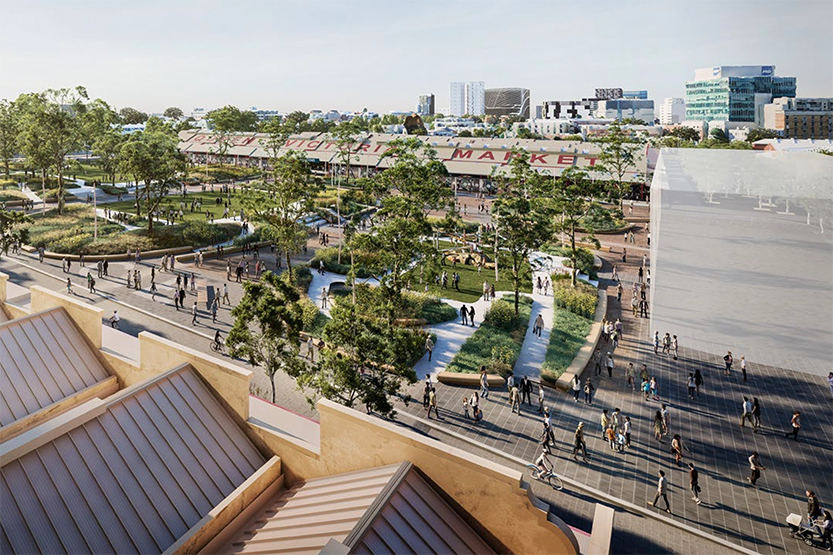
That remains evident in the latest report, which states that the $305.6 million budget does not include construction of Market Square or the Queen’s Corner Building, and that “further funding will be required”.
Yet Market Square is intrinsically linked to the Gurrowa Place agreement with Lendlease, which is understood to include a cash contribution of $125 million in FY 2029 – paying for half of the renewal's original $250 million price tag.
That contribution has always been fundamental to the project’s financing logic. Explaining it openly would arguably strengthen the council’s case, not weaken it.
Instead, the lack of clarity creates a vacuum in which every newly revealed number looks like another surprise.
The history has been further complicated by the council’s former Acting General Manager of Infrastructure and Design Roger Teale, who was hired by the City of Melbourne in February 2021.
Mr Teale was previously employed with Lendlease, which was announced as the preferred development partner for Gurrowa Place in June 2023. He would later depart the council in October that year amid a series of broader conflict-of-interest concerns that were publicly scrutinised. CBD News does not suggest this establishes anything improper about the renewal arrangements, only that it reinforces why transparency around the financial architecture matters.
There is another deadline quietly approaching.
Under the council’s 2020 land swap agreement with the Victorian Government for the southern development site, Market Square was to be delivered as public open space by September 30, 2026. If it is not, clause 22.4 provides for a payment of $10 million plus GST to the Assistant Treasurer if demanded, subject to the agreement’s conditions.
There is no suggestion that payment is automatic, and after COVID and the delays surrounding Gurrowa Place, a renegotiated timetable would seem entirely reasonable. But with Market Square still years away, the status of that obligation deserves a public answer.
These unresolved financial questions also sharpen concerns about the councillor-led review into QVM Pty Ltd. That process is focused on the market company’s governance, management and performance, but does not squarely examine the City of Melbourne’s own role as owner, shareholder and architect of the renewal program.
If some of the biggest questions surrounding the market sit with council decisions, funding arrangements and the renewal itself, there is a real risk the review becomes an expensive and time-consuming exercise with a misplaced scope.
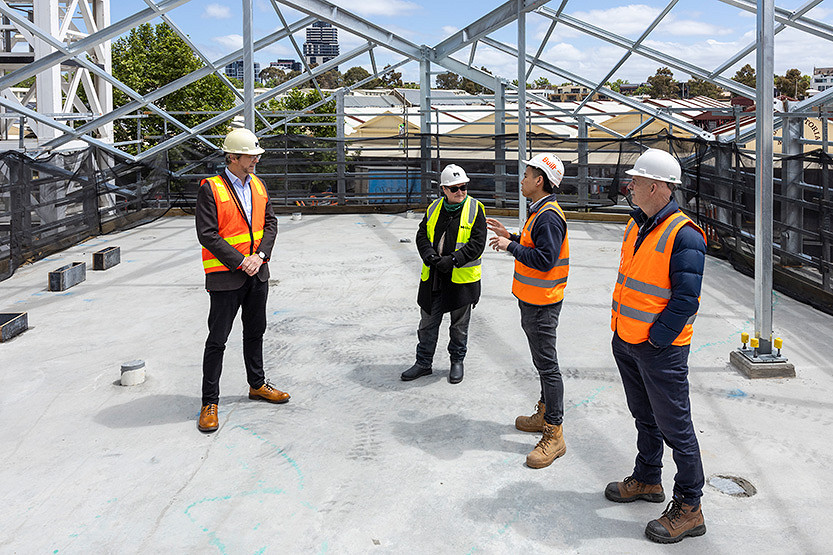
The council says it is making “the biggest investment in Queen Victoria Market’s history” and points, fairly, to substantial completed works and the Trader Shed nearing completion.
What it should now do is finish explaining the books.
The renewal may ultimately prove good value. But after more than a decade, ratepayers should not need to reverse-engineer its finances from quarterly reports (14 of which the council now says were incorrect), media releases about unpublished development agreements and outdated business cases to understand what the project really costs – and who is paying for what.
Buy our Journalists a coffee
Support our dedicated journalists with a donation to help us continue delivering high-quality, reliable news


Related Articles
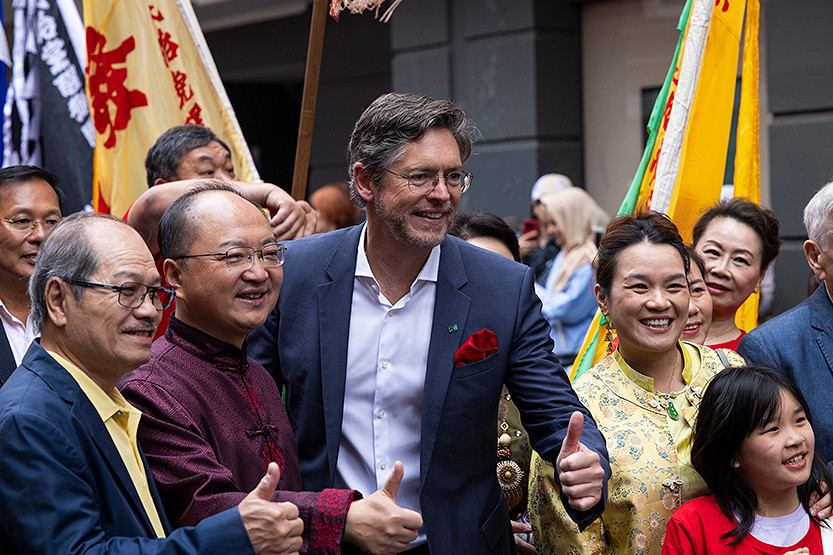
Council backs one-year multicultural advisory committee pilot
The City of Melbourne will establish a multicultural advisory committee to strengthen community input into council policies, services and communications after councillors unanimously endorsed a one-year pilot on August 4.
Read More
QVM review process only raising further questions
The City of Melbourne’s terms of reference for its independent review into Queen Victoria Market Pty Ltd have landed, but they may only deepen the governance question that has surrounded this process from the beginning.
Read More
Work-from-home laws reignite fight over Melbourne’s CBD recovery
The Victorian Government’s move to legislate a right to work from home has reignited a bitter debate over Melbourne’s post-pandemic recovery, with the City of Melbourne, business groups and the housing industry warning the policy will add red tape, weaken city activity and create new uncertainty for employers.
Read More
Who actually pays Victorians the most for solar
EastEnders to host Lord Mayor and Deputy Lord Mayor

 Download the Latest Edition