
The Melbourne Home
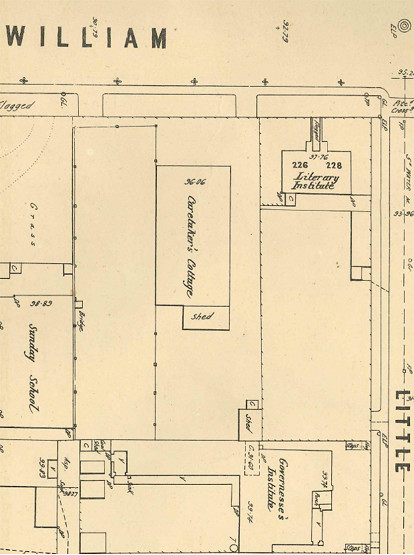

In the late 19th century, a number of female immigrants fresh off the ship from England would arrive at Victoria with no planned accommodation or nearby connections that could help them settle.
Fortunately, there was a place close to the Mint that could provide shelter: The Melbourne Home and Governesses Institute.
Melbourne saw an influx of immigration in the 1850s, there were perceived concerns for female immigrants, many of which arrived alone to make a new start or work as domestic servants. The Age in 1857 (February 14), brought up the fears of the demoralisation for any woman who made the treacherous trip to Australia alone, stating that “nine out of every 10 females so sent become surrounded by temptations which it is almost impossible to evade, and presently sink into a career of wretchedness and infamy.”
They especially warned of a particular correspondence where one female servant’s office in the city ended up engaging its girls “for the Woolshed brothels under the pretext of requiring them for ordinary service.”
In response, The Melbourne Home would be established in the early 1860s and first settled upon the Prince of Wales Hotel in Flinders Lane (as a temporarily building until they could raise funds for a new one), located behind where the Regent Theatre is today. It opened on November 1, 1863, and according to its rules, was eligible for “all respectable females, governesses, needlewomen, shopwomen, and servants not suffering from bodily infirmity or disease”.
By the end of 1864, the Home had registered 2063 women, (448 of those called the Hostel as a place of residence whilst looking for work). Depending on the woman’s status, pay for weekly lodging was 7 to 8s for a partial board, 10s for a servant, and 18s for a governess (and that didn’t include a registry fee for anyone looking for an work engagement). Notably the institution was run by an all-female committee, though a gentleman’s committee was also involved whenever needed.
By July 1867, due to concerns on the steep rent (up to £300 a year), the Home’s services moved to a building near the corner of Russell St and Little Collins St. Then in 1868, enough funds were acquired to build and move into a new permanent residence at Little Lonsdale St, between William and Queen St, across the street from the Mint Building.
The new home was a two-storey brick building, which due to funding shortages was only a portion of the planned building (extensions finishing in 1884), and reportedly could lodge as many as 40 people. In 1875, cooking classes were introduced in hoping to add to the skill sets of servants, and later dressmaking, clear starching and ironing were also introduced.
By the 1890s however, the Institute was becoming less relevant as a wider range of employment became available to women. Only 57 inmates were welcomed in 1896 alone, and the Institute eventually decided to sell the building. Elsewhere, the Victoria Hospital was established in 1896 by several women of the medical profession. It initially served as an outpatient’s clinic at St. David’s Hall, La Trobe St, and as it gained traction, a “Shilling fund” was made for a new building, raising over £3000. Renaming itself the Queen Victoria Memorial Hospital, they were able to buy the Governess Institute’s building for £2000 in July 1898 and re-opened at the site on July 12, 1899.
The Institute would survive as a Fund, its members having annual meetings at the St Paul’s Cathedral into the 1930s. Among their achievements was donating to establishing a home for retired governesses and teachers, known as Lovell House in Caulfield, which opened in 1927.
As for the Home building, it would be demolished during the Hospital’s expansion, but the hospital would remain on the site until 1946, when it moved to Bourke and Lonsdale St (later to be QV).
The site would then be run by a tuberculosis hospital, and then the Peter McCallum Clinic up until the 1990s, before being demolished for the construction of the County Court Building.
Buy our Journalists a coffee
Support our dedicated journalists with a donation to help us continue delivering high-quality, reliable news


Related Articles
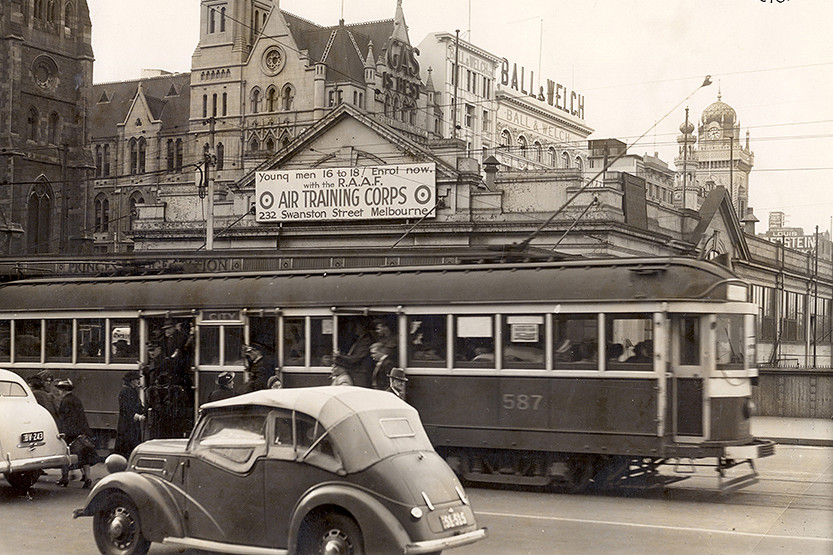
Reminders of wartime looms over Princes Bridge
In the early 1940s in Melbourne, as war ravages overseas, life in the city carries on as normal at the corner of Princes Bridge and Flinders St.
Read More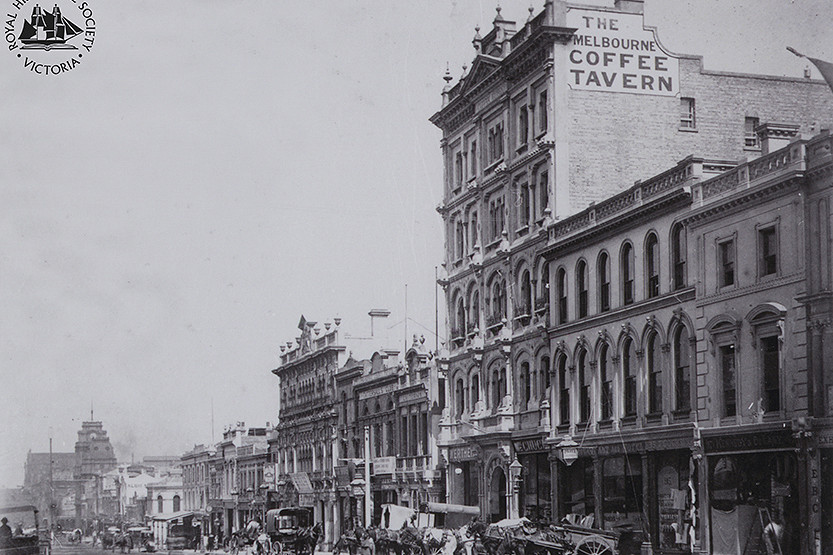
An escapee arrested at the Coffee Tavern
Opened in October 1882 on Bourke St between Swanston and Russell streets, the 90-foot-tall Melbourne Coffee Tavern featured 161 bedrooms and was also home to a sewing machine business owned by Hugo Wertheim.
Read More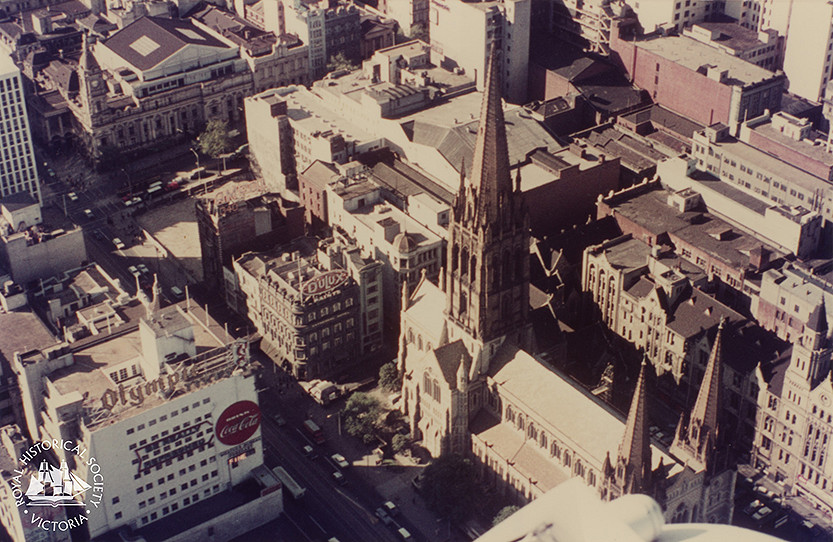
The beginning of a square, and the end of history
For those who are young or new to Melbourne, it might be a shock to discover that buildings once occupied the site of Town Hall Station, at the corner of Swanston and Collins streets.
Read More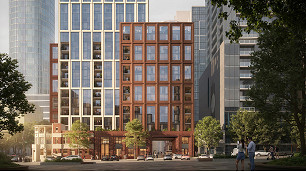
Kilkenny Inn site set for new chapter as council backs bigger residential tower
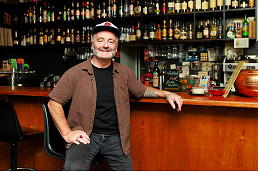
A bar, a laneway and 25 years of city life at Hells Kitchen

 Download the Latest Edition