
Work begins on new CBD community health hub to tackle addiction and disadvantage
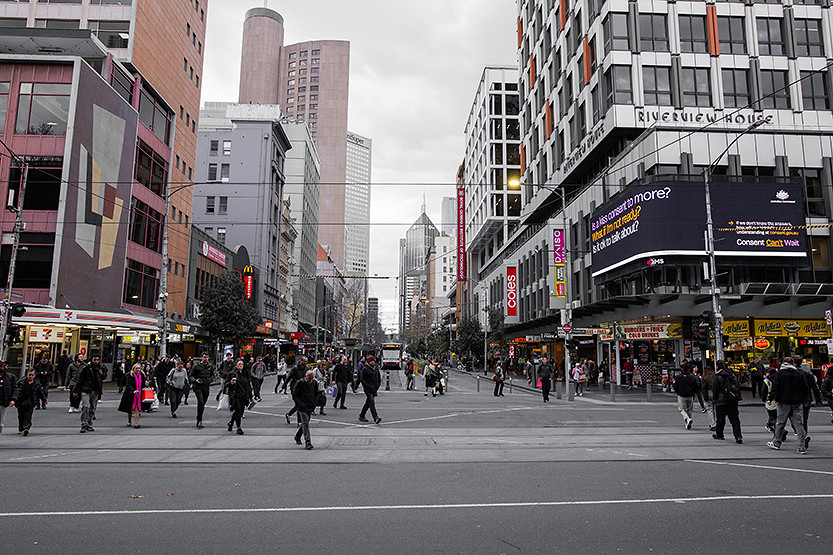

Work has officially begun on a new Community Health Hub in Melbourne’s CBD, which the state government says will provide a central access point for treatment, social support and addiction services when it opens in 2026.
Located at 244 Flinders St, the hub is being delivered in partnership with Cohealth, and will bring together medical care, mental health support, counselling, pharmacy services and social programs under one roof. The site will also host a Victorian-first hydromorphone treatment trial, designed to reduce harm by diverting people from the illicit drug market and offering evidence-based alternatives for those living with chronic addiction.
Announcing the start of works on October 15, Minister for Mental Health Ingrid Stitt said the facility would become a safe, inclusive space for some of the city’s most vulnerable residents.
“Every Victorian deserves access to care and support when they need it – and this new Community Health Hub will make that possible for people in the heart of our city who are doing it toughest,” Minister Stitt said.
This is about giving people a real chance to turn their lives around, with healthcare, treatment and social support all available in one welcoming place.
The new hub forms part of the state’s $95 million Statewide Action Plan to reduce drug harm, which was launched last year following the Ken Lay review into Victoria’s approach to drug policy. The review called for a health-based response to addiction – including a supervised injecting facility in the CBD – though the government ultimately ruled that option out.
Instead, it committed $36.4 million to transform the former Flinders St office building into a community health and wellbeing centre focused on rehabilitation and wraparound care. The redevelopment, managed by the Victorian Health Building Authority and Lendlease, will include consulting rooms, a drop-in kitchen, shower and laundry facilities, treatment and counselling spaces, and a reception area co-designed with people with lived experience of addiction.
Cohealth, which currently runs medical services at 53 Victoria St as well as at The Salvation Army headquarters at 69 Bourke St, will operate the site in partnership with the government.
The Salvation Army’s Bourke St hub is also now providing medical, nursing and mental health supports, and there is expanded street outreach in the city, Footscray and St Kilda – delivering nearly 7000 harm reduction supports and connecting hundreds of Victorians to life-saving care.
The hydromorphone trial, modelled on similar programs in Canada and Europe, will offer a medically supervised treatment for a small number of participants identified by Cohealth clinicians. Research shows such therapy can lead to significant reductions in illicit drug use and associated harms while improving participants’ overall health, housing and social stability.
The project comes amid growing concern about the city’s drug crisis. The Coroners Court of Victoria recently revealed that 584 Victorians died from overdose in 2024 – the highest rate in a decade. Health advocates, including the Alcohol and Drug Foundation (ADF), have urged the government to introduce a long-term alcohol and drug strategy, warning that short-term measures alone will not curb rising deaths.
ADF chief executive Dr Erin Lalor said stronger investment was needed in prevention, education and stigma reduction.
“While the government is progressing some great initiatives through its Statewide Action Plan, our state still lacks a long-term strategy with a dedicated budget behind it,” she said.
The state government maintains that all actions from the Statewide Plan are either completed or under way, including new outreach teams, naloxone vending machines, and the appointment of Victoria’s first Chief Addiction Medicine Adviser, Dr Paul MacCartney, to guide policy reform.
Meanwhile, the government has been engaging local businesses, residents and service providers as the new facility takes shape. A CBD Reference Group, first proposed in 2024 to advise on the project’s rollout and related safety issues, was established in May and its work is under way.
With fit-out works now under way, the Flinders Street facility is expected to open in 2026. •
Buy our Journalists a coffee
Support our dedicated journalists with a donation to help us continue delivering high-quality, reliable news


Related Articles
Knowing more about brain injury
Brain injuries can happen to anyone, and while the Melbourne CBD-based self-advocacy organisation Brain Injury Matters (BIM) faces an uncertain future, it wants to see more public education about this type of trauma.
Read More
New Flinders St health hub to open later this year
A new community health hub aimed at supporting some of Melbourne’s most vulnerable people is expected to open on Flinders St later this year, as the state government continues to roll out its response to drug harm in the CBD.
Read More
Street Side Medics calls for volunteer GPs at Bourke St clinic
Street Side Medics has issued an urgent call for Melbourne GPs to volunteer at its Bourke St clinic, as demand continues to grow for free primary healthcare among people experiencing homelessness.
Read More
Who actually pays Victorians the most for solar
EastEnders to host Lord Mayor and Deputy Lord Mayor

 Download the Latest Edition