
Craning its neck for all to see
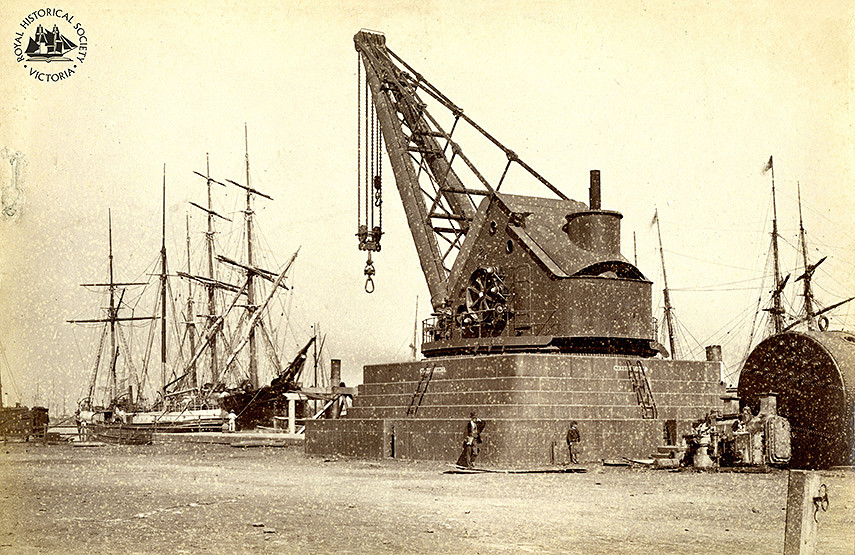

For nearly half a century, a steam crane stood over the Yarra, a hulking reminder of the river’s working life.
Sitting on its bluestone throne west of Queens Bridge, the iron behemoth was photographed by Charles Nettleton, probably sometime in the late 1870s. By then, the south bank of the Yarra had been transformed from swampy ground into a growing port precinct, as boats hauled cargo in and out of the city.
During this period, work continued on the development of South Wharf, later known as Prince’s Wharf, while the river was widened to make it easier for ships to navigate.
Among the major additions was the steam crane, which was instigated by the Chamber of Commerce and the city’s merchants and shipowners, and authorised by then-premier James Francis.
It was built by British company James Taylor and Co. at Birkenhead, England, for £6000 before being exported to Melbourne. By unfortunate coincidence, its parts and fittings were involved in three separate accidents at sea.
Some were aboard the Dunmail, which sank in the Mersey River in October 1873, while others were on the John Kerr when it was dismasted by storms in May 1874.
The most tragic incident involved fittings carried aboard the British Admiral, which sank in Bass Strait on May 23, 1874, killing 79 of the 88 people on board.
With these disasters delaying progress, Taylor reportedly had to borrow parts from a crane on the Clyde River in Scotland.
Back in Melbourne, construction of the crane’s foundation began in January 1874. The masonry work was contracted to a Mr Cornwall, though some sources spell the name “Cornwell”.
According to the Australasian Sketcher with Pen and Pencil on March 20, 1875, the base required an excavation of “44ft by 38ft and 17ft deep” and up to 42,000 cubic feet, or 3360 tons, of bluestone.
With the foundation work costing close to £8000, The Age raised concerns on June 20, 1874 that not all of the masonry below the counterpoise was necessary.
The installation of the crane was eventually contracted to a Mr Forman of the Yarra Boiler Works. Its jib, or long arm, measured around 62 feet, or 18.89 metres, and soon towered over the river.
The crane was powered by a steam boiler that controlled two engines: one for hoisting and the other for turning. Its horizontal length was 93 feet, and by February 1875 it was being tested to lift as much as 63 tons before being approved for use as a 50-ton crane.
Soon afterwards, it began work, with its first job reportedly moving the yacht Janet, according to The Herald on February 14, 1922.
The crane was used to lift boilers onto ships and handle other heavy objects as required. By the 1900s it had been reclassified as a 70-ton crane, with an average annual income in 1908 of around £200.
The Harbour Trust eventually took possession of the crane from the State Government in the early 1920s, and in 1922 it was moved to No. 20, later No. 16, North Wharf near Victoria Dock.
Positioned close to the railway tracks, it remained in use as a 60-ton crane until the 1950s, a period that included lifting locomotives, before being withdrawn altogether in 1962. •
Buy our Journalists a coffee
Support our dedicated journalists with a donation to help us continue delivering high-quality, reliable news


Related Articles
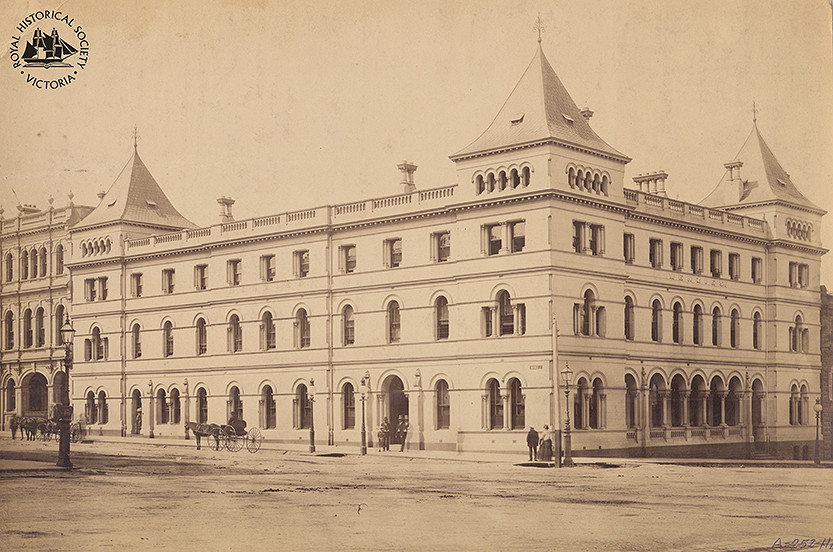
A pioneering experiment at the Menzies Hotel
Taken around the 1870s, this image shows the Menzies Hotel at the corner of William and Bourke streets.
Read More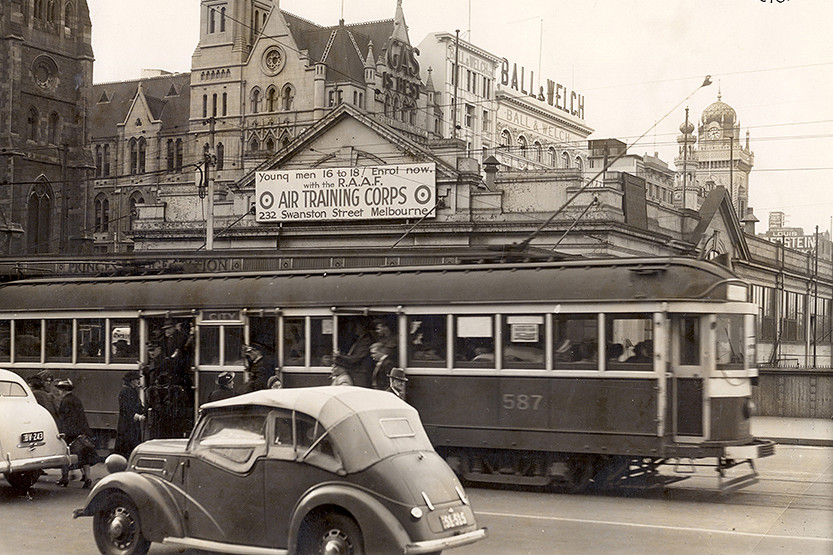
Reminders of wartime looms over Princes Bridge
In the early 1940s in Melbourne, as war ravages overseas, life in the city carries on as normal at the corner of Princes Bridge and Flinders St.
Read More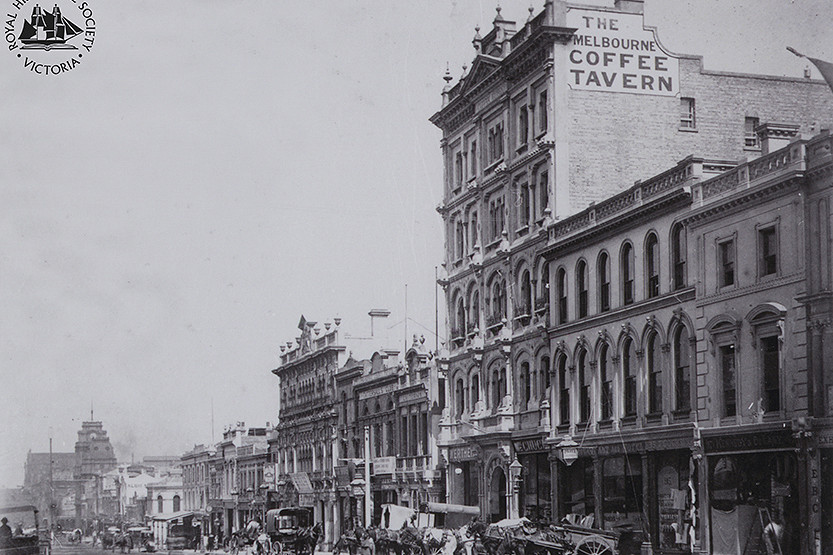
An escapee arrested at the Coffee Tavern
Opened in October 1882 on Bourke St between Swanston and Russell streets, the 90-foot-tall Melbourne Coffee Tavern featured 161 bedrooms and was also home to a sewing machine business owned by Hugo Wertheim.
Read More
Who actually pays Victorians the most for solar

EastEnders to host Lord Mayor and Deputy Lord Mayor

 Download the Latest Edition