
Employers call for 10-point fix to work-from-home laws


Victoria’s peak employer groups have released a 10-point plan to overhaul the state government’s proposed work-from-home laws, warning the legislation risks creating a costly and unworkable system for businesses.
The Victorian Congress of Employer Associations (VCEA) said that while business groups remained opposed to a legislated work-from-home mandate, the government’s decision to proceed with the Equal Opportunity Amendment (Work from Home) Bill 2026 meant urgent changes were needed before the laws took effect.
Under the government’s proposal, Victorians who can reasonably work from home would have a legal right to do so two days a week, with regular casual and part-time workers also covered on a pro-rata basis.
The government has framed the reform as a cost-of-living and family-friendly measure, arguing that working from home saves workers money, reduces commuting time and supports workforce participation.
But employer groups argue flexible work is already widespread and is best managed through direct negotiation between employers and employees, rather than through a new state-based legal regime.
The VCEA’s proposed amendments include a hard two-day cap on the legislated work-from-home right, delayed commencement for businesses with fewer than 200 employees, stronger powers for employers to manage productivity and safety, clearer rules around employer costs, and the ability to review, pause or revoke work-from-home arrangements when circumstances change.
A central concern is that the new right should not “stack” on top of existing awards, enterprise agreements or workplace arrangements in a way that could create an entitlement to work remotely for most of the week.
The VCEA said the laws should also broaden the grounds on which employers can refuse a request, including where working from home would affect productivity, efficiency or the operational needs of the business.
It also wants stronger protections around occupational health and safety, with employers able to manage their obligations for workers operating from home.
Other proposed amendments include allowing employers to pause or revoke arrangements during peak or seasonal periods, where performance issues arise, when business needs change, or when in-person attendance is required for training, professional development or team activities.
The VCEA has also called for the Victorian Equal Opportunity and Human Rights Commission to be given power to quickly dismiss frivolous, vexatious or unmeritorious complaints, and for a legally reliable checklist or code to guide employers responding to work-from-home notices.
It wants the laws limited to employees whose primary place of employment is in Victoria, with work-from-home locations restricted to agreed premises in Victoria unless otherwise negotiated.
Business groups are also warning that the proposed commencement date of September 1 is too compressed, with the Bill potentially receiving Royal Assent only weeks or even days before employers are expected to comply.
They say this would leave businesses scrambling to rewrite policies, train managers, assess safety obligations, understand cost liabilities and establish new processes.
The VCEA is urging the government to delay commencement until March 1, 2027, or, at minimum, phase in the laws for smaller employers.
The latest intervention follows earlier criticism from the City of Melbourne, which warned the laws could weaken CBD recovery and create further uncertainty for small businesses already dealing with reduced weekday foot traffic.
The debate is expected to remain a major flashpoint as the government seeks to lock in remote work rights, while employers argue the final legislation must support flexibility without undermining productivity, investment and jobs.
Buy our Journalists a coffee
Support our dedicated journalists with a donation to help us continue delivering high-quality, reliable news


Related Articles

From Port Melbourne to Brooklyn: How Born Social built a creative agency across two continents
What started as a one-woman social media business in Melbourne has grown into an international creative agency with offices in Port Melbourne and Brooklyn, New York.
Read More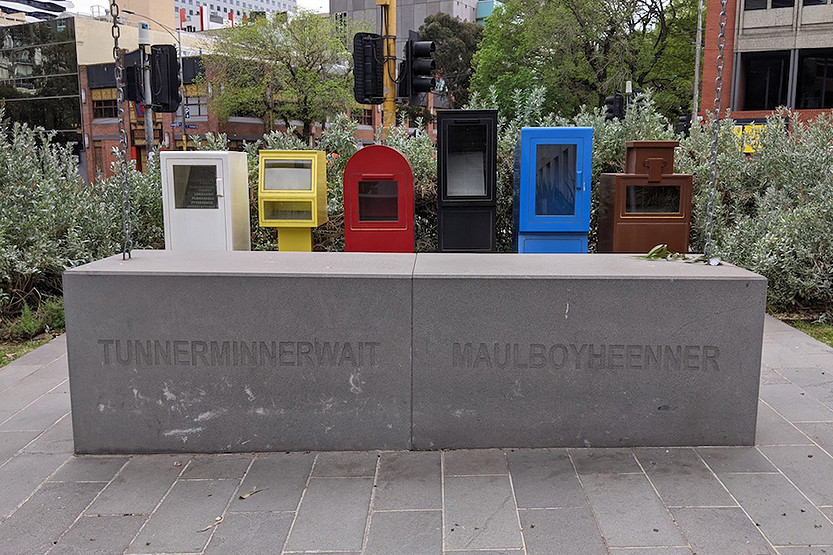
Frontier wars memorial in the heart of the city
Tucked into a tiny pocket of native trees, shrubs and plantings on one of Melbourne’s busiest corners is a surprising monument.
Read More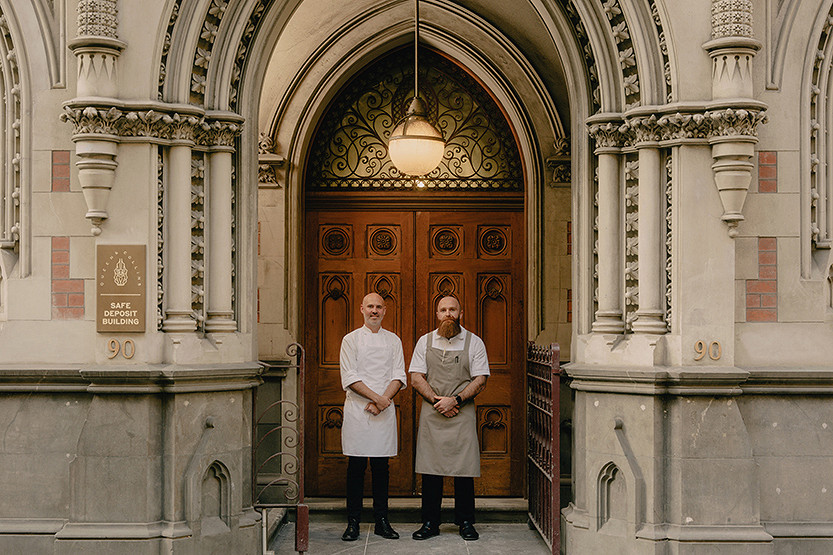
New cocktail bar to open inside historic Queen St building
A new cocktail bar and private dining venue will open on Queen St next month, adding another hospitality offering to Melbourne’s historic Gothic Bank precinct.
Read More
“Flies in the face”: Council rejects Town Hall tower plan
Open House offers a look behind the city’s closed doors

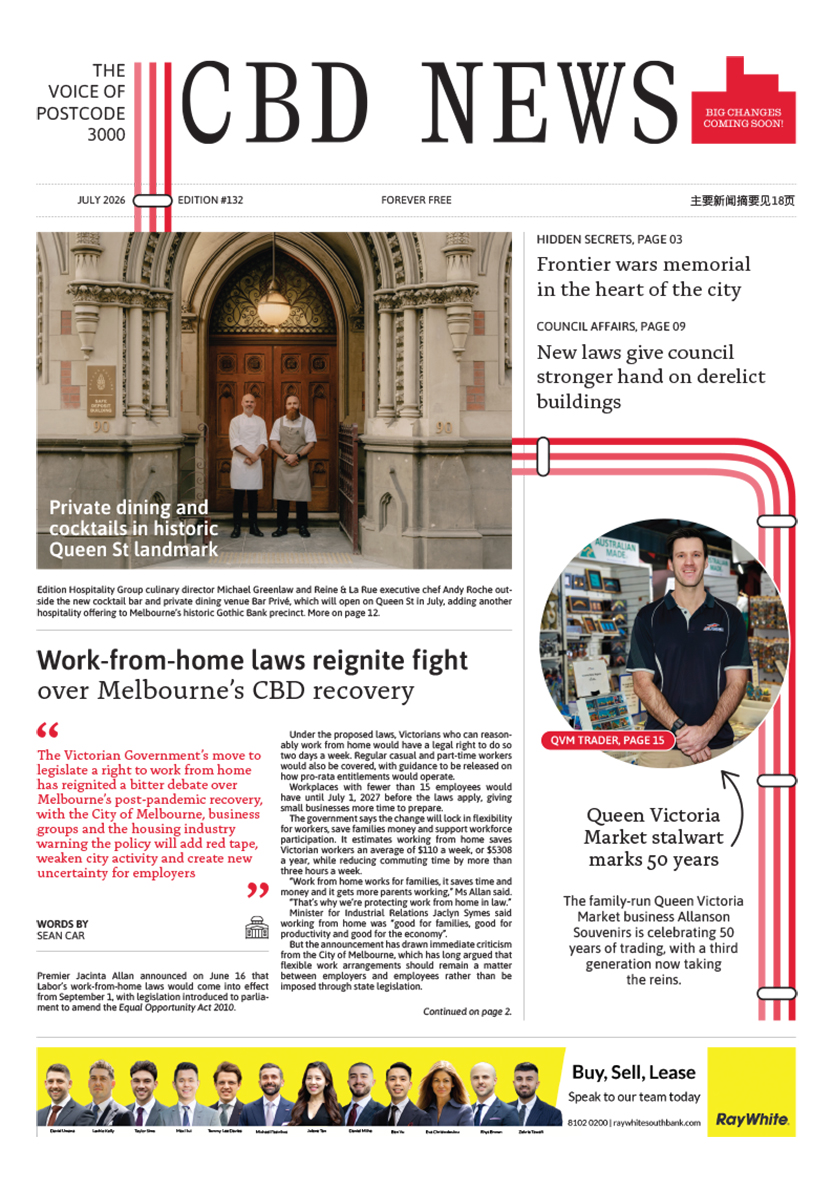 Download the Latest Edition