
New laws give council stronger hand on derelict buildings


The City of Melbourne is set to receive greater powers to pressure owners of vacant and derelict buildings to act, under state government reforms aimed at tackling some of the city’s most persistent eyesores.
The Local Government Legislation Amendment (Stronger Communities) Bill 2026, introduced to parliament in June, would amend the City of Melbourne Act 2001 to give the council more flexibility in how it applies differential rates.
Currently, the highest differential rate the council can set is no more than twice the lowest rate. The bill would increase that limit to four times the lowest differential rate, while retaining the city’s use of Net Annual Value as the valuation base for rates.
The change responds to concerns raised by the City of Melbourne about vacant and derelict properties that have become unsightly, unsafe or magnets for vandalism and rough sleeping.
In a statement to parliament on June 18, Minister for Local Government Paul Hamer said the number of properties of specific concern to the council in 2026 was around 20 to 30.
The proposed rate settings are intended to give property owners a stronger financial incentive to develop, clean up or otherwise improve neglected sites.
For the City of Melbourne, the reform follows years of frustration over prominent vacant buildings, including the former Cancer Council building on Rathdowne St in Carlton.
The site, opposite the UNESCO World Heritage-listed Royal Exhibition Building and Carlton Gardens, has sat boarded up, vandalised and repeatedly breached by squatters since being sold to private interests more than a decade ago.
It has become one of the most high-profile examples of a broader issue that Lord Mayor Nick Reece and councillors have been pushing to address.
Cr Reece previously described the former Cancer Council building as “one of the great eyesores of the city” and said it was unacceptable for buildings to fall into such disrepair that they posed risks to the community.
Acting Lord Mayor Roshena Campbell welcomed the state government’s reform, saying the change would bring Melbourne into line with other councils across Victoria.
“Changes to the City of Melbourne Act will finally bring our municipality in-line with all local governments across the state on how differential rates can be applied,” Cr Campbell said.
She said the measure was not about raising extra money for the council but about changing behaviour.
“This does not generate any additional revenue for the council – but it does allow us to crack down on some of the city’s worst eyesores, while offering an incentive for others to do the right thing,” she said.
“We’ll explore how we can best use these changes over the coming months.”
Cr Campbell said the council wanted to see sites such as the Cancer Council building cleaned up and redeveloped as quickly as possible.
The council will also continue to chase every policy lever and intervention we have available to crack down on the dilapidated and vacant sites that are a blight on our city because we know that’s what Melburnians expect, she said.
The reform builds on work already under way at Town Hall.
In September last year, councillors backed a motion calling for a comprehensive review of how the council deals with vacant, unsafe or unsightly premises.
That review included consideration of the city’s Activities Local Law, graffiti management, planning and building enforcement powers, cost recovery options, demolition orders, interim green space and potential use of differential rates, levies and charges.
While the new laws will not automatically resolve long-running problem sites, they would give the council a sharper tool to target owners who leave buildings vacant and deteriorating.
For a city still working to restore confidence, activity and safety in its central areas, the test will now be whether the new power is strong enough to turn land banking from a passive strategy into an expensive one. •
Buy our Journalists a coffee
Support our dedicated journalists with a donation to help us continue delivering high-quality, reliable news


Related Articles
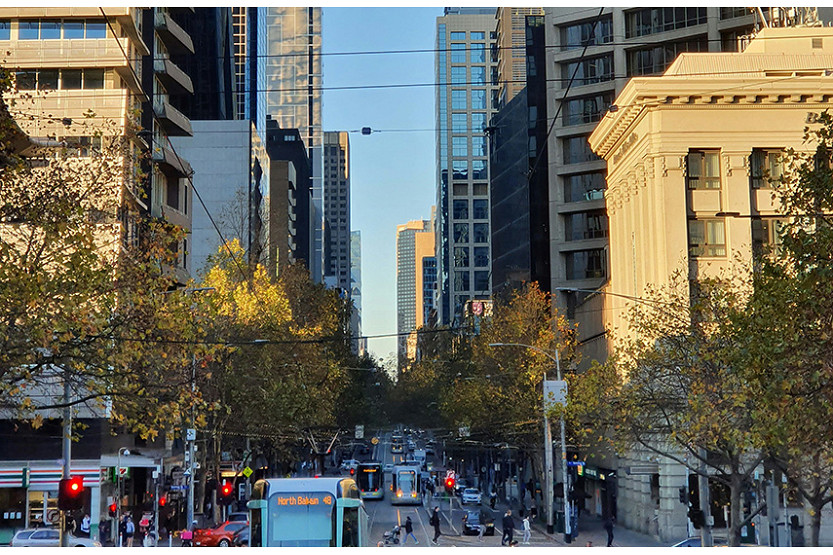
Council backs Retrofit Melbourne pilot
The City of Melbourne has approved a new three-year Retrofit Melbourne Financial Incentive Scheme, aimed at helping older commercial buildings cut emissions, reduce operating costs and remain competitive amid high office vacancy rates.
Read More
The rise of the “third room”: How Australians are reinventing their outdoor spaces
There was a time when the backyard was an afterthought. A patch of grass, a rusting barbecue, maybe a plastic chair or two.
Read More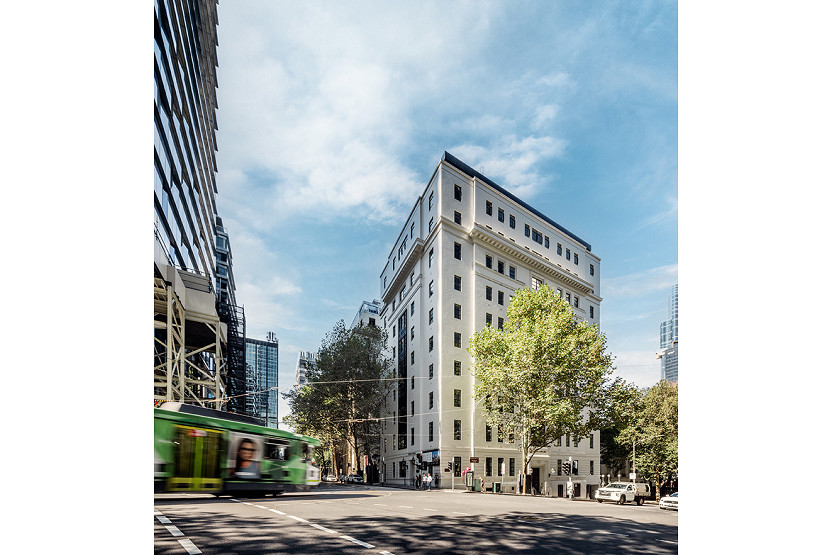
Hypetap moves into historic Swann House on Flinders Lane
One of Australia’s fastest-growing creative agencies is set to make its new home in one of Melbourne’s most historically significant CBD buildings, with Hypetap signing on as the inaugural tenant at the newly refurbished Swann House on Flinders Lane.
Read More
Who actually pays Victorians the most for solar

EastEnders to host Lord Mayor and Deputy Lord Mayor

 Download the Latest Edition