
Zero affordable homes delivered under central city uplift scheme

Almost a decade after it was introduced with the promise of delivering community benefits, the state government’s central city floor area uplift (FAU) scheme has failed to produce a single affordable housing unit in Melbourne’s CBD or Southbank.
New analysis from the Community Housing Industry Association Victoria (CHIA Vic) has revealed that since 2016, when the Central City Planning Provisions were amended to include a “public benefit uplift” incentive, developers have secured approval for almost 31,000 new homes. Not one of those has been delivered as affordable housing.
Instead, the voluntary scheme has overwhelmingly favoured commercial office space as the “public benefit” of choice. As reported by this masthead in early 2018, within just a year of its introduction more than 54,000 square metres of office floorspace had been awarded to applicants under the FAU mechanism, while no uplift had been granted for social housing, libraries, kindergartens or other community facilities that were also originally contemplated.
The result, according to CHIA Vic chief executive Sarah Toohey, is proof that voluntary approaches do not work.
The voluntary developer contribution scheme for the Melbourne CBD and Southbank has not delivered a single affordable home since it was introduced nearly a decade ago, she said.
“What we’ve seen instead is developers opting for office space and other benefits that serve their own interests, while communities continue to miss out on the affordable homes they desperately need.”
The issue is back in the spotlight with the Suburban Rail Loop East planning documents now proposing a similar voluntary uplift framework around new station precincts. CHIA Vic has warned that without mandatory requirements, there is little chance of affordable housing being supplied in these high-demand areas either.
“The Suburban Rail Loop will add tens of thousands of new homes around station precincts but right now it’s not clear if any of them will be social or affordable housing,” Ms Toohey said. “We can’t leave the delivery of social housing in these precincts up to a voluntary scheme that we know from experience won’t work.”
By contrast, Sydney’s long-standing mandatory affordable housing contributions scheme has already provided more than 1500 homes since 1996, with a further 1950 projected by 2036.
CHIA Vic argues that the Victorian Government should learn from Sydney’s approach and introduce enforceable requirements for developers to contribute to social and affordable housing in all major rezoning and urban renewal projects.
“The rezoning of these precincts will create massive windfall gains to landowners in the area,” Ms Toohey said. “It is reasonable to share these windfall gains across the community by requiring all new developments to include or contribute to social and affordable housing. Voluntary schemes do not work. The only way to deliver the social housing we need in these communities is for private developers to contribute.”
While the government continues to list increasing social and affordable housing as an objective in planning documents, critics say the absence of mandatory developer requirements, clear targets or direct public investment leaves delivery up to chance.
For residents of the central city, it is a familiar story. When Planning Scheme Amendment C270 was first conceived in 2016, consultants SGS Economics and Planning recommended the FAU scheme be used to secure lasting community assets such as libraries, childcare centres, open space and affordable housing. But by the time the controls were gazetted, “community benefit” had been diluted to “public benefit” and commercial office space had been added to the list. Developers, unsurprisingly, have overwhelmingly chosen that option.
City of Melbourne planning chair Cr Nick Reece acknowledged at the time that while more office accommodation was needed in the city, the trend risked undermining the original intent of the policy.
The then deputy planning chair Cr Rohan Leppert was more blunt, saying then that “floor area uplift regimes are never going to reliably and predictably deliver core community infrastructure” and that Melbourne should follow Sydney and Brisbane in requiring all new high-rise residential apartments to co-fund affordable housing.
Six years on, the numbers speak for themselves. Out of tens of thousands of new apartments approved across the CBD and Southbank, not even one has been set aside as affordable housing under the uplift regime. •
Buy our Journalists a coffee
Support our dedicated journalists with a donation to help us continue delivering high-quality, reliable news


Related Articles
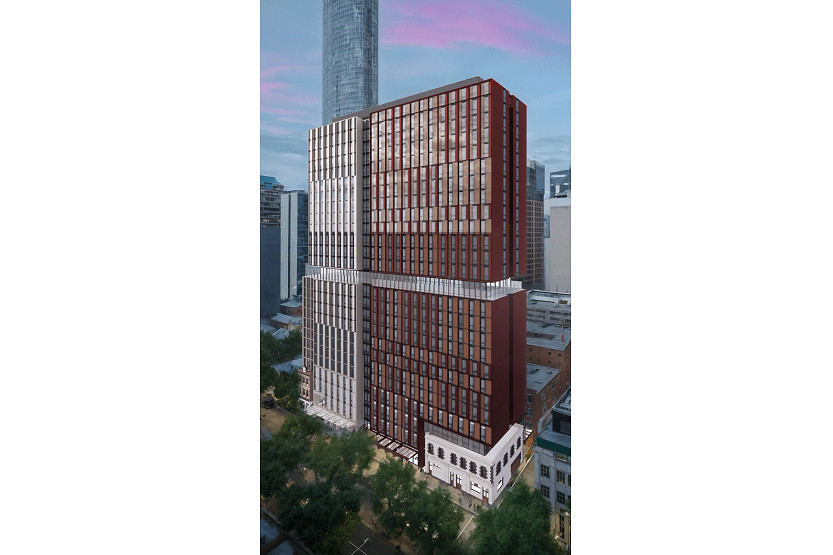
Construction begins on major student tower at 570 Little Bourke St
Construction has officially begun on a major new student accommodation tower at 570 Little Bourke St, with project partners marking the milestone at a ground-breaking and time capsule ceremony in the CBD on March 23.
Read More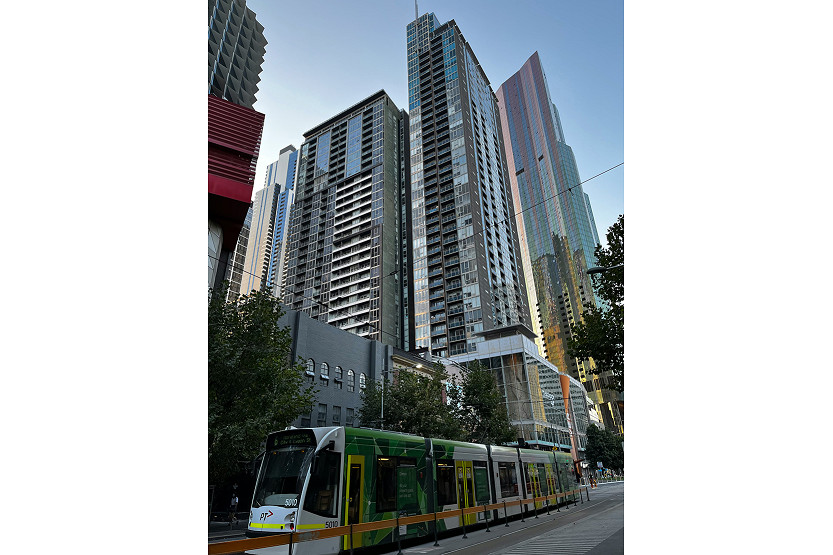
Council aims to double the number of houses in the city by 2051
The City of Melbourne aims to double the number of homes within the municipality over the next 25 years. However, councillors have raised concerns about the feasibility of this goal.
Read More
Who actually pays Victorians the most for solar

EastEnders to host Lord Mayor and Deputy Lord Mayor

 Download the Latest Edition